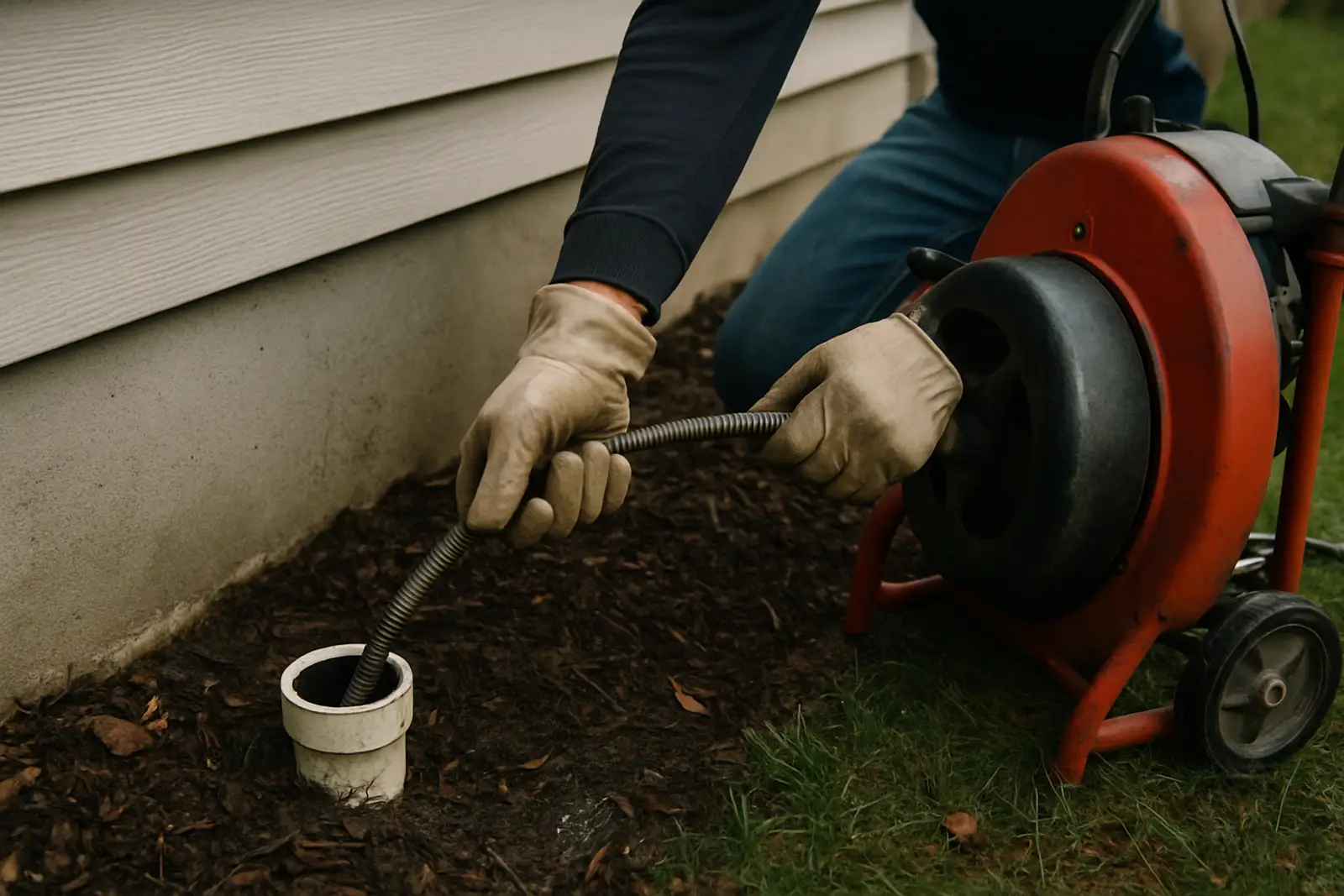
Houses and pipes in Cary
Downtown Cary, around Academy Street and the old railroad depot, has a handful of homes from the early 1900s, some with clay laterals under big oaks.
The first subdivisions, like Kildaire Farms, MacGregor Downs and the neighborhoods off Maynard Road, went up in the 1970s. Some of those homes have early PVC, ABS or even Orangeburg fiber laterals, and the pines planted then are now tall.
Through the 1980s and 1990s, Cary filled with planned communities such as Preston, Lochmere and Wellington Park, mostly with PVC drains.
West Cary and the areas toward Morrisville and Apex were built from the 2000s onward, with newer plumbing and many large family homes.
Cary sits on rolling red clay with lots of mature pines and hardwoods. Long laterals cross sloped yards, and the clay holds water after storms.
Who handles what in Cary
The Town of Cary provides sewer service. Each property owner maintains the private sewer line from the house out to the town's cleanout or main.
Drain problems Cary homes see most
| Problem | Why it happens here |
|---|---|
| Pine roots | Subdivisions from the 1970s and 1980s |
| Early plastic and fiber pipe | Kildaire Farms and the first subdivisions |
| Grease and wipes | Large family households |
| Settled laterals | Sloped lots on red clay |
| Hair and toys | Kids' bathrooms |
| Construction debris | New homes in west Cary |
Cary drains through the year
From April through September, thunderstorms roll across Wake County and soak the red clay. Pine roots grow fastest then, and a lateral that drained fine all winter can start gurgling by June.
December through February is usually mild, but a freezing-rain event can coat the pines, drop limbs on lines and leave crawlspace homes without heat. Thanksgiving and Christmas dinners bring the year's worst kitchen clogs.
What drain cleaning costs in Cary
| Job | Typical range |
|---|---|
| Sink, tub or toilet cleared | $135–$280 |
| Main line cleared from a cleanout | $200–$450 |
| Root cutting | $270–$600 |
| Hydro jetting | $345–$810 |
| Camera inspection | $155–$395 |
Newer west Cary homes are usually quick. Pine roots in 1970s laterals, old fiber pipe and long sloped runs take more time.
Before the plumber arrives
- 1
Stop water use
Pause showers, laundry and dishes.
- 2
Kids' toilet?
If only one toilet is backed up, check for toys first.
- 3
Look at the pines
Big pines near the sewer path are the usual root source.
- 4
Find the cleanout
Near the front of the house or out by the curb.
Kildaire Farms and the first subdivisions
Kildaire Farms, one of North Carolina's first planned unit developments, and MacGregor Downs around its golf course were built in the 1970s. Builders then were moving from Orangeburg fiber pipe to early ABS and PVC, so a house can have any of the three under the yard. Pines planted when the streets were new are now fifty years old and sixty feet tall, and their roots have found the weaker joints. A camera inspection shows which material you have, where the roots are and whether cutting, lining or replacing makes sense.
Preston, Lochmere and the 1980s and 1990s
Preston, Lochmere, Wellington Park, Scottish Hills and the other big planned communities of the 1980s and 1990s have PVC drains with glued joints that usually hold up well. Thirty-five years later, though, the oaks and pines in their yards are big, and a joint that shifted slightly as the clay settled is an easy target. Beyond roots, the calls in these neighborhoods come from busy family kitchens and bathrooms: bacon fat in the sink, long hair in a shower drain, wipes in a kids' toilet.
West Cary and new construction
West Cary, Amberly and the areas toward Morrisville, Green Level and Apex are still filling in with new homes and townhomes. Pipe in those houses is brand new, but a surprising number of first-year backups trace back to the build itself: grout and thinset from tile work, drywall mud washed down a utility sink or a rag left in a cleanout. Have the line scoped, keep the video and file it with the builder's warranty department before paying out of pocket.
A typical Cary call
On a rainy April weekend, a family in a 1978 home in Kildaire Farms finds the toilets gurgling and the tub slow. The plumber clears the main from the front cleanout, cutting a dense mass of pine roots about forty feet out, and runs a camera that shows cracked ABS joints. The family schedules a liner.
Big families
Cary consistently ranks among the best places in the country to raise kids, and its homes show it: four bedrooms, three or four bathrooms and a kitchen that cooks for six every night. More bathrooms mean more hair in more drains and more chances for a toddler to flush something interesting. Hair catchers in every shower, a small trash can beside each toilet and a lidded grease can by the stove prevent most of those calls.
Red clay and slopes
Cary rolls gently across red Piedmont clay, and many lots sit above or below the street with long laterals crossing sloped yards. The clay holds water after storms, shrinks in dry Augusts and settles unevenly over the decades, leaving shallow dips in the pipe where water stands and paper collects. If a clog keeps coming back at the same distance from the house, a camera with a locator can mark the dip on the lawn for a short, targeted repair.
Downtown Cary
Downtown Cary has been rebuilt over the last decade around the new Downtown Cary Park, with restaurants, breweries and townhomes along Academy and Chatham Streets. Some of those businesses sit in older buildings with old laterals, and busy kitchens push a lot of grease into them. Interceptors pumped on a fixed schedule and lines jetted before big events like the Lazy Daze festival keep them open.
Selling in Cary
Buyers relocating to the Triangle for tech and research jobs often ask for a sewer camera inspection as part of their due diligence, especially on homes from the 1970s and 1980s. A clean report helps a sale close smoothly. If the camera finds roots or an old fiber section, sellers can fix it or offer a credit on their own schedule.
What to tell a Cary plumber
Give your neighborhood and the home's age, whether big pines are near the sewer path and whether kids might have flushed something. Mention if the house sits well above or below the street, whether the problem is one fixture or the whole house, and if it's a new build, whether the warranty still applies.
Cary ZIP codes
- 27511
- 27513
- 27518
- 27519
Cary drain questions
Who handles sewer in Cary?+
The Town of Cary. The private line from the house to the town's connection is the owner's.
Do pine roots really get into sewer pipes?+
Yes. Pines have aggressive, far-reaching roots that find cracked joints, especially in older laterals.
Does my 1970s house have bad pipe?+
Some homes from that decade have early plastic or fiber pipe that can crack or deform. A camera inspection shows what you have.
Why did my new home clog in the first year?+
Grout, drywall mud, caulk tubes and scraps from the build sometimes wash into new laterals. Keep the camera video; most Cary builders cover it in the warranty year.