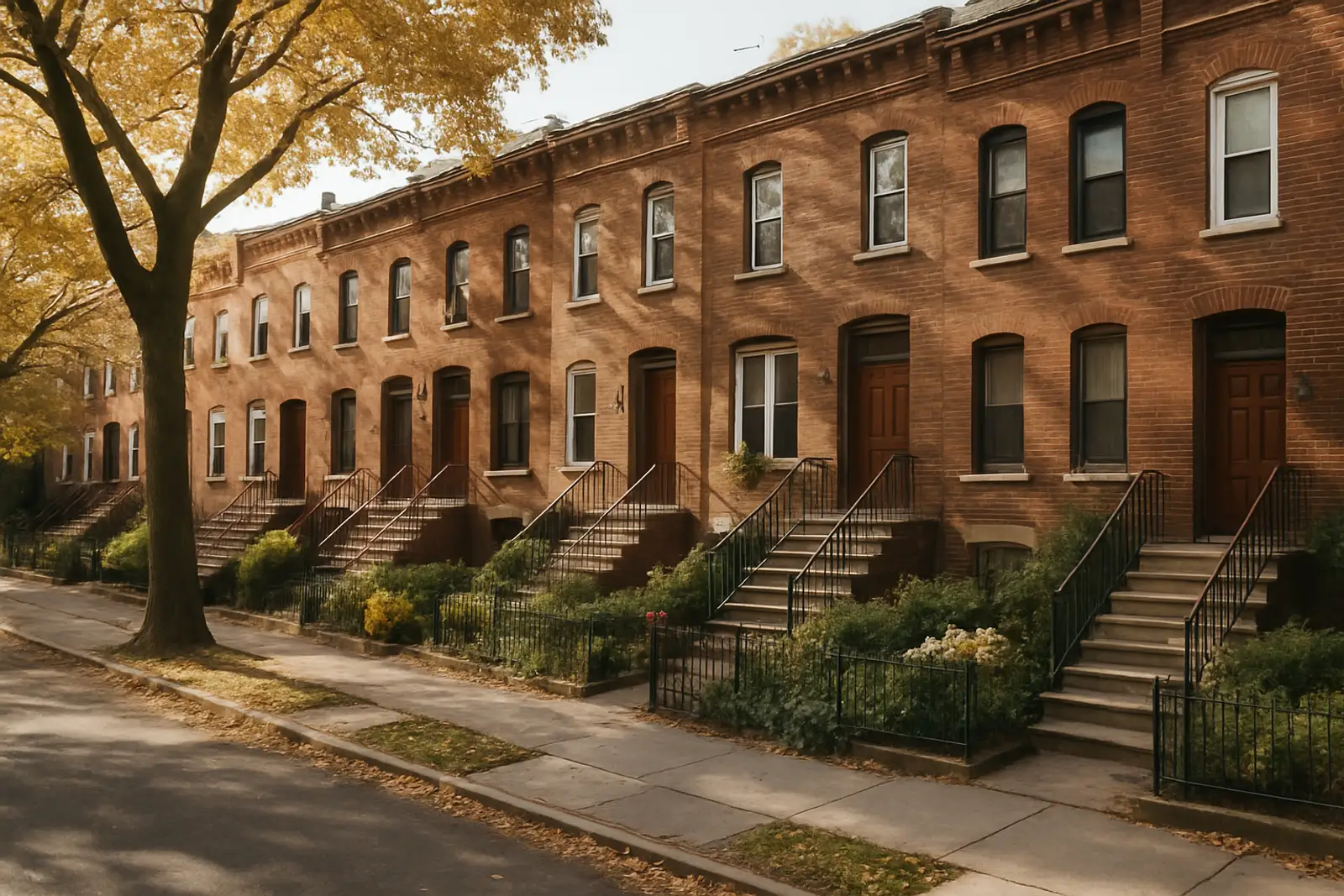
Houses and pipes in New York
Brooklyn's Park Slope, Bed-Stuy, Crown Heights and Fort Greene, and Manhattan's Harlem and Upper West Side, have brownstones and row houses from the 1850s through the 1910s with cellars, cast iron drains and a house trap near the front wall.
Queens neighborhoods like Astoria, Ridgewood, Woodhaven and Jackson Heights have attached brick row houses, two-family homes and garden apartments from the 1900s through the 1940s.
The Bronx and outer Brooklyn have many semi-attached and detached two-family homes from the 1920s through the 1960s, often with basement apartments.
Staten Island and eastern Queens have more detached homes from the 1950s through the 1990s, some on newer separate sewers and a few still on septic.
About 60 percent of the city is served by combined sewers that carry rain and wastewater together, and intense rain can overwhelm them, as the floods of 2021 and 2023 showed.
Who handles what in New York
The NYC Department of Environmental Protection operates the city's sewers and treatment plants. Under city rules, the property owner owns the house sewer from the building all the way to the city sewer in the street, including the connection.
Drain problems New York homes see most
| Problem | Why it happens here |
|---|---|
| House trap clogs | Brownstones and row houses with basement traps |
| Basement flooding in storms | Combined sewer areas citywide |
| Roots and broken house sewers | Tree-lined Brooklyn and Queens blocks |
| Grease buildup | Apartment buildings and restaurants |
| Cast iron corrosion | Pre-war buildings |
| Basement apartment backups | Two-family homes |
New York drains through the year
Summer cloudbursts are the big risk. When two or three inches of rain fall in an hour, combined sewers back up into basements and basement apartments across whole neighborhoods. Tropical storms in late summer bring the same danger.
Winter cold and freeze-thaw cycles crack old pipes in unheated cellars, vestibules and exterior walls.
What drain cleaning costs in New York
| Job | Typical range |
|---|---|
| Sink, tub or toilet cleared | $175–$360 |
| Main line or house trap cleared | $260–$575 |
| Root cutting | $340–$750 |
| Hydro jetting | $450–$1,050 |
| Sewer camera inspection | $185–$370 |
| Backwater valve installation | $1,200–$3,500 |
A clear path to the house trap or cleanout keeps costs down. Long house sewers under the sidewalk, buildings with many units and work during flooding take longer.
Before the plumber arrives
- 1
Tell the building
In a brownstone or two-family, ask every unit to stop running water.
- 2
Flash flood?
If the street is flooding, get out of any basement apartment and call 911 if water is rising fast. Report sewer backups to 311.
- 3
Find the house trap
Look for a U-shaped cast iron fitting with two caps, usually near the front cellar wall.
- 4
Don't open the trap yourself
If the line is full, opening a trap cap can release a flood of sewage.
Brownstones and the house trap
A Brooklyn brownstone or Harlem row house usually has a cellar or garden level with the main drain running toward the street. Near the front wall, there's a house trap, a U-shaped cast iron fitting with two cleanout caps, required by the old plumbing code to block sewer gas. Paper, grease, wipes and debris settle in that trap, and when it clogs, every fixture in the building backs up to the lowest drain. A plumber can clear the trap and then run a cable or jetter out through the house sewer under the sidewalk to the city main.
Combined sewers and flash floods
Most of New York City is served by combined sewers. During intense summer storms, like the remnants of Hurricane Ida in September 2021, which killed people in flooded basement apartments, and the record rain of September 2023, the sewers filled within minutes and pushed water back into basements across Queens, Brooklyn and the Bronx. DEP has been adding sewer capacity and green infrastructure, but homeowners in flood-prone areas should consider a backwater valve and know how to get out of a basement quickly.
Queens row houses
Astoria, Ridgewood, Woodhaven, Glendale and Jackson Heights have long rows of attached brick homes and two-family houses built from the 1900s through the 1940s. Many have finished basements or basement apartments. House sewers run under the front yard and sidewalk to the street, and the London plane trees and maples along the blocks send roots into clay and cast iron joints.
Two-family homes and basement apartments
Across Brooklyn, Queens and the Bronx, two- and three-family homes often have a basement unit, legal or not, and that unit has the lowest drains in the building. When the house sewer clogs or the city sewer surcharges, the basement unit floods first. Owners who keep the house trap and sewer clean and install a backwater valve protect their tenants and their property.
A typical New York call
Late on a Sunday in Crown Heights, the garden-level tenant in a 1905 brownstone sees water rising in the shower and coming up through the floor drain. The plumber opens the house trap at the front of the cellar and pulls out a wad of wipes and grease, then runs a cable out under the sidewalk and finds roots from the street tree about fifteen feet past the wall. After clearing, the camera shows a cracked joint in the clay house sewer. The owner gets a bid for lining the section under the sidewalk.
Apartment buildings
Pre-war walk-ups and elevator buildings in Manhattan, Brooklyn and the Bronx have cast iron stacks serving many apartments. Kitchen stacks collect grease from dozens of households, and lower-floor apartments get the backup when a stack clogs. Building supers who schedule regular jetting of kitchen lines avoid many emergency calls.
Restaurants and grease
With tens of thousands of restaurants, New York's sewers take in an enormous amount of grease. The city requires grease interceptors for food service establishments, and DEP inspects. Restaurants in older buildings need their interceptors pumped and lines jetted regularly, or grease backs up into their own basements and their neighbors'.
Staten Island and eastern Queens
Staten Island and eastern Queens have more detached homes from the postwar decades, some on separate sanitary sewers and a few still on septic systems. Homes there have the same house sewer ownership rules, and tree roots and sagging lines are common in older sections.
Permits and street work
Repairing a house sewer under the sidewalk or street in New York requires permits from DOB, DEP and DOT, and the work must be done by a licensed master plumber. Trenchless lining can reduce the need for street openings. Expect repairs in the street to take longer and cost more than work on private property.
Winter in the city
New York winters bring cold snaps that freeze pipes in unheated cellars, vestibules, exterior walls and old additions. Keep heat in the basement, seal drafts around pipes and let a faucet drip during deep cold.
Calling a New York plumber
Give the borough and neighborhood, the building type and age, how many units it has and whether there's a basement apartment. Mention whether there's a house trap, whether it rained hard first and whether neighbors also have water.
New York ZIP codes
- 10001
- 10002
- 10003
- 10004
- 10005
- 10006
- 10007
- 10009
- 10010
- 10011
- 10012
- 10013
- 10014
- 10016
- 10017
- 10018
- 10019
- 10020
- 10021
- 10022
- 10023
- 10024
- 10025
- 10026
- 10027
- 10028
- 10029
- 10030
- 10031
- 10032
- 10033
- 10034
- 10035
- 10036
- 10037
- 10038
- 10039
- 10040
- 10044
- 10065
- 10069
- 10075
- 10103
- 10110
- 10111
- 10112
- 10115
- 10119
- 10128
- 10152
- 10153
- 10154
- 10162
- 10165
- 10167
- 10168
- 10169
- 10170
- 10171
- 10172
- 10173
- 10174
- 10177
- 10199
- 10271
- 10278
- 10279
- 10280
- 10282
- 10301
- 10302
- 10303
- 10304
- 10305
- 10306
- 10307
- 10308
- 10309
- 10310
- 10311
- 10312
- 10314
- 10451
- 10452
- 10453
- 10454
- 10455
- 10456
- 10457
- 10458
- 10459
- 10460
- 10461
- 10462
- 10463
- 10464
- 10465
- 10466
- 10467
- 10468
- 10469
- 10470
- 10471
- 10472
- 10473
- 10474
- 10475
- 11004
- 11005
- 11101
- 11102
- 11103
- 11104
- 11105
- 11106
- 11109
- 11201
- 11203
- 11204
- 11205
- 11206
- 11207
- 11208
- 11209
- 11210
- 11211
- 11212
- 11213
- 11214
- 11215
- 11216
- 11217
- 11218
- 11219
- 11220
- 11221
- 11222
- 11223
- 11224
- 11225
- 11226
- 11228
- 11229
- 11230
- 11231
- 11232
- 11233
- 11234
- 11235
- 11236
- 11237
- 11238
- 11239
- 11249
- 11354
- 11355
- 11356
- 11357
- 11358
- 11359
- 11360
- 11361
- 11362
- 11363
- 11364
- 11365
- 11366
- 11367
- 11368
- 11369
- 11370
- 11371
- 11372
- 11373
- 11374
- 11375
- 11377
- 11378
- 11379
- 11385
- 11411
- 11412
- 11413
- 11414
- 11415
- 11416
- 11417
- 11418
- 11419
- 11420
- 11421
- 11422
- 11423
- 11424
- 11426
- 11427
- 11428
- 11429
- 11430
- 11432
- 11433
- 11434
- 11435
- 11436
- 11439
- 11451
- 11691
- 11692
- 11693
- 11694
- 11697
New York drain questions
Who is responsible for my sewer line in New York City?+
The property owner owns the house sewer from the building to the city sewer, including the connection in the street. DEP maintains the city sewer.
What is a house trap?+
It's a U-shaped fitting near the front of the basement that keeps sewer gas out of the building. Paper, grease and debris often catch there, and clearing it fixes many backups.
Will a backwater valve protect my basement apartment?+
It can keep sewage from flowing back into the building when the city sewer surcharges. DEP recommends them for flood-prone areas, and installation requires a licensed plumber.
Should I scope the sewer before buying a brownstone?+
Yes. House sewers under the sidewalk and street can be very old and expensive to repair.