Houses and pipes in Washington
Capitol Hill, Shaw, Logan Circle, Dupont Circle, Bloomingdale and LeDroit Park have brick rowhouses from the 1870s through the 1910s, many with English basements and old cast iron or clay sewer laterals.
Petworth, Brightwood, Columbia Heights and Brookland were built from the 1900s through the 1930s with porch-front rowhouses and detached homes.
Chevy Chase, Cleveland Park, AU Park and Palisades have detached homes from the 1910s through the 1950s on tree-lined streets.
East of the Anacostia, neighborhoods like Anacostia, Hillcrest and Congress Heights have homes and garden apartments from the 1880s through the 1960s.
About a third of the city, mostly the older core, has combined sewers, and DC Water's Clean Rivers Project has built deep tunnels to capture overflows.
Who handles what in Washington
DC Water operates the city's sewers and the Blue Plains treatment plant. In the District, the property owner is responsible for the sewer lateral from the house to the property line, and DC Water maintains the section from the property line to the public main.
Drain problems Washington homes see most
| Problem | Why it happens here |
|---|---|
| English basement backups | Rowhouses with basement apartments |
| Basement flooding in storms | Combined sewer neighborhoods |
| Roots in clay pipe | Petworth, Brookland and Chevy Chase |
| Cast iron corrosion | Century-old rowhouses |
| Grease buildup | Rowhouse kitchens and restaurants |
| Shared sewer connections | Older rowhouse blocks |
Washington drains through the year
Summer thunderstorms can drop inches of rain in an hour, overwhelming combined sewers and flooding basements in Bloomingdale, Shaw and other low areas. Roots grow fastest from May through August.
Winter cold snaps freeze pipes in unheated basements, back additions and exterior walls of old rowhouses.
What drain cleaning costs in Washington
| Job | Typical range |
|---|---|
| Sink, tub or toilet cleared | $160–$325 |
| Main line cleared from a cleanout | $240–$520 |
| Root cutting | $310–$690 |
| Hydro jetting | $405–$940 |
| Sewer camera inspection | $165–$330 |
| Backwater valve installation | $1,000–$3,000 |
Detached homes with an accessible cleanout go quickest. Old rowhouse laterals under the sidewalk, cramped English basements and lines shared between houses take longer.
Before the plumber arrives
- 1
Warn the basement tenant
If there's an English basement apartment, the tenant there will see water first; ask upstairs to stop running water.
- 2
Flash flood?
During a cloudburst, get out of any basement with rising water and report the backup to DC Water.
- 3
Check the floor drain
Water coming up from a basement floor drain or shower is the usual sign.
- 4
Find the cleanout
Rowhouses often have one at the front basement wall or under the front stoop.
English basements
Many DC rowhouses have an English basement, a lower level partly below grade with its own entrance, often rented as a separate apartment. It holds the lowest drains in the building. When the lateral clogs or the public sewer surcharges, water rises there first. Owners who keep the lateral clean, install a backwater valve and add a floor drain plug protect their tenants and income.
Combined sewers and the Clean Rivers Project
The older parts of DC, including Capitol Hill, Shaw, Bloomingdale, Columbia Heights and downtown, are served by combined sewers that carry rain and wastewater together. During big storms, they overflowed into the Anacostia, Potomac and Rock Creek, and low neighborhoods like Bloomingdale flooded repeatedly. DC Water's Clean Rivers Project built the Anacostia River Tunnel and the Northeast Boundary Tunnel to store overflow, and flooding has dropped. Extreme storms can still surcharge local sewers.
Capitol Hill and Shaw
Capitol Hill's rowhouses, from small frame homes to grand Victorians, and Shaw's and Logan Circle's brick rowhouses date mostly from the 1870s through the 1910s. Laterals are often cast iron or clay, running under the front yard and sidewalk. Street trees along the sidewalks send roots into the joints.
Petworth and Brookland
Petworth, Brightwood and Brookland have porch-front rowhouses and detached homes from the early 1900s, on streets lined with oaks and maples. Those trees are a big part of the neighborhoods' charm, and they are also why so many Petworth and Brookland plumbing calls end with a root cutter.
A typical DC call
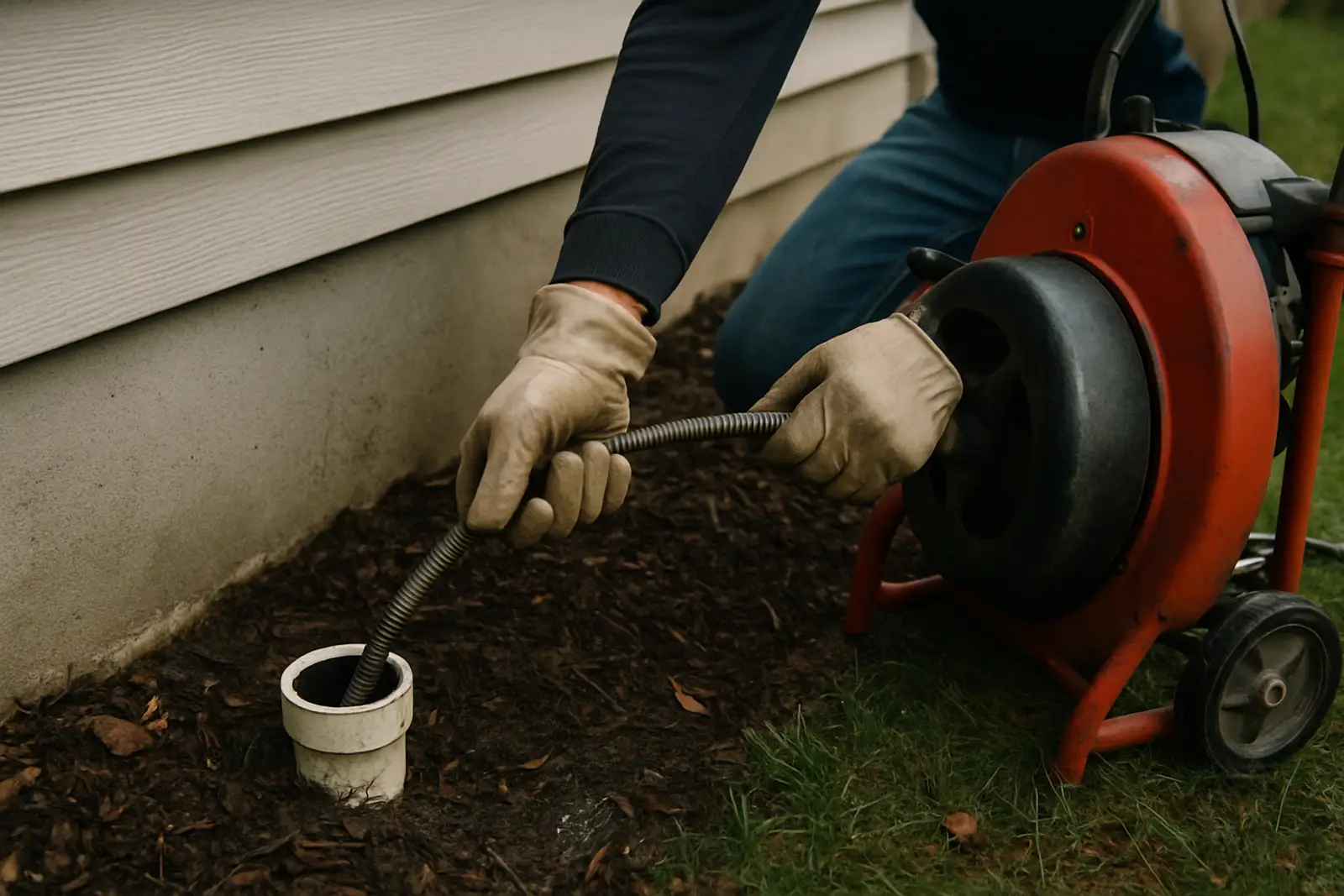
After a July thunderstorm, the English basement tenant in a 1905 rowhouse in Bloomingdale finds water rising from the shower drain. The owner calls a plumber, who opens the cleanout at the front basement wall and cables toward the street, clearing roots about fifteen feet out under the sidewalk. The camera shows cracked clay. The owner books a liner and a backwater valve.
Detached homes in Northwest
Chevy Chase, Cleveland Park, AU Park and the Palisades have detached homes on wooded lots. Long laterals under big trees mean roots and cracks. Many homes have finished basements, making flood protection worthwhile.
East of the river
Anacostia's historic district has some of the city's oldest homes, and neighborhoods like Hillcrest and Congress Heights have homes and garden apartments from the early and mid twentieth century. Old clay and cast iron laterals are common, and low areas near the river can see higher groundwater.
Shared laterals
Some older rowhouse blocks have laterals that join before reaching the main or pass under a neighbor's property. A clog in a shared section affects multiple homes. A camera inspection traces the line and shows who owns which part.
Restaurants on 14th Street and H Street
14th Street, U Street, H Street, Barracks Row and the Wharf are packed with restaurants, many in old rowhouse buildings with old laterals. Kitchens there avoid shutdowns by keeping interceptors pumped and lines jetted on a regular cycle.
Permits and public space
Repairing a lateral under a DC sidewalk or street requires permits from DDOT and coordination with DC Water, since the city maintains the part beyond the property line. Trenchless lining can reduce the need for public space excavation.
Rowhouse winters
Shared walls keep rowhouses fairly warm, but back additions, unheated basements and pipes along rear walls freeze in a hard cold snap. Keep the basement warm and let a faucet drip on the coldest nights of January.
Government, students and turnover
Washington has a constant churn of residents: Hill staffers, students at Georgetown, GW, Howard and Catholic, and people on short government postings. Rental rowhouses and English basements turn over often, and new tenants rarely know a building's plumbing quirks. Owners who leave a note on where the cleanout is and what not to flush save themselves a lot of late-night calls.
What to tell the plumber
Give the neighborhood and quadrant, the home's age and type, and whether there's an English basement apartment. Mention whether it rained hard, where the cleanout is and whether neighbors have water too.
Washington ZIP codes
- 20001
- 20002
- 20003
- 20004
- 20005
- 20006
- 20007
- 20008
- 20009
- 20010
- 20011
- 20012
- 20015
- 20016
- 20017
- 20018
- 20019
- 20020
- 20024
- 20032
- 20036
- 20037
- 20045
- 20052
- 20057
- 20059
- 20064
- 20204
- 20220
- 20230
- 20240
- 20245
- 20317
- 20390
- 20408
- 20415
- 20418
- 20422
- 20431
- 20510
- 20520
- 20530
- 20535
- 20540
- 20551
- 20560
- 20565
- 20566
Washington drain questions
Who is responsible for my sewer lateral in DC?+
The property owner is responsible from the house to the property line. DC Water maintains the lateral from the property line to the main.
What is the Clean Rivers Project?+
DC Water's program of deep tunnels and green infrastructure to capture combined sewer overflows that once went into the Anacostia, Potomac and Rock Creek.
Does DC Water help with backwater valves?+
DC has offered rebate programs for backwater valves in flood-prone areas. Check with DC Water or DOEE for current programs.
Should I scope the sewer before buying a rowhouse?+
Yes. Century-old laterals can have roots, cracks or collapses, and repairs under sidewalks can be costly.