Houses and pipes in Las Vegas
The oldest neighborhoods, like the John S. Park and Beverly Green historic districts near downtown, Huntridge and Scotch 80s, have homes from the 1940s and 1950s on slabs with cast iron or clay sewer lines.
Central and east Las Vegas filled in from the 1950s through the 1970s with ranch homes on slabs, many with cast iron drains.
Summerlin, the northwest, Centennial Hills and the southwest were built from the 1980s onward with ABS or PVC drains on slabs.
There are almost no basements; nearly every home sits on a concrete slab over caliche, a cement-hard layer of desert soil.
Las Vegas Valley water is extremely hard, and mineral scale builds up in pipes, fixtures and water heaters.
Who handles what in Las Vegas
The City of Las Vegas runs sewers inside city limits, and the Clark County Water Reclamation District serves the unincorporated valley, including much of the Strip area. In Las Vegas, the homeowner is responsible for the sewer lateral from the house to the public main.
Drain problems Las Vegas homes see most
| Problem | Why it happens here |
|---|---|
| Grease buildup | Busy kitchens and short-term rentals |
| Mineral scale in drains | Hard water citywide |
| Cast iron under slabs | 1950s through 1970s homes |
| Roots from landscape trees | Mature neighborhoods with mesquite, palo verde and ash |
| Wipes and foreign objects | Vacation rentals |
| Shifted lines in caliche | Older slab homes |
Las Vegas drains through the year
Summer heat, when temperatures top 110 degrees, drives landscape trees to send roots searching for water, and monsoon storms in July and August can flood streets and stress sewers.
Holiday seasons and big convention and event weeks bring heavy use in rentals and restaurants.
What drain cleaning costs in Las Vegas
| Job | Typical range |
|---|---|
| Sink, tub or toilet cleared | $130–$270 |
| Main line cleared from a cleanout | $195–$435 |
| Root cutting | $255–$585 |
| Hydro jetting | $335–$800 |
| Sewer camera inspection | $135–$275 |
| Cast iron under-slab assessment | $245–$530 |
Newer Summerlin and southwest lines clear quickly. Cast iron under older slabs, heavy scale and rental lines full of wipes take longer.
Before the plumber arrives
- 1
Stop running water
Turn off the dishwasher and washer first.
- 2
Vacation rental?
If guests are staying, ask them to stop flushing until the plumber arrives.
- 3
Check the tub
In a slab home, the tub or shower nearest the cleanout usually fills first.
- 4
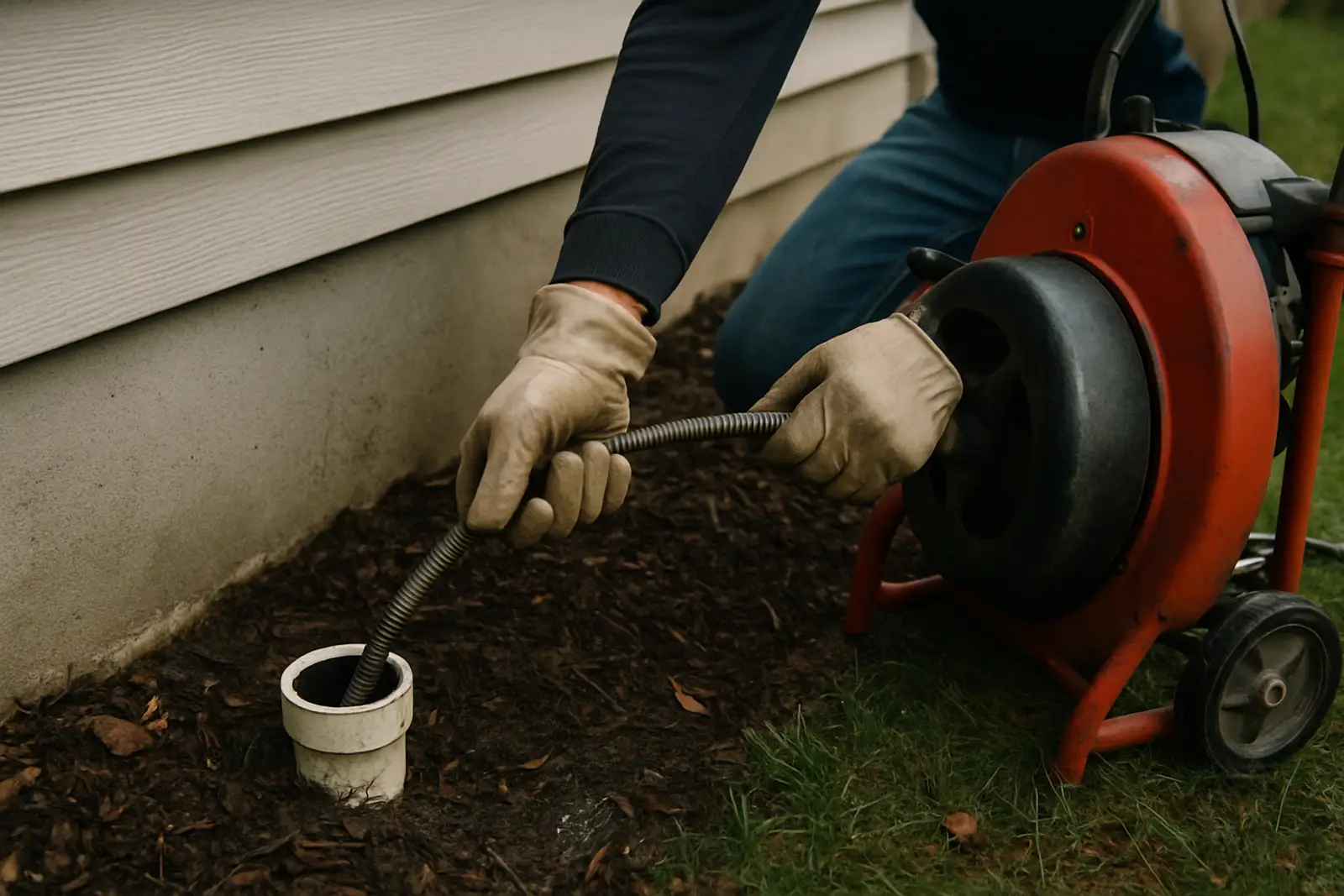
Find the cleanout
Usually a capped pipe near the front of the house, sometimes in a gravel landscape bed.
Old Las Vegas
Before the megaresorts, Las Vegas was a small railroad and casino town, and its oldest neighborhoods, like John S. Park, Beverly Green, Huntridge and the Scotch 80s, have ranch homes from the 1940s and 1950s, some of them custom homes built for casino owners and entertainers. Their sewer lines are cast iron or clay, now seventy years old, running under slabs and through yards planted with big shade trees. Roots, scale and cracks are common.
Cast iron under slabs
Homes built in central and east Las Vegas from the 1950s through the 1970s usually have cast iron drains under the slab. After decades of hard water, the inside of that pipe is coated with scale, and the outside can corrode in the alkaline desert soil. Slow drains throughout the house, gurgling and recurring backups are signs. A camera inspection shows the condition, and lining or rerouting can avoid breaking up the slab.
Hard water
Las Vegas gets most of its water from Lake Mead, and it is very hard. Minerals build up as scale inside drain pipes, especially in kitchen and laundry lines where hot water and soap mix with grease. Over time, scale narrows the pipe and gives grease and debris something to cling to. Hydro jetting removes scale and buildup better than a cable.
Caliche
Under much of the valley is caliche, a layer of soil cemented by calcium carbonate that can be as hard as concrete. Sewer lines laid through it are hard to reach, and digging to repair them is slow. Trenchless methods are often the practical choice.
A typical Las Vegas call
In July, a family in a 1964 slab ranch in east Las Vegas notices every drain in the house running slowly. The plumber opens the cleanout by the front walk and clears scale, grease and fine roots from an old ash tree about twenty-five feet out. The camera shows the cast iron under the slab heavily scaled with a crack near the foundation. They get quotes for lining.
Short-term rentals
Las Vegas has thousands of short-term rentals hosting bachelor parties, conventions and vacationers. Guests flush wipes, cleaning cloths and other items that would never go down a homeowner's toilet, and kitchens see a lot of greasy cooking. Rental owners who post clear signs, provide trash cans in every bathroom and jet lines between busy seasons avoid many emergency calls.
Summerlin and newer neighborhoods
Summerlin, Centennial Hills and the southwest valley have been built since the 1980s with ABS or PVC drains that resist scale and roots better than cast iron. Calls there are mostly about grease, wipes and kids' bathrooms. Some newer homes have drains in tight spaces under the slab that make clogs hard to reach without a cleanout.
Desert landscaping and roots
Even with desert landscaping, many Las Vegas yards have trees that need irrigation: ash, mulberry, mesquite, palo verde, palms and pines. In the dry heat, their roots travel far to find water, and a weeping joint in a sewer line is irresistible. Older neighborhoods with mature trees see the most root clogs.
Monsoon storms
July and August bring monsoon storms that can dump heavy rain in minutes on hard desert ground. Water runs off rather than soaking in, flooding streets and washes. Storm water can enter sewers through damaged cleanouts or manholes, and low-lying neighborhoods may see surcharges.
Restaurants and the Strip
Las Vegas restaurants, on the Strip, downtown, in Chinatown on Spring Mountain Road and across the valley, serve enormous numbers of meals. Commercial kitchens are required to maintain grease interceptors, and pumping them on schedule and jetting lines keeps them open around the clock.
Shift workers and busy households
Las Vegas runs around the clock, and many households include casino, hotel and restaurant workers on different shifts. Showers, laundry and cooking happen at all hours. Grease and wipes are common culprits in kitchen and bathroom clogs.
Winter
Las Vegas winters are mild, but overnight lows can dip below freezing in December and January. Exposed pipes in garages and on exterior walls, and outdoor plumbing for pools and irrigation, are most at risk. Insulating exposed pipe usually prevents trouble.
Information to have ready
Say which part of the valley you're in and roughly when the house was built, whether it's a rental and which drains are affected. Mention any big trees near the sewer line.
Las Vegas ZIP codes
- 89101
- 89102
- 89103
- 89104
- 89106
- 89107
- 89108
- 89109
- 89110
- 89113
- 89117
- 89118
- 89119
- 89120
- 89121
- 89122
- 89123
- 89124
- 89128
- 89129
- 89130
- 89131
- 89134
- 89135
- 89138
- 89139
- 89141
- 89142
- 89143
- 89144
- 89145
- 89146
- 89147
- 89148
- 89149
- 89156
- 89158
- 89161
- 89166
- 89169
- 89178
- 89179
- 89183
Las Vegas drain questions
Who handles sewer in Las Vegas?+
The City of Las Vegas inside city limits and the Clark County Water Reclamation District in unincorporated areas. The lateral from your house is yours.
Does hard water affect drains?+
Yes. Mineral scale builds up inside pipes over time, narrowing them and catching grease and debris.
Can desert trees really clog a sewer line?+
Yes. Ash, mesquite, palo verde and other landscape trees send roots long distances looking for water, and a cracked joint is an easy target.
Should I get a camera inspection before buying an older Las Vegas home?+
Yes, especially for homes from the 1950s through the 1970s with cast iron under the slab.