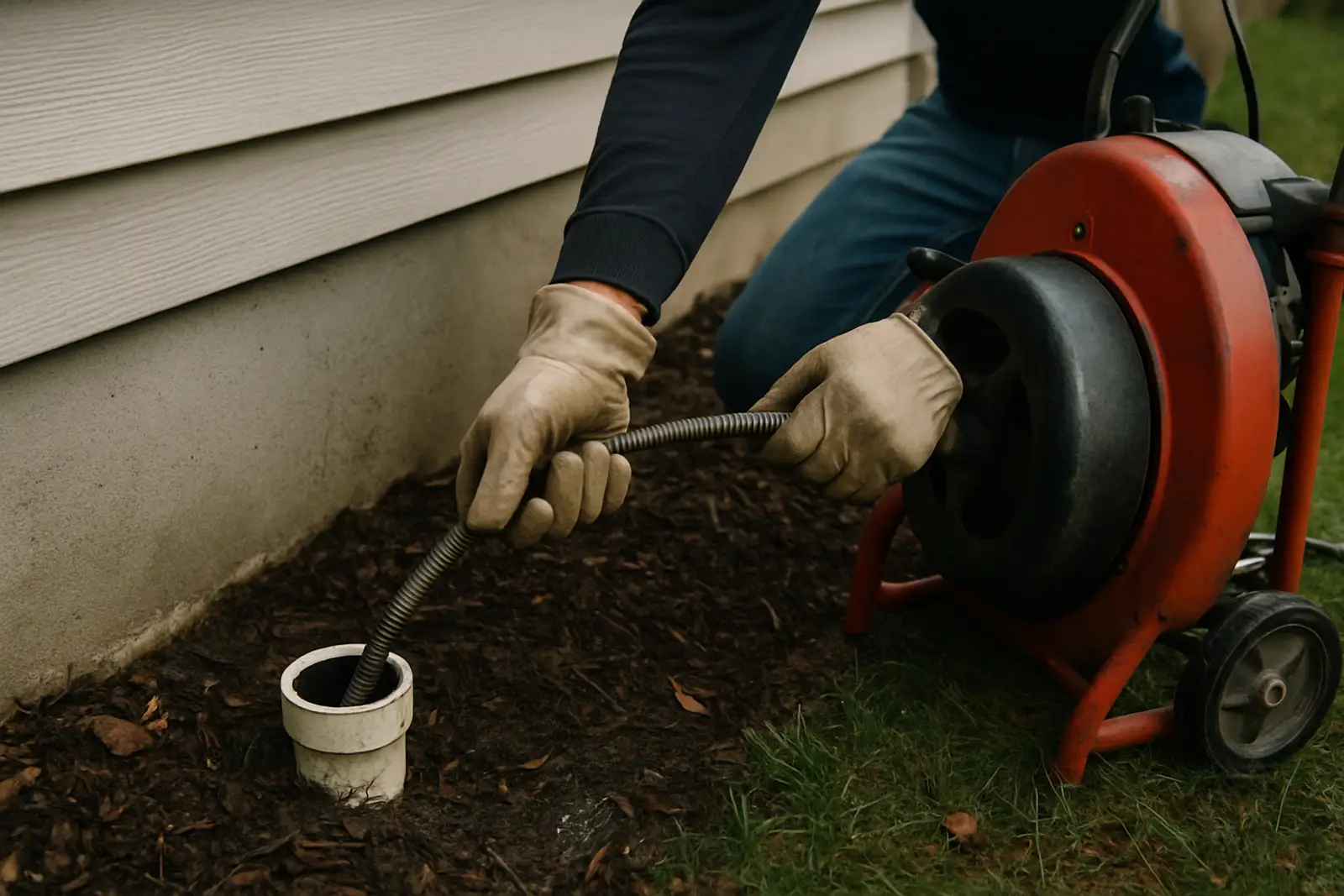
Houses and pipes in Oklahoma City
Heritage Hills, Mesta Park, Crown Heights and the Paseo have homes from the 1900s through the 1930s, many on pier-and-beam foundations with crawlspaces and clay laterals.
Neighborhoods like Edgemere Park, Gatewood, Classen Ten Penn and Capitol Hill were built from the 1910s through the 1940s with bungalows, Tudors and cottages.
Postwar neighborhoods across the city, from Nichols Hills' edges to south OKC, Del City and Midwest City, were built from the 1950s through the 1970s, mostly ranches on slabs with cast iron drains.
Newer subdivisions toward Edmond, Yukon, Mustang and far north OKC have PVC drains on slab foundations.
Oklahoma's red clay soils shrink and swell dramatically with moisture, shifting foundations and buried pipe.
Who handles what in Oklahoma City
Oklahoma City's Utilities Department runs the city sewer system and treatment plants. Oklahoma City owners are responsible for the private sewer service line from the house to the city main.
Drain problems Oklahoma City homes see most
| Problem | Why it happens here |
|---|---|
| Shifted and cracked lines | Expansive red clay soils |
| Cast iron under slabs | 1950s through 1970s homes |
| Roots in clay pipe | Heritage Hills, Mesta Park and Crown Heights |
| Crawlspace drain leaks | Pier-and-beam homes |
| Grease and wipes | Busy households |
| Storm infiltration | Spring storm season |
Oklahoma City drains through the year
Spring storm season brings heavy rain that saturates the clay and swells it, while summer droughts dry and shrink it. Both stress sewer lines, and roots chase water hardest in July and August.
Winter ice storms and occasional deep cold can freeze drains in garages and crawlspaces.
What drain cleaning costs in Oklahoma City
| Job | Typical range |
|---|---|
| Sink, tub or toilet cleared | $125–$265 |
| Main line cleared from a cleanout | $190–$425 |
| Root cutting | $250–$575 |
| Hydro jetting | $325–$785 |
| Sewer camera inspection | $130–$270 |
| Cast iron under-slab assessment | $240–$520 |
Newer PVC lines go fast. Cast iron under slabs, roots in old clay and lines shifted by soil movement take longer.
Before the plumber arrives
- 1
Stop the water
Hold off on the washer, dishwasher and showers.
- 2
Slab or pier-and-beam?
On a slab, the tub nearest the cleanout often fills first; with a crawlspace, listen for dripping under the floor.
- 3
After a dry spell?
Drought shrinks the clay and can crack a weak line; mention it.
- 4
Find the cleanout
Usually a capped pipe in the yard near the front foundation.
Red clay
Central Oklahoma's red clay is famous for shrinking and swelling. After a wet spring, it expands and pushes on foundations and pipe. After a hot, dry summer, it shrinks and pulls away, leaving gaps. Over decades, that movement cracks foundations, shifts sewer lines and separates joints. Many homeowners water their foundations during droughts to keep the soil stable, which also helps protect buried pipe.
Heritage Hills and Mesta Park
Heritage Hills and Mesta Park, just north of downtown, have grand homes built by oil men and merchants in the early 1900s, many on pier-and-beam foundations. Their clay laterals run under big elms, oaks and pecans. Roots are the most common cause of backups, and soil movement adds cracks.
Crown Heights and the Paseo
Crown Heights, Edgemere Park and the Paseo Arts District have bungalows, Tudors and Spanish Revival homes from the 1920s and 1930s. Many sit on crawlspaces, with drain lines running under the floor. Clay laterals, roots and crawlspace leaks are common.
Postwar slab homes
After World War II, Oklahoma City spread in every direction with ranch homes on concrete slabs, built for families working at Tinker Air Force Base, the oil fields and aviation plants. Most have cast iron drains under the slab. After fifty to seventy years, that cast iron scales, cracks and sometimes collapses, especially where the clay has shifted the slab. When every tub and sink in the house drains a little slower each year, scaled or cracked cast iron under the slab is the usual reason.
A typical Oklahoma City call
In August, after weeks without rain, a family in a 1962 slab ranch in south OKC notices every drain in the house running slowly. The plumber opens the yard cleanout and clears roots and scale, then sends a camera under the slab and finds the cast iron cracked where the foundation has shifted. They get quotes for lining and a reroute.
Spring storms
Oklahoma's spring storm season brings heavy rain, hail and the occasional tornado. Heavy rain saturates the ground, seeps into cracked lines and can surcharge sewers in low areas. After severe weather, check for slow drains and odors, and have the line inspected if anything seems off.
Tinker and Midwest City
Tinker Air Force Base is one of the area's largest employers, and Midwest City and Del City nearby grew up with postwar ranches for base workers. Cast iron under slabs and clay laterals there are now aging.
Crawlspace homes
Older OKC homes on pier-and-beam foundations have drain lines in the crawlspace that can sag, leak or separate as the clay moves. A slow leak can soak the soil under the house and make movement worse. A plumber can inspect crawlspace lines while clearing the main.
Bricktown and restaurants
Bricktown, Midtown, the Plaza District and the busy corridors along May Avenue and Memorial Road are full of restaurants, including plenty of chicken fried steak and barbecue. Kitchens in older buildings stay open by keeping interceptors pumped on a short cycle.
Ice storms and cold
Oklahoma City gets occasional ice storms and arctic blasts. The February 2021 freeze burst pipes across the state. Pipes in garages, crawlspaces and exterior walls are the first to freeze. Open cabinet doors on exterior walls and let faucets drip during a hard freeze.
Newer homes
Newer subdivisions in far north OKC and suburbs like Edmond, Yukon and Mustang have PVC drains, which handle soil movement better than cast iron. Most calls there are about grease, wipes and hair.
Information to share
Say which part of the city you're in, roughly when the home was built and whether it's on a slab or pier-and-beam. Mention whether it's been very wet or very dry, whether big trees grow near the line and whether foundation cracks have appeared.
Oklahoma City ZIP codes
- 73012
- 73013
- 73049
- 73064
- 73084
- 73097
- 73099
- 73102
- 73103
- 73104
- 73105
- 73106
- 73107
- 73108
- 73109
- 73110
- 73111
- 73112
- 73114
- 73115
- 73116
- 73117
- 73118
- 73119
- 73120
- 73121
- 73122
- 73127
- 73128
- 73129
- 73130
- 73131
- 73132
- 73134
- 73135
- 73139
- 73141
- 73142
- 73145
- 73149
- 73150
- 73151
- 73159
- 73160
- 73162
- 73165
- 73169
- 73170
- 73173
- 73179
- 74857
Oklahoma City drain questions
Who handles sewer in Oklahoma City?+
The city's Utilities Department. The service line from your house to the main is yours.
Why does red clay damage sewer lines?+
It swells when wet and shrinks when dry, moving pipe and foundations. Over years that movement cracks and separates joints.
Is cast iron under my slab a problem?+
In homes from the 1950s through the 1970s, it often is. A camera shows whether it's scaled, cracked or collapsing.
Should I scope the line before buying in OKC?+
Yes. Under-slab cast iron and shifting clay can hide costly repairs.