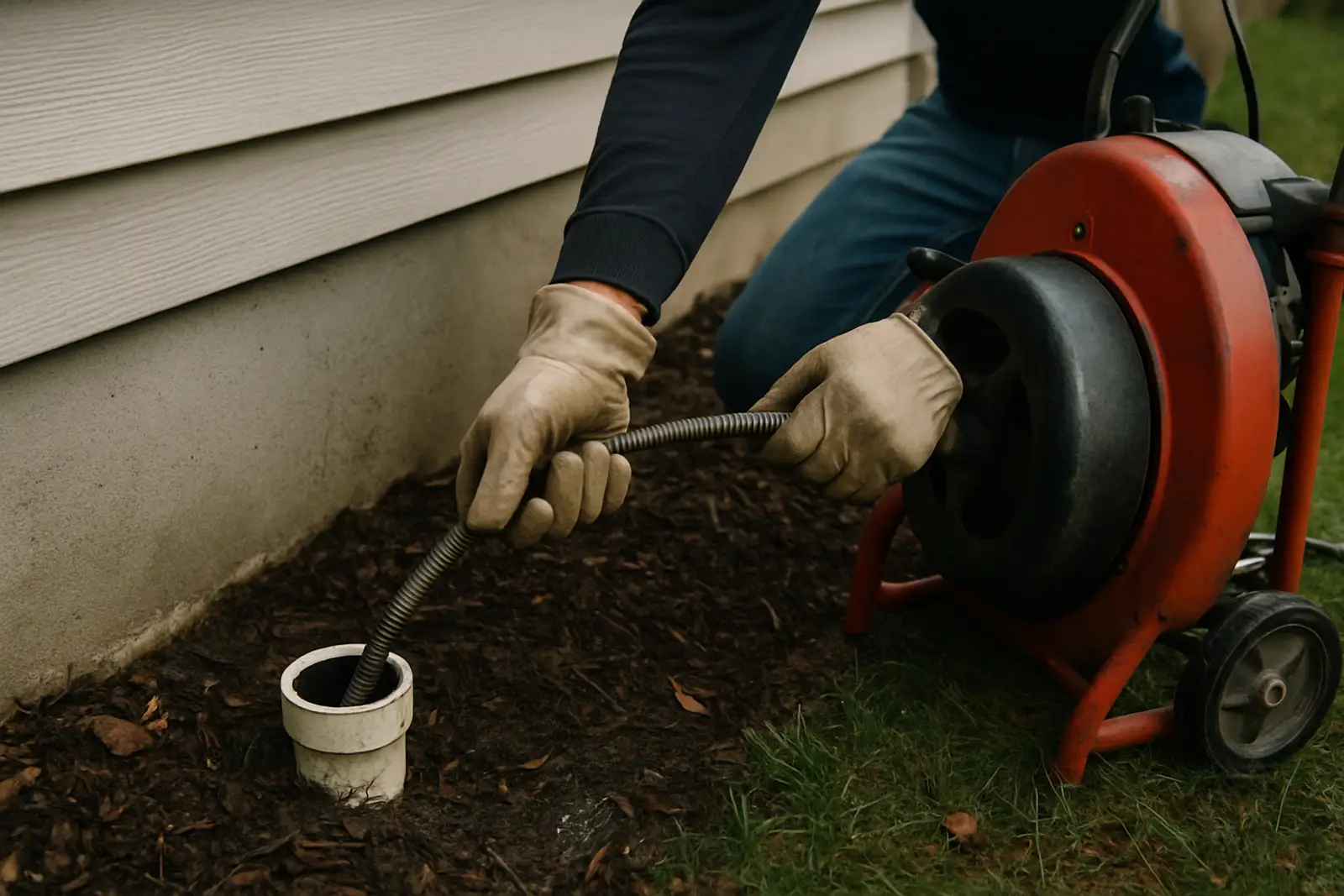
Houses and pipes in Escondido
Escondido's Old Escondido Historic District, just south of Grand Avenue, has Victorian and craftsman homes from the 1890s through the 1930s on a tidy grid of streets. Many sit on raised foundations, and their clay laterals run to street or alley mains beneath mature trees. Roots and shifted joints are the most common reasons those lines back up, and the plumbing inside has usually been altered several times over the decades.
Around the historic core, mid-century neighborhoods filled in during the 1950s and 1960s with single-story homes on slabs and raised foundations, many with clay laterals and cast iron or galvanized drains inside. Then, from the 1970s through the 1990s, the city spread up the surrounding hills with larger homes on sloping lots: the Kit Carson area, Felicita, the neighborhoods toward San Pasqual Valley and the ridges east of downtown. Laterals on those lots can run long and steep, and solids tend to settle where the grade flattens near the street.
Escondido's edges are still semi-rural. Avocado and citrus groves, horse properties and large lots ring the city, and many of those homes are on septic systems rather than city sewer. A backup on one of those properties may mean a full tank, a blocked baffle or a saturated leach field rather than a clogged line.
The city has a large rental stock, many older apartment complexes near Escondido Boulevard and a big multigenerational population. Busy kitchens and shared laterals make grease and wipes common causes of main line clogs.
Inland Escondido is hotter and drier than the coast in summer and cooler at night in winter, and irrigated groves and gardens keep roots active much of the year.
Who handles what in Escondido
The City of Escondido maintains its public sewer system and treatment facility. Each owner maintains the lateral running from the house to the public main. Properties outside the sewer service area use private septic systems, which the owner maintains entirely. A street-wide backup usually means the public main, so ring the city's sewer line before anyone else.
Drain problems Escondido homes see most
| Problem | Why it happens here |
|---|---|
| Roots in historic clay laterals | Old Escondido's tree-lined grid |
| Low spots on hillside laterals | Sloped lots in the hills around the valley |
| Septic backups | Grove and horse properties on the city's edges |
| Grease and wipes in shared lines | Older apartments and multigenerational homes |
| Corroded galvanized drains | Mid-century homes with original interior pipe |
| Storm infiltration | Winter rain entering cracked laterals |
Escondido drains through the year
Escondido's rainy season, November through March, can send runoff down the surrounding hills and into cracked older laterals. Septic leach fields saturate after long storms, and slow drains on septic properties are common then.
Summer is hot inland, and irrigated groves and yards keep roots growing. Fire season in late summer and fall sometimes brings evacuations, and homes left empty may return with dry traps.
What drain cleaning costs in Escondido
| Job | Typical range |
|---|---|
| Sink, tub or shower cleared | $150–$300 |
| Main line cleared from a cleanout | $225–$500 |
| Root cutting in a clay lateral | $275–$575 |
| Jetting a steep hillside line | $400–$850 |
| Camera inspection | $175–$425 |
Historic homes with roots, long hillside laterals and septic-related work sit toward the top of these ranges. Newer valley homes with plastic pipe and an accessible cleanout usually come in lower.
Before the plumber arrives
- 1
Stop the water
Pause laundry, dishes and showers.
- 2
Sewer or septic?
Grove and horse properties often drain to a tank; know which you have.
- 3
Find the cleanout
Older homes may have it by the alley; hillside homes partway down the yard.
- 4
Mention the slope
Steep lots often clog where the lateral flattens near the street.
Old Escondido
The historic district's Victorians and bungalows sit on lots with alleys and big trees. Laterals there are often a century old, and many have roots at several joints. Owners who want to keep the trees, and the district's character, usually line their laterals. During any drain visit in one of these homes, a look in the crawlspace for rusted or sagging interior drains is worthwhile.
The hills
Neighborhoods climbing the hills around the valley were built from the 1970s onward on graded lots with long driveways and terraced yards. Laterals drop steeply and then level out near the street, and that flat stretch is where clogs form. Jetting cleans it, and a camera with a locator can mark the low spot if a repair makes sense.
Groves, ranches and septic
Escondido's rural edges have avocado groves, citrus orchards and horse properties, many with septic systems. Slow drains throughout the house, gurgling, odors near the tank and soggy ground over the leach field point to the septic system. Pump the tank on schedule and keep wipes, grease and harsh chemicals out of it.
A typical Escondido call
After a wet February week, a family in a 1960s home near Escondido Boulevard finds the tub filling when the washer drains. The plumber clears the lateral from a cleanout by the front walk and pulls back roots and silt about forty feet out. The camera finds a cracked joint letting both in. The owner sets up a February root-cutting visit and asks for a price to line the clay section.
Mid-century Escondido
The neighborhoods that ring downtown, built in the 1950s and 1960s, are a mix of slab and raised-foundation homes with clay laterals outside and galvanized or cast iron inside. Galvanized pipe rusts from the inside and leaks at threaded joints, while cast iron narrows with scale. A main line clog in one of these homes often has both roots in the lateral and rough, narrowed pipe indoors. A camera look shows which to tackle first, and whether the interior pipe is worth keeping.
Apartments and shared lines
Older apartment complexes along Escondido Boulevard and Valley Parkway share laterals among many units. Grease and wipes from several kitchens and bathrooms clog those lines often. Managers who jet shared lines on a schedule and post notes about wipes prevent most backups, and tenants who report slow drains early keep small problems small.
Keeping lines clear
Schedule root cutting before spring for older laterals, jet steep lines that clog repeatedly, pump septic tanks on schedule and keep grease and wipes out of every drain.
Escondido ZIP codes
- 92025
- 92026
- 92027
- 92029
Escondido drain questions
Is my Escondido home on sewer or septic?+
Most homes in the valley are on city sewer. Many properties on the rural edges use septic. Your utility bill shows a sewer charge if you're connected.
Why does Old Escondido have root problems?+
Clay laterals laid a century ago under big street and yard trees.
Who maintains the lateral?+
The homeowner, up to the city's main. Septic systems are entirely the owner's.
Why does my hillside home clog at the same spot?+
Paper and solids settle where a steep line levels out near the street. Jetting clears that stretch.