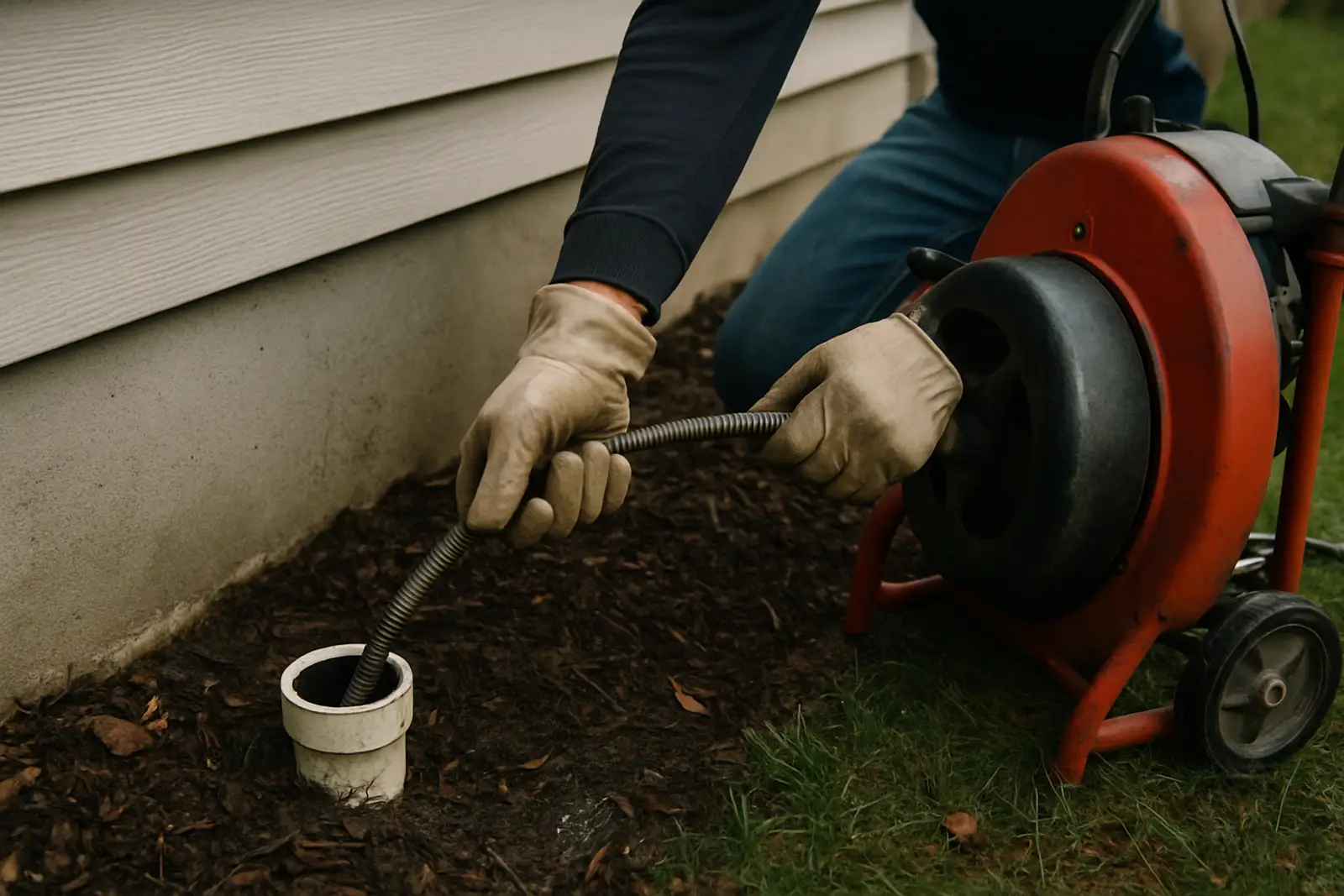
Houses and pipes in Garden Grove
Almost all of Garden Grove was built in a rush during the 1950s and early 1960s, when farmland gave way to tract after tract of three-bedroom ranch homes on concrete slabs. The laterals under those homes are mostly clay, laid in short sections that run from a cleanout near the front of the house to the main in the street. Six decades of settling, ground movement and roots from parkway and front-yard trees have opened joints in many of them, and roots are the most common reason a Garden Grove main line backs up.
Inside the house, the original drains under the slab are usually cast iron. Over sixty-plus years, cast iron rusts from the inside, building a rough crust that narrows the pipe and catches paper and grease. In many homes, a main line clog has as much to do with that narrowing as with anything the household flushed.
Garden Grove homes have been expanded more than most. Garage conversions, rear bedrooms, second bathrooms and back houses are common, and each addition tied into the original lateral somewhere, often by tapping the line under the slab or running a new branch through the side yard. Those connections are frequent clog points, especially when they join the main at a sharp angle.
Garden Grove shares Little Saigon with Westminster, and the city also has large Korean-American and Latino communities. Many households are large or multigenerational, and busy kitchens send a lot of grease and food scraps down the drains. More people on one lateral means a narrowing shows up quickly.
The city sits on flat, low ground in central Orange County. Laterals rarely have dramatic slopes, but the soil can stay damp, and a cracked lateral may take in groundwater during wet winters.
Who handles what in Garden Grove
The Garden Grove Sanitary District, run by the city, maintains the public sewer mains. Each homeowner is responsible for the lateral from the house to the main, including the connection. If several homes on your street back up at once, call the city's sanitary district line first.
Drain problems Garden Grove homes see most
| Problem | Why it happens here |
|---|---|
| Roots in 1950s clay laterals | Parkway and front-yard trees as old as the tracts |
| Scaled cast iron under the slab | Original interior drains narrowed by rust |
| Addition and back-house tie-ins | Rooms and units added over the decades |
| Grease in busy kitchens | Large and multigenerational households |
| Shared laterals with rear units | Second dwellings on the same line |
| Groundwater infiltration | Damp soil around cracked joints in wet winters |
Garden Grove drains through the year
The rainy season, November through March, is when cracked laterals take in stormwater and groundwater. Backups during or right after storms are common across the older tracts. Spring brings root growth, and late winter is the best time to schedule root cutting.
Lunar New Year, Thanksgiving and the winter holidays bring large family gatherings and heavy cooking, and kitchen and main line calls climb around each of them.
What drain cleaning costs in Garden Grove
| Job | Typical range |
|---|---|
| Sink, tub or shower cleared | $150–$300 |
| Main line cleared from a cleanout | $225–$500 |
| Root cutting in a clay lateral | $275–$575 |
| Descaling cast iron under the slab | $400–$900 |
| Camera inspection | $175–$425 |
Homes without a cleanout, lines with heavy roots and properties where a back house or several additions share the lateral sit toward the top of these ranges. A simple tract home with an accessible cleanout usually lands lower.
Before the plumber arrives
- 1
Stop running water
Tell everyone in the main house and any back unit.
- 2
Find the cleanout
Look by the front wall, the driveway or the parkway.
- 3
List the additions
Mention garage conversions, rear rooms and back houses.
- 4
Protect floors
Move rugs and belongings away from the lowest drain.
Tract homes, block by block
Because Garden Grove was built so quickly, homes on the same street usually share a builder, a floor plan and the same kind of pipe. If a neighbor had roots cut from their lateral last spring at forty feet, there's a good chance yours has the same problem at about the same distance. Plumbers who work the city often can predict where the cleanout sits and where the line runs before they arrive.
Back houses and garage conversions
Many Garden Grove lots have a second dwelling or a converted garage. When both buildings drain through one lateral, a clog downstream of where they meet backs up into whichever fixture is lowest, often the back unit's shower. Adding a separate cleanout where the branch joins the main makes diagnosis much faster.
A typical Garden Grove call
A family with grandparents in a converted garage finds water rising in the garage-room shower whenever the main house runs the dishwasher. The plumber clears the lateral from the front cleanout and pulls back roots and grease about forty-five feet out. The camera shows clay pipe with roots at three joints and heavy scale in the cast iron under the kitchen. The owner books cutting before spring and a lining quote.
Busy kitchens
Large family meals produce a lot of grease, rice and food scraps, and older cast iron kitchen lines catch them easily. A can for cooled grease, a sink strainer and plenty of water with the disposal prevent most kitchen calls. If the kitchen line clogs every few months, jetting cleans the walls and keeps it open much longer.
Low ground and wet winters
Garden Grove sits on flat, low ground where the soil can stay damp through the winter. Around a cracked or offset joint, that damp soil lets groundwater seep into the lateral during long storms, adding flow and carrying fine silt that settles at low spots. A line that drains fine in August and slowly in February is a good candidate for a camera look; clear water entering at a joint on the video points to a crack that lining can seal.
Selling or buying
A sewer scope during the inspection period is one of the most useful checks on any Garden Grove home. Roots, offsets and scaled cast iron are common, and the video gives a buyer a clear basis for a repair request and a seller a way to address it on their own terms.
Keeping lines clear
Schedule root cutting in late winter, check the cleanout cap before the rains, and share the rules about wipes and grease with every household on the line.
Garden Grove ZIP codes
- 92840
- 92841
- 92843
- 92844
- 92845
Garden Grove drain questions
Who maintains the lateral in Garden Grove?+
Whoever owns the house, all the way to the tap on the street main; the sanitary district handles everything beyond that.
Why do so many Garden Grove homes have roots in the line?+
Most tracts were built in the 1950s with clay laterals, and the trees planted then are now large.
Do additions cause drain problems?+
They can. Branches added later sometimes join the main at awkward angles where debris collects.
Can cast iron under the slab be fixed without breaking the floor?+
Usually. Descaling restores much of the diameter, and lining can seal what's left.