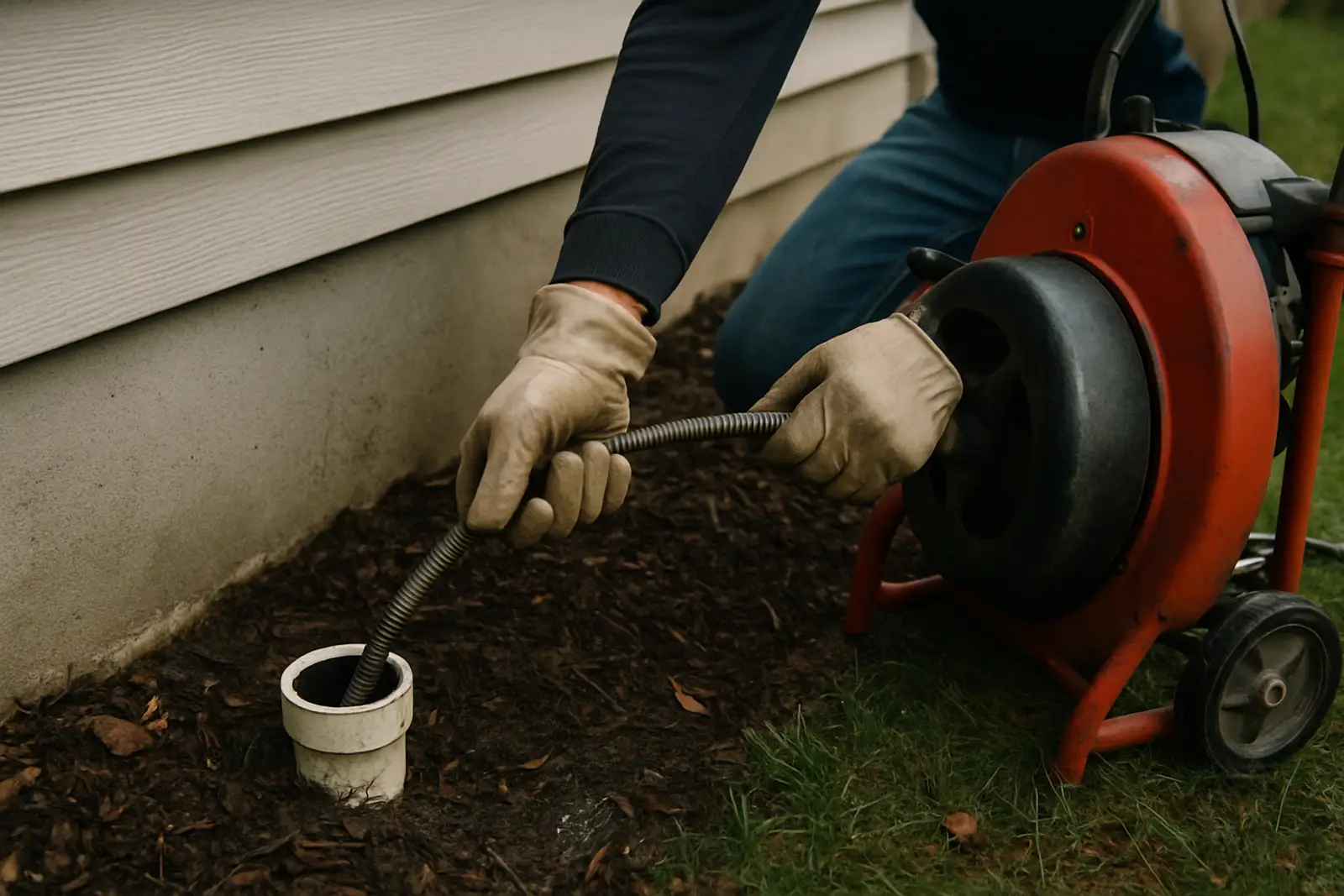
Houses and pipes in San Bernardino
San Bernardino grew as a railroad town and citrus center long before most of Southern California's suburbs existed. The neighborhoods north of downtown, around Arrowhead Avenue, the Wilson and Arrowhead Suburban Farms areas and the streets leading toward the foothills, have homes from the 1910s through the 1940s. Many sit on raised foundations, and their clay laterals run to alley or street mains under trees that were planted generations ago. Roots in those joints are the leading cause of main line backups north of downtown.
After the war, the city filled in with single-story homes on slabs, especially in the west side, Del Rosa, Muscoy and the neighborhoods spreading toward Highland and Loma Linda. These homes typically have clay laterals and cast iron drain lines inside, and the cast iron has had seven decades to scale and narrow. In many of these homes, a main line clog has as much to do with a pipe that has lost much of its diameter as with anything the household flushed.
Northern neighborhoods near Cal State San Bernardino and the foothills of the San Bernardino Mountains include newer tracts from the 1980s onward, where plastic pipe and outside cleanouts are standard. Some foothill lots slope steeply, and laterals there drop toward the street at changing grades.
A large share of San Bernardino homes are rentals, and many older homes have been split into units or have rear houses. Shared laterals, frequent tenant turnover and heavy use mean more main line calls than the age of the housing alone would predict. Landlords who keep simple records of where the line has been cleared and what the camera showed save time on every visit.
The city's dry summers and Santa Ana winds bake the soil, and the occasional heavy winter storm can send water rushing down from the mountains. Older laterals with cracked joints take in stormwater and silt during those storms, which adds to the load on lines that were already narrow.
Who handles what in San Bernardino
The San Bernardino Municipal Water Department provides water and sewer service and maintains the public mains in most of the city. The lateral that runs from a house to the public main is the owner's to maintain. If several homes on your street back up during the same storm, call the water department before booking a plumber, since the main itself may be overloaded.
Drain problems San Bernardino homes see most
| Problem | Why it happens here |
|---|---|
| Roots in century-old clay laterals | North of downtown, where trees are as old as the homes |
| Scaled cast iron under slabs | Post-war homes on the west side and Del Rosa |
| Shared laterals in divided homes | Rear houses and converted units on one line |
| Storm silt in cracked lines | Heavy winter runoff from the mountains |
| Grease in kitchen lines | Busy households and long kitchen runs |
| Steep foothill laterals | Northern neighborhoods near the mountains |
San Bernardino drains through the year
Summer in San Bernardino is long and hot, and irrigated trees keep pushing roots into old laterals from spring into fall. Santa Ana winds in autumn dry out the soil, which can open older joints slightly further before the rains arrive. Root backups in the older neighborhoods are spread through much of the year.
Winter storms are infrequent but can be heavy, and water running off the mountains can find its way into cracked laterals along with silt. Backups during or just after a big storm are common in the older parts of the city. The holidays bring the usual surge in kitchen clogs and full households.
What drain cleaning costs in San Bernardino
| Job | Typical range |
|---|---|
| Sink, tub or laundry line cleared | $125–$300 |
| Main line cleared from a cleanout | $200–$475 |
| Root cutting in an old clay lateral | $250–$575 |
| Descaling or jetting cast iron | $350–$850 |
| Camera inspection | $150–$400 |
Older homes north of downtown with heavy roots, raised-foundation homes without an outside cleanout and divided properties with shared laterals sit toward the top of these ranges. Newer northern tracts with plastic pipe usually come in lower.
Before the plumber arrives
- 1
Stop running water
Tell everyone in the main house and any rear unit to hold off.
- 2
Find the cleanout
In older homes it may be under the house or near the alley; in newer ones, by the front wall.
- 3
Clear a path
Move belongings away from the lowest drain and the cleanout.
- 4
Mention the storm
If the trouble began during heavy rain, say so; silt may be involved.
North end, west side and the foothills
The north end's older homes, between downtown and the foothills, combine raised foundations, clay laterals and very large trees. Root cutting is routine there, and many owners eventually line their laterals to stop the cycle. On the west side and in Del Rosa, post-war slab homes add cast iron to the picture, and a camera inspection often shows both roots in the lateral and scale in the interior drains.
In the newer neighborhoods near the university and along the foothills, homes have plastic pipe and fewer structural problems. Their calls are usually kitchen grease, wipes and laundry lint, plus the occasional low spot on a sloped lot.
A typical San Bernardino call
After a heavy February storm, the tenant in a rear house behind a 1930s home near Arrowhead Avenue reports that the shower is filling with muddy water. The plumber opens a cleanout near the alley and clears a mix of roots and silt about thirty-five feet out. The camera shows clay pipe with roots at three joints and a crack where soil has been washing in. The owner books root cutting for late winter and gets a quote to line the shared lateral, since both houses depend on it.
Raised foundations and older interiors
Many of the city's oldest homes sit on raised foundations, with cast iron or galvanized drains running under the floor before joining the clay lateral. Over the decades, those interior lines can rust, sag or separate at joints. Trouble under the house tends to announce itself late, as a damp smell in a closet or a floorboard that gives a little. During any drain visit in an older home, it's worth asking the plumber to take a look in the crawlspace.
Cast iron that has lost its diameter
In post-war slab homes, the cast iron under the floor rusts from the inside, building a crust that narrows the pipe and roughens its walls. A four-inch line can lose a surprising amount of its opening over seventy years. Descaling with a cutting head restores much of it, and a camera shows whether the remaining pipe is sound enough to keep or should be lined.
Keeping lines clear
Schedule root cutting before spring if your line has had roots, check that outdoor cleanout caps are tight before winter storms, keep grease and wipes out of the drains and, in divided properties, share the same rules with every household that uses the line.
San Bernardino ZIP codes
- 92369
- 92401
- 92404
- 92405
- 92407
- 92408
- 92410
- 92411
- 92415
San Bernardino drain questions
Who repairs the lateral in San Bernardino?+
The property owner, up to the public main. The city's municipal water department handles the mains themselves.
Why do older San Bernardino homes back up so often?+
Clay laterals with open joints, large old trees and, in post-war homes, cast iron that has narrowed with seventy years of scale.
Can silt really block a sewer line?+
Yes. Storm runoff carries soil into cracked laterals, where it settles at low spots and catches paper. Jetting clears it; lining stops it coming back.
What should landlords do?+
Scope older lines between tenants, note where roots or scale were found, and post a short note about wipes and grease in each unit.