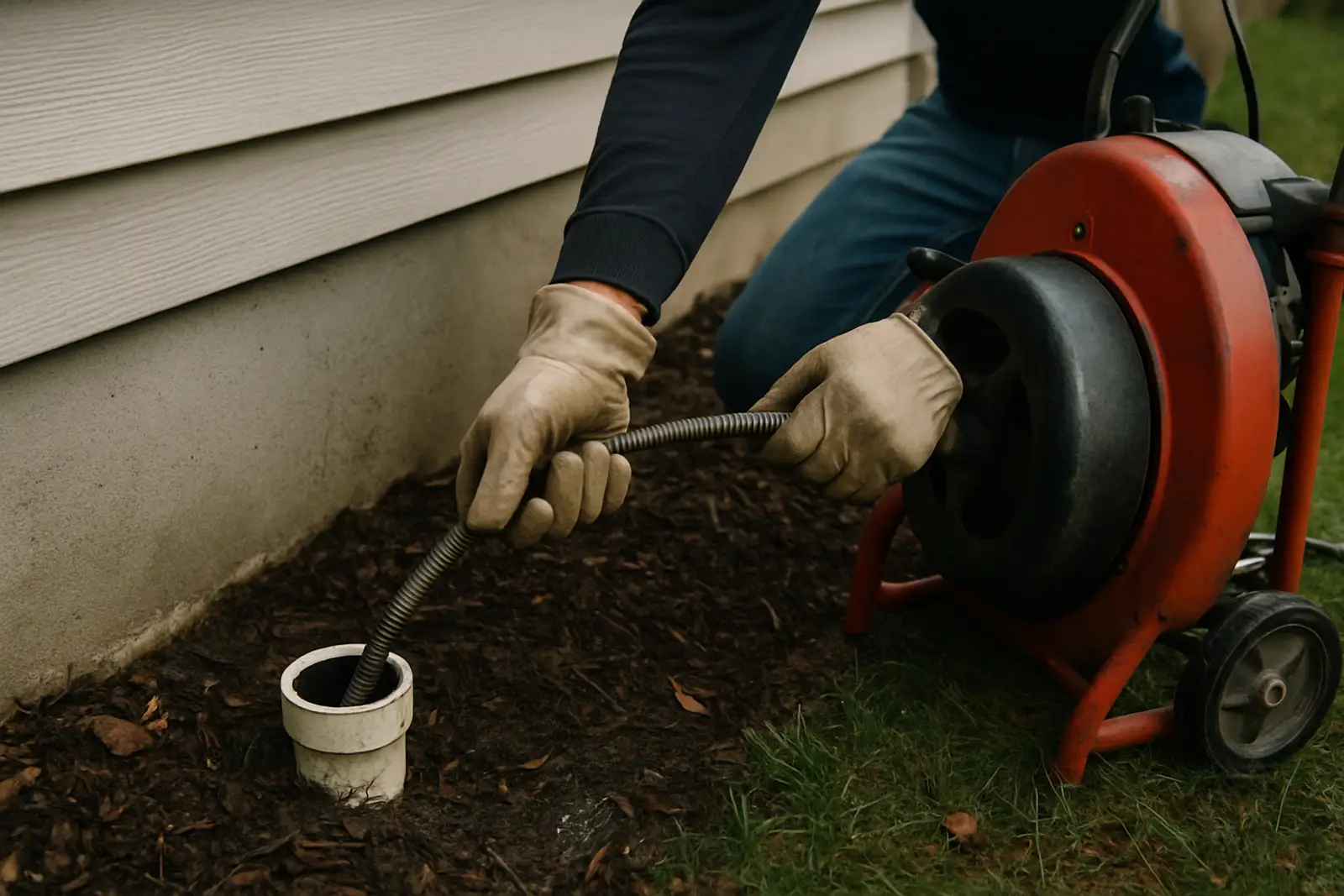
Houses and pipes in Thornton
Original Thornton, the 1950s and 1960s neighborhoods between Washington Street and I-25 south of 104th Avenue, was built as one planned town with small brick ranches, partial basements and clay or cast iron laterals.
The middle of the city, around Thornton Parkway, 120th Avenue and Northglenn's border, filled in through the 1970s and 1980s with bi-levels, tri-levels and ranches that mostly have basements or garden levels.
North Thornton, from 136th Avenue up past E-470 toward 168th, has been built since the late 1990s and is still growing, with PVC drains, finished basements and many sewage ejector pumps.
Much of the city sits on clay soils that swell after rain and snowmelt and shrink in dry spells, which moves slabs, basement floors and buried pipe.
Thornton is mostly a commuter city for Denver and Boulder, with a lot of young families, multigenerational households and rental homes in the older south end.
Who handles what in Thornton
Thornton's city utility provides sewer service across most of the city, with wastewater treated regionally by Metro Water Recovery. A few edge areas are served by districts. Thornton homeowners are responsible for their own sewer service line all the way out to the city main.
Drain problems Thornton homes see most
| Problem | Why it happens here |
|---|---|
| Roots in clay laterals | 1950s and 1960s south Thornton |
| Shifted joints and bellies | Expansive clay soil |
| Ejector pump failures | Newer homes with basement bathrooms |
| Basement floor drain backups | Bi-levels and full basements |
| Wipes and grease | Busy family households |
| Frozen drains | Garages and exterior walls in arctic cold |
Thornton drains through the year
Spring snowmelt and late spring storms soak the clay soil, and roots in older laterals push hardest from May through July. That is when south Thornton basements see the most backups.
January and February cold snaps freeze drains and supply lines in garages, crawlspaces and the outside walls of bi-levels.
What drain cleaning costs in Thornton
| Job | Typical range |
|---|---|
| Sink, tub or toilet cleared | $135–$285 |
| Main line cleared from a cleanout | $205–$455 |
| Root cutting | $270–$605 |
| Hydro jetting | $350–$830 |
| Sewer scope inspection | $140–$285 |
| Ejector pump service | $245–$590 |
North Thornton PVC lines usually clear fast. Root-packed clay in the original neighborhoods, lines shifted by swelling soil and ejector pump repairs take more time.
Before the plumber arrives
- 1
Stop running water
Hold off on laundry, dishes and showers until the line is open.
- 2
Look downstairs
Water at the basement or lower-level floor drain means the main is blocked.
- 3
Listen for the pump
If a basement bathroom has an ejector pump and the alarm is beeping, stop using fixtures down there.
- 4
Locate the cleanout
Usually in the utility room, under the stairs or outside near the front foundation.
The original planned town
Thornton began as a single development laid out by a Denver builder in the early 1950s, sold to returning veterans and young families who wanted a new house with a yard north of the city. Those small brick ranches between Washington Street and I-25 were built quickly and on a budget, with clay tile sewer laterals and many partial basements. Seventy years later, the ash, elm and cottonwood trees planted in those front yards are full grown, and their roots have found nearly every joint. Roots are the number one reason for main line calls in this part of the city.
Many of these homes have been added onto over the decades, sometimes with a basement bathroom or laundry tied into the old lateral. A line sized and laid for a two bedroom ranch now carries a lot more water than its builders expected.
Bi-levels and tri-levels
The neighborhoods that filled in during the 1970s and 1980s are full of bi-level and tri-level homes, a style common all along the northern Front Range. The lower level usually holds a family room, a bedroom or two, a bathroom and the laundry, with a floor drain in the utility area. Because that floor drain sits near the bottom of the plumbing, it is where wastewater first shows up when the main clogs. Homeowners often notice a gurgle in the lower toilet or water around the furnace before anything happens upstairs.
Swelling clay under the city
Like much of Adams County, Thornton sits on clay soils that swell when they get wet and shrink when they dry. Over years of snowmelt, storms and dry summers, that movement heaves basement slabs and pushes on buried pipe. Clay and cast iron laterals can separate at the joints or sag into low spots, called bellies, where paper and grease settle. A camera inspection after clearing the line shows whether the problem is a simple clog or a pipe that has moved.
North Thornton and ejector pumps
North of 136th Avenue, neighborhoods like Eagle Creek, Cobblestone Ranch, Trailside and the newer areas along E-470 and toward 168th were built with PVC drains, cleanouts outside the front of the house and finished basements. Because many of those basements have a bathroom set below the level of the sewer, the builder installed a sealed basin with a sewage ejector pump. When the pump fails or a float sticks, the basement bathroom backs up even though the main line is fine. Wipes, paper towels and toys are the usual culprits, and pumps simply wear out after a decade or more.
A typical Thornton call
On a Saturday morning in June, a family in a 1958 ranch near Eppinger Boulevard sees water pooling around the floor drain by the water heater after running the washing machine. The plumber opens the cleanout in the basement, runs a cable with a root cutting head and pulls back a mat of fine roots about forty feet out, near the old ash tree in the front yard. A camera shows a cracked clay joint at that spot. The homeowner gets a quote for a spot repair and books a follow up jetting in a year.
Winter cold on the plains
Thornton sits on open ground north of Denver where arctic air settles in on clear winter nights. Drains in attached garages, laundry lines on exterior walls and pipes in crawlspaces under additions are the first to freeze. A frozen drain line can look exactly like a clog, with water backing up in a sink or washer. Keeping the garage door closed, insulating exposed pipe and letting a faucet drip when temperatures fall below zero prevent most of these calls. A frozen line should be thawed with gentle heat, never an open flame.
Big households, heavy use
Thornton has a lot of large families, multigenerational homes and rentals shared by several adults. More people means more showers, more laundry and more cooking, all running through the same lateral. Grease from daily cooking, hair from several bathrooms and wipes flushed by kids are steady sources of clogs. A strainer in every shower, a can for cooking grease and a rule against flushing wipes cut down on calls a great deal.
Restaurants and shopping centers
The shopping centers along 104th Avenue, Thornton Parkway, 120th Avenue and around the Thornton Town Center redevelopment hold a long list of restaurants, from taquerias and pho shops to chain grills. Commercial kitchens need their grease interceptors pumped on schedule and their lines jetted regularly, especially in the older strip centers where sewer lines are as old as the neighborhoods around them.
Buying a home in Thornton
Sewer scopes are a routine part of buying a house across the Denver metro, and in Thornton they are especially useful on homes built before 1980. Ask the inspector to run the camera all the way to the main, watch the full video and look for roots, offset joints and bellies. In newer homes, ask about the age of any ejector pump and whether it has an alarm. A repair quote in hand before closing gives you room to negotiate.
What to tell a Thornton plumber
Share your neighborhood and the year the home was built, whether it's a ranch, bi-level or two-story with a basement, and whether there is an ejector pump. Say where the water appeared, whether more than one drain is slow and whether large trees grow near the sewer path. Mention if the problem started after a storm, after snowmelt or during a cold snap.
Thornton ZIP codes
- 80229
- 80233
- 80241
- 80260
- 80602
Thornton drain questions
Who handles sewer in Thornton?+
The City of Thornton handles sewer for most addresses, with treatment through Metro Water Recovery. Everything from your house out to that main, the lateral included, is yours to maintain.
Why does my bi-level back up at the lower floor drain?+
The lower floor drain is the lowest opening in the house, so when the main line clogs, wastewater from upstairs fixtures comes out there first.
How often should an ejector pump be checked?+
Test the alarm and listen to the pump run a couple of times a year. Most pumps last ten to fifteen years, and wipes are the most common reason they fail early.
Do I need a sewer scope to buy in south Thornton?+
It's strongly worth it. Clay laterals from the 1950s and 1960s often have roots, cracks or joints shifted by soil movement.