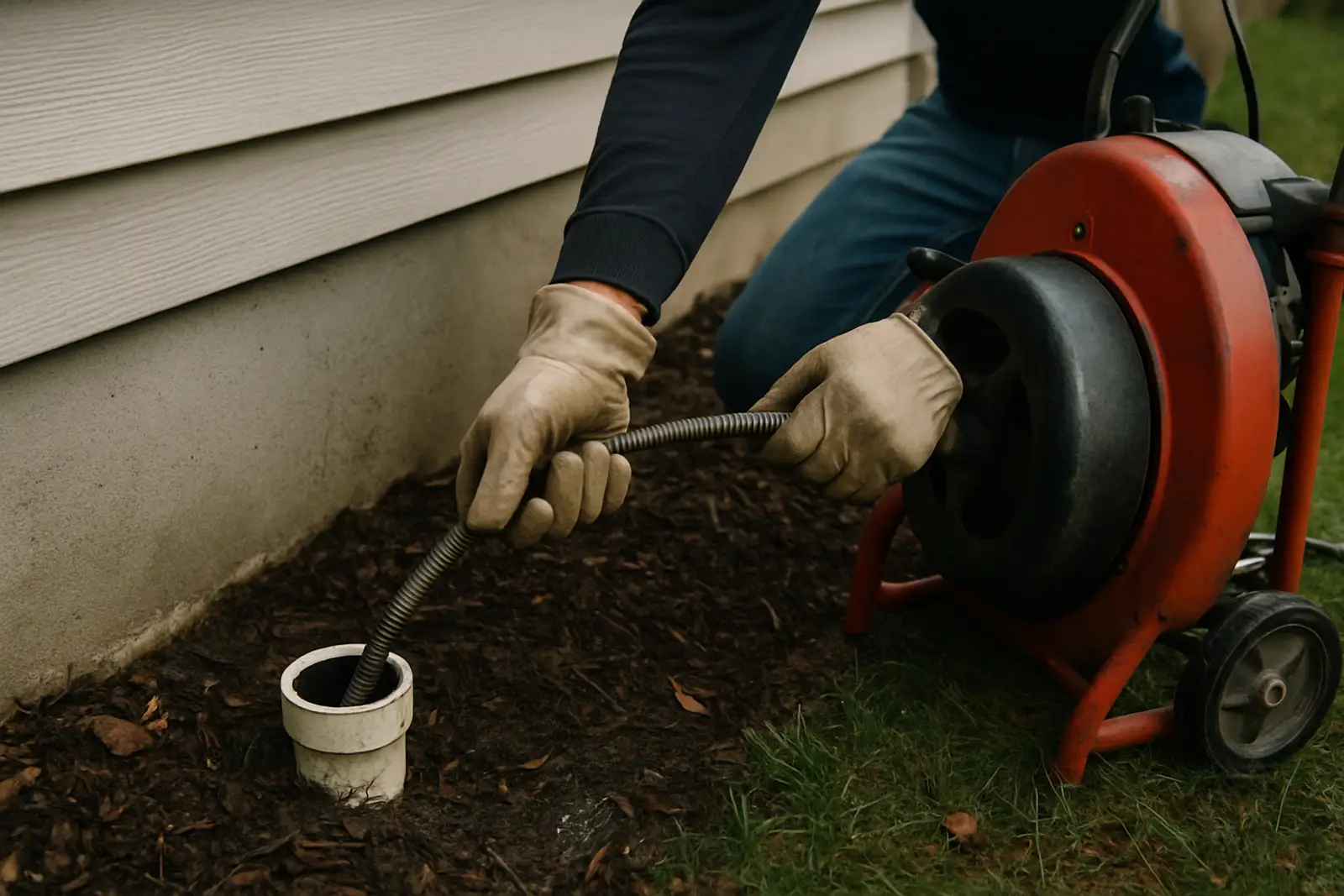
Houses and pipes in Glendale
Glendale's flatlands, south of the 134 and around Brand Boulevard, were built up from the 1910s through the 1960s. Spanish revival bungalows, duplexes and courtyard apartments from the 1920s sit beside dense apartment buildings from the 1950s and 1960s. Clay laterals run to street mains beneath mature trees, and many buildings share a single lateral among several units. Wipes, grease and roots keep those shared lines busy.
North of the 134, neighborhoods like Rossmoyne, Verdugo Woodlands, Sparr Heights and Montrose climb into the foothills with homes from the 1920s through the 1960s on larger, often sloping lots. Clay laterals run down to the street at changing grades, under oaks, sycamores and pines. Roots and low spots where the slope flattens are the usual culprits.
The hillside neighborhoods, Chevy Chase Canyon, the Adams Hill area and the streets above Kenneth Road, have homes on steep lots, some with very long laterals, sewage pumps or tight access. Each job there is a little different, and plumbers who work the canyons know where the trouble spots tend to be.
Glendale has a large Armenian-American community and many multigenerational households, and big family gatherings test kitchen and main lines, especially around holidays.
Like much of the San Fernando Valley's edge, Glendale felt the 1994 Northridge earthquake and its many aftershocks. Older clay laterals throughout the city can show offsets on camera from that and earlier ground movement.
Who handles what in Glendale
Glendale Water & Power provides water, and the city's public works department maintains the public sewer mains. The lateral running from each building to the main is the owner's to maintain. In apartment buildings, the building owner is responsible for shared laterals. If several buildings on your street back up together, call the city first.
Drain problems Glendale homes see most
| Problem | Why it happens here |
|---|---|
| Roots in foothill clay laterals | Oaks, sycamores and pines in Rossmoyne, Verdugo Woodlands and Montrose |
| Shared lines in flatland apartments | Many households on one lateral south of the 134 |
| Low spots on sloped lots | Laterals that flatten near the street |
| Earthquake offsets | Older clay joints shifted by ground movement |
| Grease in busy kitchens | Large households and big gatherings |
| Steep or pumped hillside lines | Canyon homes with long laterals or ejector pumps |
Glendale drains through the year
Glendale's rainy season, roughly November through March, can send runoff down the foothills and into cracked laterals. Backups after the first big storms are common in older neighborhoods. Spring brings root growth on the tree-shaded foothill streets.
The holidays and big family occasions bring heavy cooking and full houses, and kitchen clogs climb from Thanksgiving through New Year's and around spring celebrations. Fire season in the hills can mean evacuations; homes left empty may come back with dry traps.
What drain cleaning costs in Glendale
| Job | Typical range |
|---|---|
| Sink, tub or shower cleared | $150–$325 |
| Main line cleared from a cleanout | $225–$550 |
| Root cutting in a foothill lateral | $275–$650 |
| Hydro jetting a long or sloped line | $400–$950 |
| Camera inspection with locating | $175–$450 |
Hillside homes with steep or long laterals, older homes without a cleanout and apartment buildings with shared lines sit toward the top of these ranges.
Before the plumber arrives
- 1
Stop running water
In a building, let other units know.
- 2
Find the cleanout
Check near the front steps or driveway; hillside homes may have one partway down the slope.
- 3
Plan for parking
Steep, narrow streets in the hills make truck access tricky; tell the plumber where to stop.
- 4
Mention any pump
Some hillside homes use a sewage ejector; say if yours does.
Flatland apartments and courtyard buildings
South Glendale's apartment buildings and 1920s courtyard complexes often have several units feeding a single lateral. When that line slows, the ground-floor units see water first, even if an upstairs neighbor caused the clog. Building owners who jet shared lines on a schedule, keep the main cleanout accessible and post notes about wipes and grease prevent most emergency calls.
Rossmoyne, Verdugo Woodlands and Montrose
These foothill neighborhoods are known for their tree canopy, and that canopy sits on top of seventy- and eighty-year-old clay laterals. Root cutting every year or two is common, and many owners have lined their laterals to end the cycle without touching the trees. Montrose, with its small-town shopping street, has older homes on flatter lots with similar pipe.
Canyon homes
In Chevy Chase Canyon and the steeper hillside streets, laterals can run a long way down or across a slope, and some homes sit below the main with an ejector pump. A pump failure looks like a clog, but the fix is replacing or repairing the pump rather than clearing the line. Pumps usually have an alarm; if yours sounds, stop using water and call.
A typical Glendale call
In April, a Verdugo Woodlands homeowner hears the downstairs toilet gurgle whenever the upstairs shower drains. The plumber clears the lateral from a cleanout near the front steps and pulls back oak roots about sixty feet down the slope, where the line levels out near the street. The camera shows roots at three joints and an old offset. The homeowner chooses lining before next spring.
Big family gatherings
Large holiday meals and celebrations mean a lot of grease and a lot of flushing in a short time. A jar for cooled grease by the stove, a strainer in the sink and a reminder about wipes in every bathroom keep a family party from ending with a plumbing call.
Older interiors on raised foundations
Many of Glendale's 1920s homes and courtyard buildings sit on raised foundations, with cast iron or galvanized drains running under the floor before joining the lateral. Those interior lines rust and sag over a century, and a slow leak under the house may go unnoticed until a floor softens or a closet smells musty. During any drain visit in an older building, it's worth asking the plumber to look in the crawlspace. Catching a sagging section early is far cheaper than replacing a rotted subfloor.
Keeping lines clear
Schedule root cutting before spring for foothill laterals, check cleanout caps before the rains, test any ejector pump alarm periodically and keep grease and wipes out of the drains.
Glendale ZIP codes
- 91046
- 91201
- 91202
- 91203
- 91204
- 91205
- 91206
- 91207
- 91208
- 91210
- 91214
Glendale drain questions
Who handles sewer laterals in Glendale?+
Property owners maintain laterals; the city maintains public mains. In apartment buildings, the building owner handles the shared lateral.
Why do foothill homes back up in spring?+
Roots from oaks, sycamores and pines push into old clay joints as trees start growing.
Can earthquakes still affect my sewer line?+
Older clay laterals may have offsets from past quakes that catch debris. A camera inspection shows them.
My hillside home has a pump. What does that mean?+
If the house sits below the sewer main, an ejector pump lifts wastewater up to it. If the pump fails, drains back up even when the line is clear.