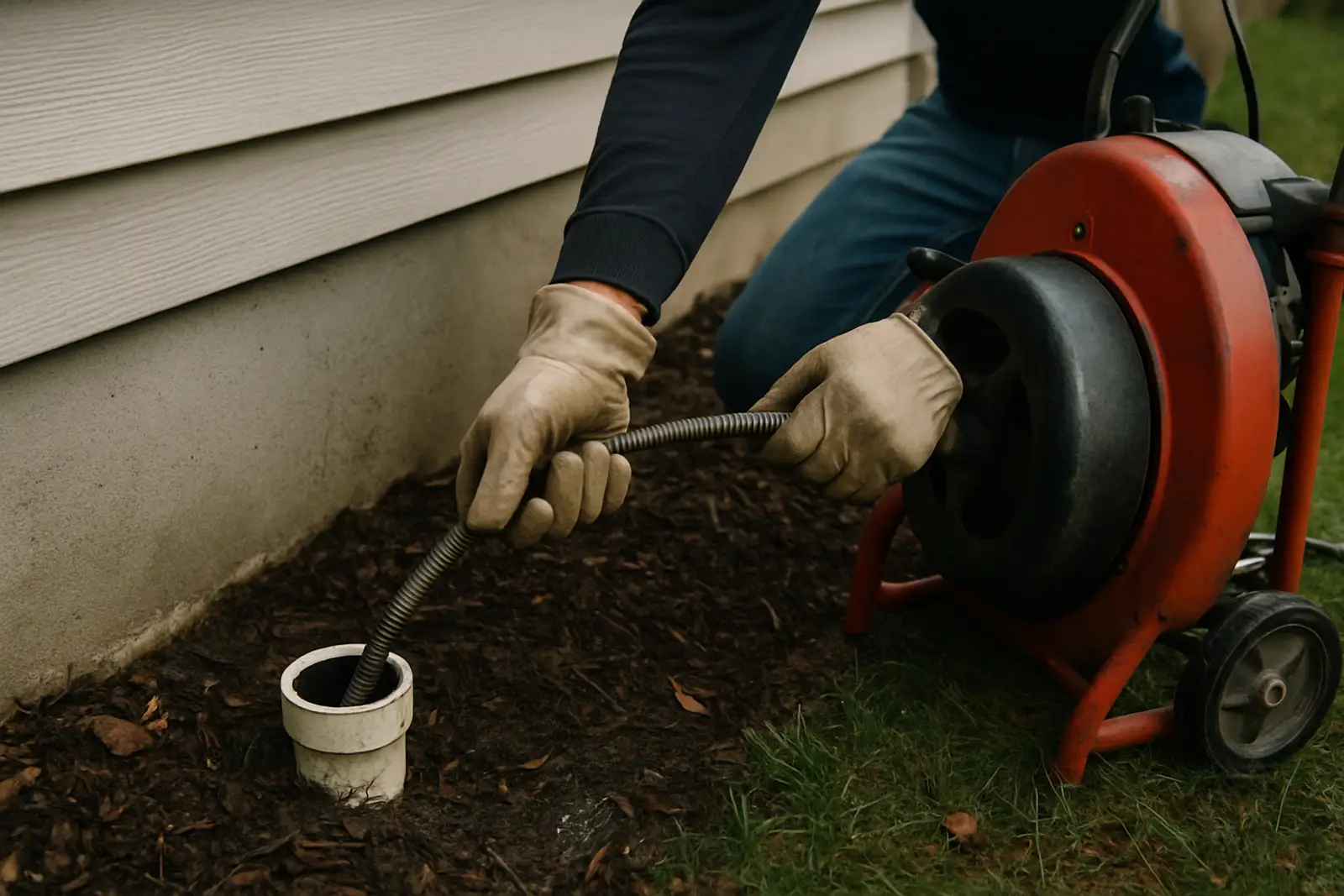
Houses and pipes in West Covina
In 1950, West Covina had about 4,500 residents. By 1960, it had more than 50,000. Tract builders filled the valley floor with ranch homes, most with clay laterals that now carry seventy years of roots, settling and wear.
The flatlands north of the 10 freeway and around the old town center hold the oldest tracts. South of the freeway, neighborhoods climb into the hills toward the South Hills and Woodside Village, with homes from the late 1950s through the 1970s on sloped lots.
Hillside homes have longer laterals that run steeply down to the street, and some sit below street level with pumps.
Big trees, including sycamores, pines and jacarandas, shade many West Covina streets, and their roots find any open joint.
Water here is hard, leaving white scale inside traps, shower drains and the tubs' drain shoes, which narrows them a little more every year.
Who handles what in West Covina
The City of West Covina maintains local sewer mains, and the Los Angeles County Sanitation Districts handle trunk lines and treatment. West Covina homeowners own the pipe from the house all the way out to the city connection, including the part under the parkway.
Drain problems West Covina homes see most
| Problem | Why it happens here |
|---|---|
| Roots in clay laterals | 1950s and 1960s tracts with big trees |
| Long hillside laterals | Homes in the South Hills |
| Joint offsets | Settling and old earthquakes |
| Grease in kitchen lines | Family cooking and holidays |
| Pump failures | Homes below street level |
| Hard water scale | Mineral buildup in fixtures |
West Covina drains through the year
Winter rain swells roots and soaks the hillsides, so main line backups peak from December through March.
Hot summers send roots searching for moisture. Holiday gatherings bring grease clogs.
What drain cleaning costs in West Covina
| Job | Typical range |
|---|---|
| Sink, tub or toilet cleared | $140–$285 |
| Main line cleared from a cleanout | $210–$455 |
| Root cutting | $275–$600 |
| Hydro jetting | $350–$800 |
| Camera inspection | $160–$400 |
Flatland homes with a cleanout and light roots stay toward the bottom. Hillside laterals, pumps or heavy roots raise the cost. If your lateral runs downhill to the street, mention it, since steep or pumped lines change the equipment needed.
Before the plumber arrives
- 1
Pause water use
Stop laundry, dishes and showers.
- 2
Check the lowest drain
Water rising in a lower tub or shower means the main line is blocked.
- 3
Check the pump alarm
Homes below the street may have a sewage pump.
- 4
Find the cleanout
Front yard, side yard or near the driveway.
The flatland tracts
North of the 10 and around Glendora Avenue, West Covina's oldest tracts were built in the early 1950s. Ranch homes there almost all have clay laterals under front lawns. After seventy years, roots and offsets are common. A camera inspection is the best way to know what you're dealing with.
The South Hills
South of the freeway, neighborhoods like South Hills and Woodside Village climb into the hills. Homes there are slightly newer, from the late 1950s through the 1970s, but sit on sloped lots with longer laterals. Some homes below street level use sewage pumps. Test the pump and alarm a few times a year.
A typical West Covina call
After a January storm, a family in a 1955 home near Cameron Park notices the toilet gurgling and water rising in the shower. The plumber clears the main from the front cleanout, cutting roots from a large pine about thirty-five feet out. The camera shows cracked clay joints, and the family plans for lining.
Roots and big trees
West Covina's mature street trees are part of its charm, but their roots find clay laterals easily. Root cutting every year or two keeps lines open, and lining seals the joints for good. Avoid planting new trees directly over the sewer path.
Hard water
San Gabriel Valley water is hard, and West Covina homes show it on every faucet. The same mineral crust builds inside bathroom traps and tub drains until the opening shrinks and hair snags on it. Pulling traps every few years, scrubbing them out and keeping a hair catcher in each shower prevent most slow bathroom drains. If a tub stays slow after cleaning, the corroded drain shoe itself may need replacing.
Big households and added units
Many West Covina homes house extended families or have added units. More people mean more flow through an old lateral, and roots make that worse. If clogs become more frequent, a camera inspection shows whether the line can handle the load.
Shopping centers and restaurants
Plaza West Covina and the restaurant rows along Azusa Avenue, Amar Road and the Eastland area handle a huge volume of cooking every day, from dim sum and pho to burgers and tacos. Interceptors that are pumped on time and kitchen lines jetted every few months keep those dining rooms open. Older strip centers often share one sewer run across several tenants, so a single neglected trap can back up the shop next door.
Buying or selling
With most homes built in the 1950s, a sewer camera inspection is becoming a routine part of buying in West Covina. Roots and a couple of cracked joints are normal for that age and shouldn't scare a buyer off, but they belong in the price. Sellers who scope before listing can line the pipe or offer a credit without deadline pressure. Either way, keep the video so the next plumber can compare.
Walnut Creek wash and the valley floor
Low parts of West Covina near the Walnut Creek channel and the San Jose Creek wash sit on softer alluvial soil. Over decades, laterals there can settle unevenly, leaving a shallow belly where water stands. Paper and grease collect in the dip and the line slows a little more every year. A camera with a locator can mark the belly on the lawn, and a short dig to relay that one section often fixes a clog that keeps returning.
What to tell a West Covina plumber
Share your neighborhood, the home's age and whether it sits on a hillside or the flats. Mention big trees near the front lawn, any sewage pump and whether a back unit or converted garage shares the line. Say if the trouble started after rain, and how far out roots were found the last time the line was cut.
West Covina ZIP codes
- 91790
- 91791
- 91792
West Covina drain questions
Who maintains the sewer in West Covina?+
The city maintains local mains, and LA County Sanitation Districts handle trunk lines and treatment. Owners maintain laterals.
Why does my hillside home clog more?+
Long, steep laterals can develop low spots, and roots from hillside trees are common. A camera inspection pinpoints the problem.
Should I line my lateral?+
If roots keep coming back every year or two, lining often costs less over time than repeated cutting.
What if my pump alarm sounds?+
Stop using water and call for service. The basin can overflow quickly if the pump fails.