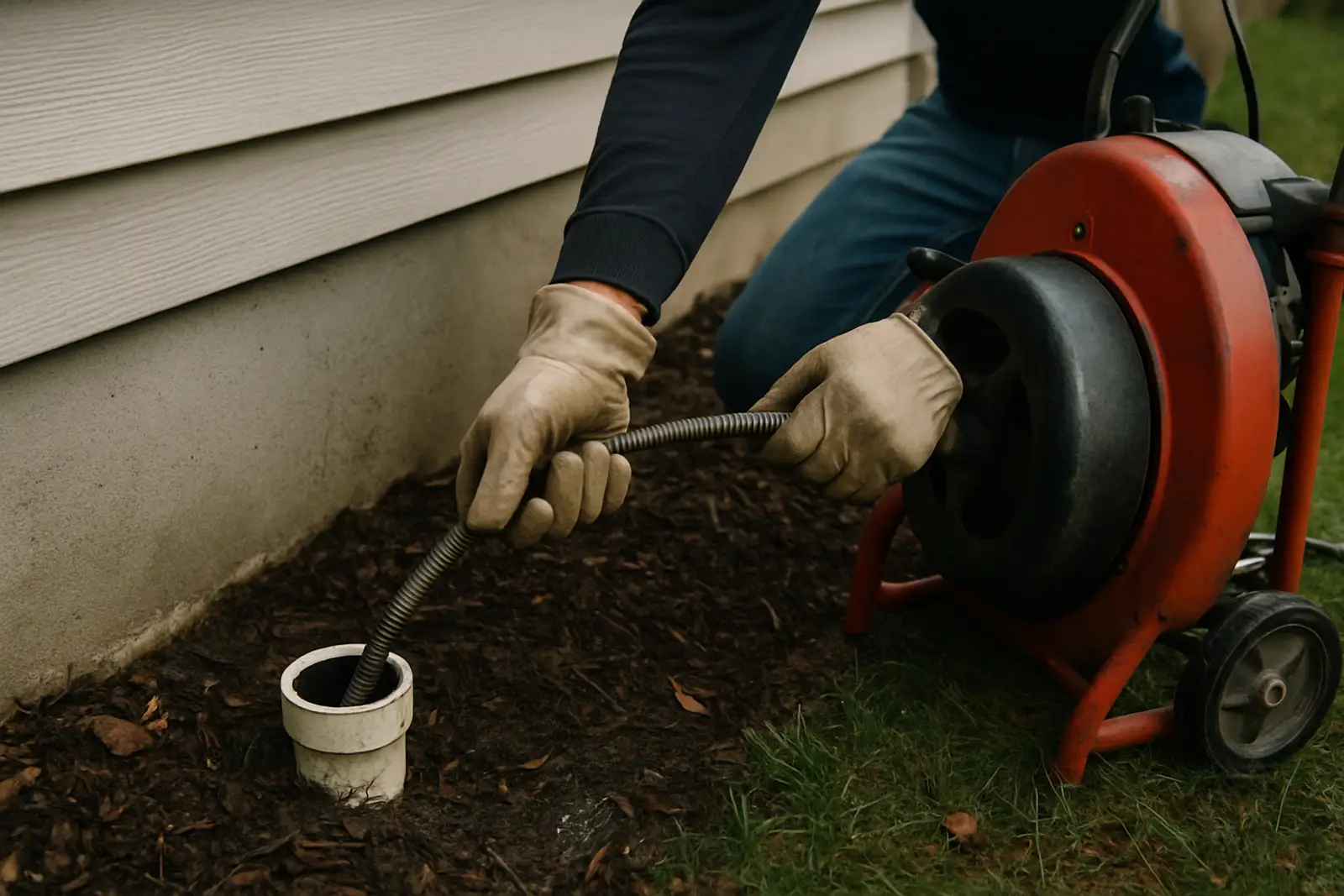
Houses and pipes in Norman
The neighborhoods around OU and downtown, including Miller, Southridge and the Chautauqua area, have homes from the 1910s through the 1940s, many on crawlspaces with clay laterals.
Neighborhoods built from the 1950s through the 1970s on the east and west sides are mostly slab ranches with cast iron drains.
Newer subdivisions toward the far west side and north toward Moore were built from the 1990s onward with PVC.
Norman's clay soils shrink and swell, and the city is in the heart of tornado alley.
The University of Oklahoma brings more than 30,000 students, and many older homes near campus are rentals.
Who handles what in Norman
The City of Norman's Utilities Department runs the sewer system and the water reclamation facility. Each Norman property owner handles the service line from the house out to the public sewer.
Drain problems Norman homes see most
| Problem | Why it happens here |
|---|---|
| Heavy use in student rentals | Neighborhoods near OU |
| Roots in clay laterals | Miller and Southridge |
| Cast iron under slabs | 1950s through 1970s homes |
| Shifted lines | Expansive clay |
| Grease and wipes | Game day crowds and busy households |
| Crawlspace drain leaks | Older homes |
Norman drains through the year
August move-in and football season bring heavy use to rentals and restaurants, and spring storms soak the clay and stress old pipe.
Winter ice storms and cold snaps can freeze crawlspace and garage drains.
What drain cleaning costs in Norman
| Job | Typical range |
|---|---|
| Sink, tub or toilet cleared | $125–$260 |
| Main line cleared from a cleanout | $185–$420 |
| Root cutting | $245–$570 |
| Hydro jetting | $320–$780 |
| Sewer camera inspection | $130–$265 |
| Cast iron under-slab assessment | $235–$515 |
Newer west side PVC clears fast. Root-filled clay near campus, cast iron under slabs and crawlspace access take longer.
Before the plumber arrives
- 1
Tell your roommates
In a student house, everyone needs to stop running water.
- 2
Renting?
Contact your landlord or property manager first.
- 3
Check the tub
In slab homes, the tub or shower usually fills first.
- 4
Find the cleanout
Look for a capped pipe near the front foundation.
Around OU
The neighborhoods near the University of Oklahoma, from the Miller and Southridge areas to the blocks around Campus Corner, have many older homes converted to student rentals. Several tenants per house, often with game day guests, push heavy loads through old clay laterals. Hair, grease, wipes and the occasional cup or bottle cap cause most backups. Landlords who jet lines each summer avoid a lot of September calls.
Game days
On OU home football Saturdays, Norman's population swells by tens of thousands. Restaurants, bars and tailgating households run at full capacity, and kitchen drains and grease traps get pushed hard. Restaurants on Campus Corner and Main Street that pump interceptors before the season avoid game day backups.
Older neighborhoods
Norman's older neighborhoods near downtown have bungalows and cottages from the 1910s through the 1940s, many on crawlspaces, with clay laterals under big elms and oaks. Roots and crawlspace leaks are common.
Postwar slab homes
As Norman grew after World War II, ranch homes on slabs spread east and west. Cast iron under those slabs is now fifty to seventy years old, and clay soil movement can crack it. Recurring slow drains throughout the house point to trouble under the slab.
Clay soil
Central Oklahoma's clay swells after rain and shrinks in droughts, moving foundations and pipe. Joints separate, and lines can sag or crack. Watering around foundations during dry spells helps stabilize the soil.
A typical Norman call
Two weeks into the fall semester, five students in a 1930s house near Campus Corner find the bathtub filling with dirty water. The plumber opens the yard cleanout and pulls out hair, wipes and roots about twenty-five feet out. On the camera, the clay has cracked at two joints. The landlord books a liner for winter break.
Tornado alley
Norman sits in one of the most tornado-prone areas in the country, and the 2013 Moore tornado struck just to the north. Storms with heavy rain saturate the clay, and severe weather can damage plumbing. After a big storm, watch for slow drains and odors.
Crawlspaces
Older Norman homes on pier-and-beam foundations have drain lines in the crawlspace that can sag or leak as the ground moves. A smell or damp soil under the house is a sign to have them checked.
Newer homes
Norman's newer subdivisions have PVC drains that flex with the clay instead of cracking, so a call from the west side usually turns out to be a kitchen line full of grease or a toilet full of wipes.
Lake Thunderbird and rural edges
East Norman stretches out toward Lake Thunderbird, and many homes there are on septic systems rather than city sewer. Slow drains on septic can mean a full tank or a struggling drain field in the clay soil. Tell the plumber if you're on septic.
Winter
Norman gets occasional ice storms and arctic blasts. Crawlspace drains and pipes in garages freeze first. Close crawlspace vents and let a faucet drip during hard freezes.
Downtown and Main Street
Norman's downtown along Main Street grew up around the Santa Fe railroad depot in the 1890s, and the oldest homes in the city sit on the blocks just north and south of it. Many have been restored, and many others are rentals. Their sewer laterals often run to alleys rather than the street, and those alley lines can be hard to reach and easy to forget. A homeowner who knows exactly where the lateral leaves the house and which way it runs saves the plumber time and saves themselves money on the first visit.
Moore and the north side
North Norman blends into Moore along the I-35 corridor, with neighborhoods of slab ranches and newer homes, many rebuilt after the tornadoes of 1999 and 2013. Rebuilt homes often have new PVC inside but may still connect to an older lateral or main. If a newer-looking house has repeated clogs, the camera often shows that the trouble is in the old section past the foundation.
Summer drought and roots
Oklahoma summers can go weeks without meaningful rain, with temperatures over 100 degrees. As the clay dries, it shrinks away from foundations and pipe, and tree roots spread out looking for moisture. A cracked joint in a sewer lateral is one of the few reliable sources of water in a dry yard, and roots can fill a pipe surprisingly fast in July and August. Owners with big trees near the line often schedule root cutting in late spring, before the hottest months.
Helpful details
Share the neighborhood, the home's age, whether it's a rental and whether it's on a slab or crawlspace. Mention whether you're on city sewer or septic and whether trees grow near the line.
Norman ZIP codes
- 73019
- 73026
- 73069
- 73070
- 73071
- 73072
Norman drain questions
Who handles sewer in Norman?+
Norman's Utilities Department. The service line from your house is yours.
Why do OU-area rentals clog so often?+
Several students in an old house send a lot of hair, grease and wipes through clay laterals not built for that use.
Does clay soil affect sewer lines in Norman?+
Yes. It swells and shrinks with moisture, shifting pipe and cracking joints over time.
Do I need a sewer scope to buy in Norman?+
It's a smart step, especially for homes built before 1980.