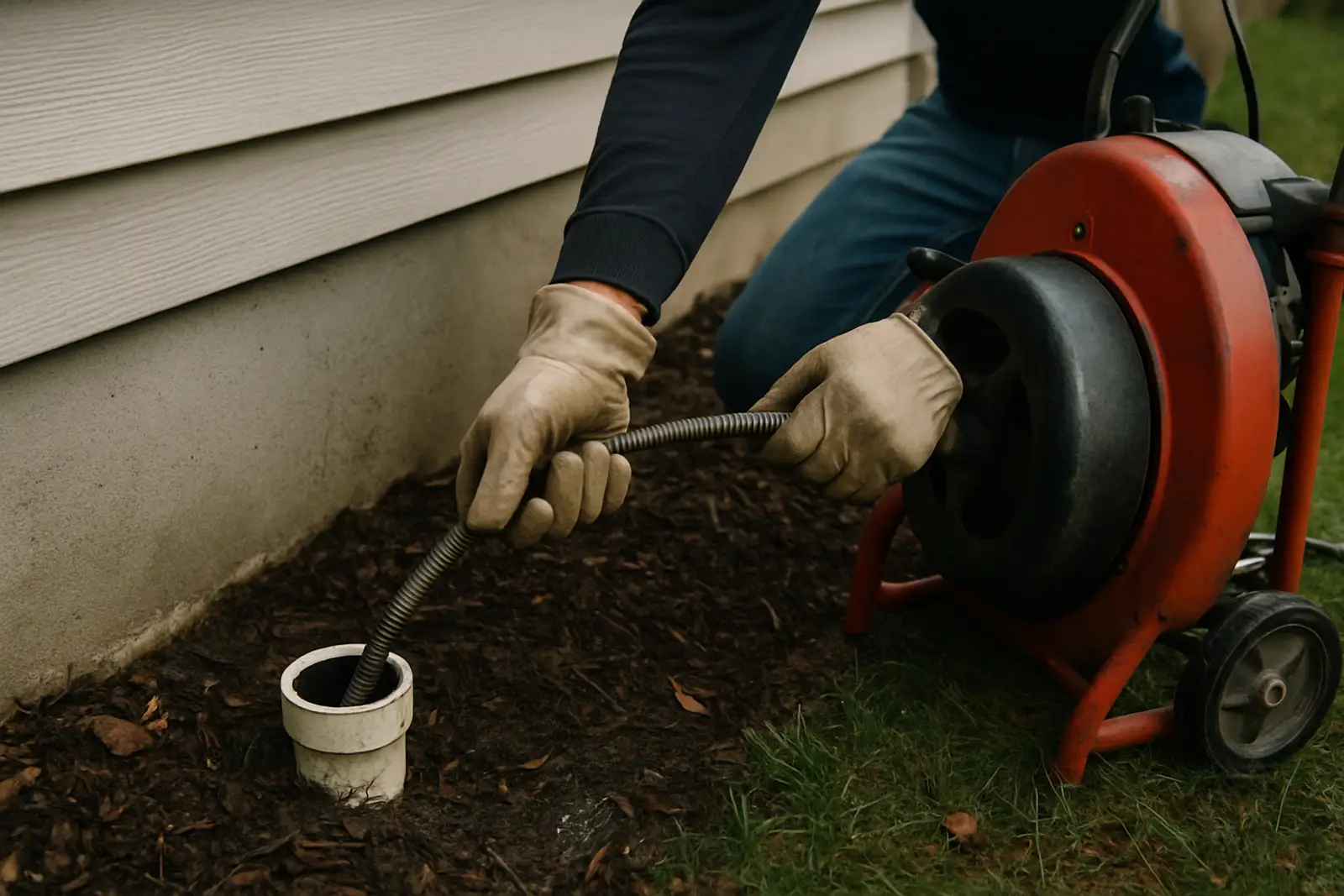
Houses and pipes in Tulsa
Maple Ridge, Swan Lake, Yorktown, Gillette and the Tracy Park area have homes from the 1910s through the 1930s, many grand, with basements or crawlspaces and clay laterals.
Brookside, Florence Park, Kendall-Whittier and the neighborhoods north of downtown, including historic Greenwood, were built from the 1910s through the 1940s with bungalows and cottages.
Midtown and east Tulsa filled in from the 1950s through the 1970s with ranches, mostly on slabs with cast iron drains.
South Tulsa, toward Jenks and Bixby, has been built mostly since the 1980s with PVC drains.
Tulsa sits along the Arkansas River on clay soils that swell and shrink with Oklahoma's wet springs and hot summers.
Who handles what in Tulsa
The City of Tulsa's water and sewer department runs the sanitary sewer system and treatment plants. A Tulsa homeowner owns the service line from the house to the city main and pays for its repairs.
Drain problems Tulsa homes see most
| Problem | Why it happens here |
|---|---|
| Roots in clay laterals | Maple Ridge, Swan Lake and Brookside |
| Cast iron under slabs | Postwar midtown and east Tulsa |
| Shifted lines | Expansive clay soil |
| Crawlspace drain leaks | Older pier-and-beam homes |
| Grease and wipes | Busy households |
| Storm infiltration | Spring storms |
Tulsa drains through the year
Spring storms soak the clay and push water into cracked lines, and summer heat and drought shrink the soil and send roots searching for moisture.
Winter ice storms and arctic blasts can freeze pipes in crawlspaces, garages and exterior walls.
What drain cleaning costs in Tulsa
| Job | Typical range |
|---|---|
| Sink, tub or toilet cleared | $125–$265 |
| Main line cleared from a cleanout | $190–$430 |
| Root cutting | $250–$580 |
| Hydro jetting | $325–$790 |
| Sewer camera inspection | $130–$270 |
| Cast iron under-slab assessment | $240–$525 |
South Tulsa PVC goes quickly. Century-old clay under big trees, cast iron under slabs and crawlspace work take longer.
Before the plumber arrives
- 1
Hold off on water
Pause showers, the washer and the dishwasher.
- 2
Where's the water?
In a slab home the tub usually fills first; in an older home with a basement, check the floor drain.
- 3
Recent storm or drought?
Both can stress clay soils and old pipe; mention which.
- 4
Find the cleanout
Usually a capped pipe near the front foundation or by the driveway.
Oil Capital neighborhoods
In the 1910s and 1920s, Tulsa called itself the Oil Capital of the World, and oil money built Maple Ridge, Swan Lake and the neighborhoods along Peoria Avenue. Grand homes on big lots, shaded by oaks and pecans planted a century ago, have clay laterals running long distances to the street. Roots have worked into many joints, and soil movement has cracked others. Lining protects mature trees and historic yards.
Brookside and Cherry Street
Brookside, along Peoria south of downtown, and the Cherry Street district, along 15th Street, have bungalows and cottages from the 1920s through the 1940s, many on crawlspaces. Old clay laterals and crawlspace drains are common trouble spots, along with roots from neighborhood trees.
Greenwood and north Tulsa
Greenwood, once known as Black Wall Street before it was destroyed in the 1921 Race Massacre, was rebuilt and is now home to a growing historic district. North Tulsa neighborhoods have older homes with aging clay and cast iron lines. Many homes have been in families for generations.
Midtown and east Tulsa slabs
Midtown and east Tulsa filled in after World War II with ranch homes on concrete slabs, many built for workers at the aviation plants and oil companies. Cast iron under those slabs is now fifty to seventy years old. Clay soil movement can crack it, and scale narrows it. Recurring slow drains are a common symptom.
Expansive clay
Tulsa's clay soils swell after spring rains and shrink in summer droughts. That movement shifts foundations and pulls sewer joints apart. Watering foundations during drought keeps the soil more stable, which also helps protect buried pipe.
A typical Tulsa call
In July, a family in a 1925 home in Maple Ridge sees water pooling around the basement floor drain after laundry. The plumber clears the main from the cleanout and pulls back thick roots from a big pin oak about fifty feet out. On the camera, the clay is cracked and one joint has shifted. They schedule a liner to avoid digging near the tree.
Pier-and-beam homes
Many older Tulsa homes sit on pier-and-beam foundations with crawlspaces. Drain lines there can sag or separate as the ground moves, and leaks can soak the crawlspace. A musty or sewer smell under the floor is a sign to have the lines checked.
South Tulsa
South Tulsa, toward Jenks and Bixby, grew from the 1980s onward with PVC drains on slabs. Those lines handle soil movement better, and calls are mostly about grease, wipes and hair.
Spring storms and the river
Tulsa's spring storm season brings heavy rain and occasional flooding along the Arkansas River and creeks like Mingo and Joe. Saturated ground pushes water into cracked lines. After big storms, watch for slow drains or odors.
Restaurants on Cherry Street and the Blue Dome
Cherry Street, Brookside, the Blue Dome District and the Pearl District have a lot of restaurants, from barbecue joints to Tex-Mex. Kitchens in older buildings avoid weekend backups by keeping interceptors pumped and lines jetted.
Winter freezes
Tulsa gets occasional ice storms and arctic outbreaks, like the February 2021 freeze. Pipes in crawlspaces, garages and exterior walls freeze first. Close crawlspace vents and let faucets drip during a hard freeze.
Kendall-Whittier and the University of Tulsa
Kendall-Whittier, east of downtown around the University of Tulsa, has bungalows and small brick homes from the 1920s and 1930s, many now rented to students or home to large families. The Whittier Square commercial strip along Route 66 has been revived with shops and restaurants. Clay laterals here are old and often crowded by trees, and the homes see heavy daily use. A jetting before the fall semester and a camera run on any house that clogs more than once a year keep most owners ahead of emergencies.
Tell the plumber
Mention your neighborhood, the home's rough age, whether it's on a slab, crawlspace or basement and whether big trees grow near the line. Say whether a storm or drought came first.
Tulsa ZIP codes
- 74015
- 74103
- 74104
- 74105
- 74106
- 74107
- 74108
- 74110
- 74112
- 74114
- 74115
- 74116
- 74117
- 74119
- 74120
- 74126
- 74127
- 74128
- 74129
- 74130
- 74131
- 74132
- 74133
- 74134
- 74135
- 74136
- 74137
- 74145
- 74146
- 74171
Tulsa drain questions
Who handles sewer in Tulsa?+
The City of Tulsa's water and sewer department runs the public system. The homeowner owns the line from the house to the main.
Why do Maple Ridge homes have root problems?+
Their clay laterals are about a century old and run under huge oaks, elms and pecans.
Is cast iron under the slab a concern in midtown?+
Often. Homes from the 1950s through the 1970s frequently have scaled or cracked cast iron under the slab.
Does a Tulsa home purchase call for a sewer camera inspection?+
Yes. Older laterals and under-slab cast iron are common and costly to repair.