Houses and pipes in Peoria
Old Town Peoria, along Washington Street near Grand Avenue, has the city's oldest homes, some dating to its farming days. Their laterals may be clay or cast iron, and mature trees near the old town center mean roots are a factor. South Peoria filled in during the 1970s and 1980s with ranch homes and two-story houses, many now old enough that their original fixtures and some laterals need attention.
Most of Peoria, though, was built from the 1990s onward. Neighborhoods like Westwing Mountain, Vistancia, Fletcher Heights and the communities along Lake Pleasant Parkway are master-planned with plastic drain lines and outside cleanouts. Drain trouble in these homes usually means grease, wipes, hair or lint rather than a failing pipe.
Peoria also has a large retirement population and seasonal residents, especially in communities near the Sun City border and Trilogy at Vistancia. Lower water use during summer absences and heavy use in winter shape when drain problems appear.
Who handles what in Peoria
The City of Peoria maintains its public sewer system, while some parts of the city are served by other water providers. Your bill names your provider. Homeowners are generally responsible for the lateral from the house to the main. In HOA communities, common areas are the association's responsibility, but your lateral is usually yours.
Drain problems Peoria homes see most
| Problem | Why it happens here |
|---|---|
| Grease in kitchen lines | Busy households and entertaining in newer homes |
| Wipes in the main line | Plastic laterals catch wipes at fittings and sags |
| Roots in Old Town laterals | Mature trees near older clay pipe |
| Scale in traps | Hard water crusts fixtures and drains |
| Dry traps in seasonal homes | Homes left empty over summer |
| Sags in 1990s neighborhoods | Settled soil in older master-planned communities |
Peoria drains through the year
Peoria's drain calls rise in winter, when seasonal residents return and holiday cooking and visitors add load. Spring training brings visitors to the area too. Summer is quieter in retirement communities but busy in family neighborhoods, with kids home and laundry running daily.
Monsoon storms in late summer can flood streets and briefly overload mains in older areas near Grand Avenue. Freezes are rare but happen occasionally on the northern edge of the city near Lake Pleasant.
What drain cleaning costs in Peoria
| Job | Typical range |
|---|---|
| Kitchen or bath line cleared | $125–$300 |
| Main line cleared from an outside cleanout | $200–$450 |
| Root cutting in an older lateral | $250–$600 |
| Jetting a grease-coated line | $350–$800 |
| Camera inspection | $150–$400 |
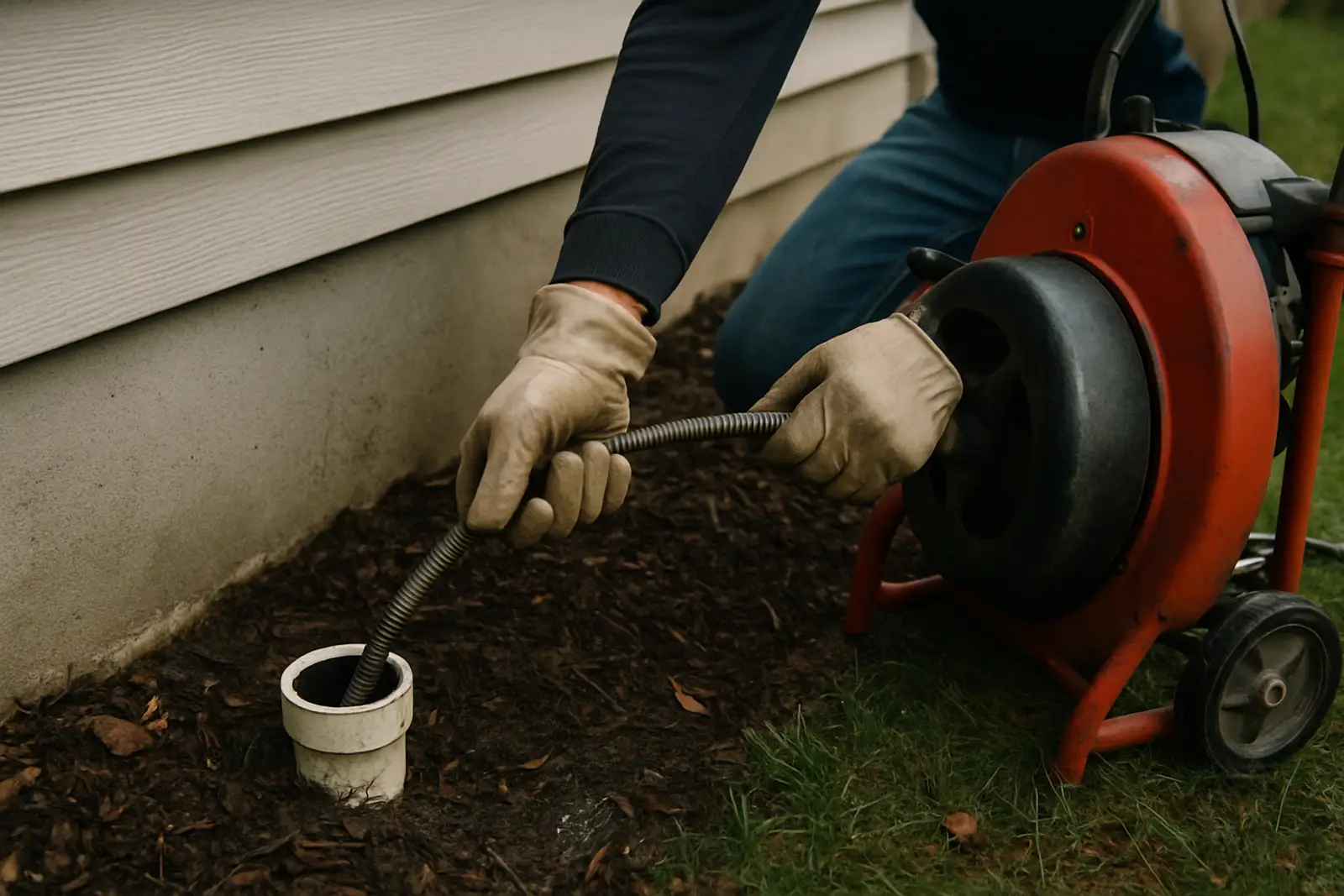
Most Peoria homes have plastic pipe and an outside cleanout, which keeps main line clearings near the low end. Old Town homes with roots and older pipe cost more. Gated community access and holiday visits can add cost.
Before the plumber arrives
- 1
Stop the water
Pause appliances and showers.
- 2
Find the cleanout
Usually outside near the front of the house, sometimes under rock landscaping.
- 3
Arrange access
Share gate codes for gated communities.
- 4
Refill traps
If you've been away and smell sewer gas, run water in every drain.
Vistancia, Fletcher Heights and Old Town
Vistancia, on Peoria's northern edge, includes family neighborhoods and an active-adult community, all built since the 2000s with modern plumbing. Fletcher Heights and other 1990s and early 2000s neighborhoods in the middle of the city are old enough that sags occasionally show up on camera. Old Town, near Grand Avenue, has the city's oldest pipe and its most frequent root problems.
A typical Peoria call
In a Fletcher Heights home, the kitchen sink backs up on Thanksgiving afternoon while relatives are visiting. The plumber clears the kitchen branch line from under the sink and pulls back grease and turkey fat that hardened in the line. The main line is flowing fine. The homeowner gets a jar for grease and a strainer for the sink and decides to have the kitchen line jetted after the holidays, since it had been slow for months.
After the line is clear
Ask the plumber what came out of the line and how far down it was. In a newer home, that answer usually points to a habit worth changing; in an older one, it may point to a sag or roots that need a follow-up visit.
Keeping traps healthy
Hard water in Peoria builds scale inside bathroom and kitchen traps. Over a few years that narrows the opening until hair and grease catch easily. Removing and cleaning traps every few years keeps drains flowing, and it's an easy add-on during any other plumbing visit. In homes that sit empty for the summer, running water through every drain on return refills traps and flushes out stagnant water before it smells.
Lake Pleasant and the far north
Homes near Lake Pleasant and in the newest northern neighborhoods sit on hilly desert land, and some lots are large. Laterals can be long and run downhill toward the street, which helps flow but lets solids settle where the slope flattens. A few properties on the far edges use septic systems, so check before assuming city sewer.
What to tell a Peoria plumber
Say which fixtures are slow, whether they're upstairs or down, and whether water is rising anywhere. Mention the community name and give the gate code if needed. If the home sat empty for the summer, say so, since dry traps and stagnant lines are common after a long absence. For older homes near Old Town, mention whether the line has had roots before.
If you're in an active-adult community, check whether the HOA keeps a list of approved contractors or requires notice before work. Some do, especially for work near common areas.
Preventing clogs in a newer Peoria home
Most drain calls in Peoria's newer neighborhoods are preventable. Scrape plates and pans into the bin before they go in the sink. Keep a trash can in every bathroom for wipes and hygiene products. Use hair catchers in showers and empty them weekly. Add a lint catcher to the washer hose. Every few years, have bathroom traps cleaned to remove hard water scale. These habits cost almost nothing and prevent most of the clogs plumbers see in homes built since the 1990s.
South Peoria's middle-aged homes
Homes built in south Peoria during the 1970s and 1980s sit between the old town and the new subdivisions. Their drains are often a mix of original and replaced pipe, and landscape trees planted when the homes were new are now large. A camera inspection after the first main line backup shows whether the problem is roots, a sag or simply buildup.
Peoria ZIP codes
- 85345
- 85381
- 85382
- 85383
Peoria drain questions
Who maintains Peoria's sewer?+
The City of Peoria maintains public sewer mains. Homeowners maintain their laterals.
Why do newer Peoria homes clog?+
Usually grease, wipes, hair or lint. Plastic pipe rarely fails on its own.
Do seasonal homes need special care?+
Run water in every drain when you return, and consider having lines checked before the busy winter season.
What about Old Town homes?+
Older laterals there can have roots and scale. A camera inspection after a backup is worth it.