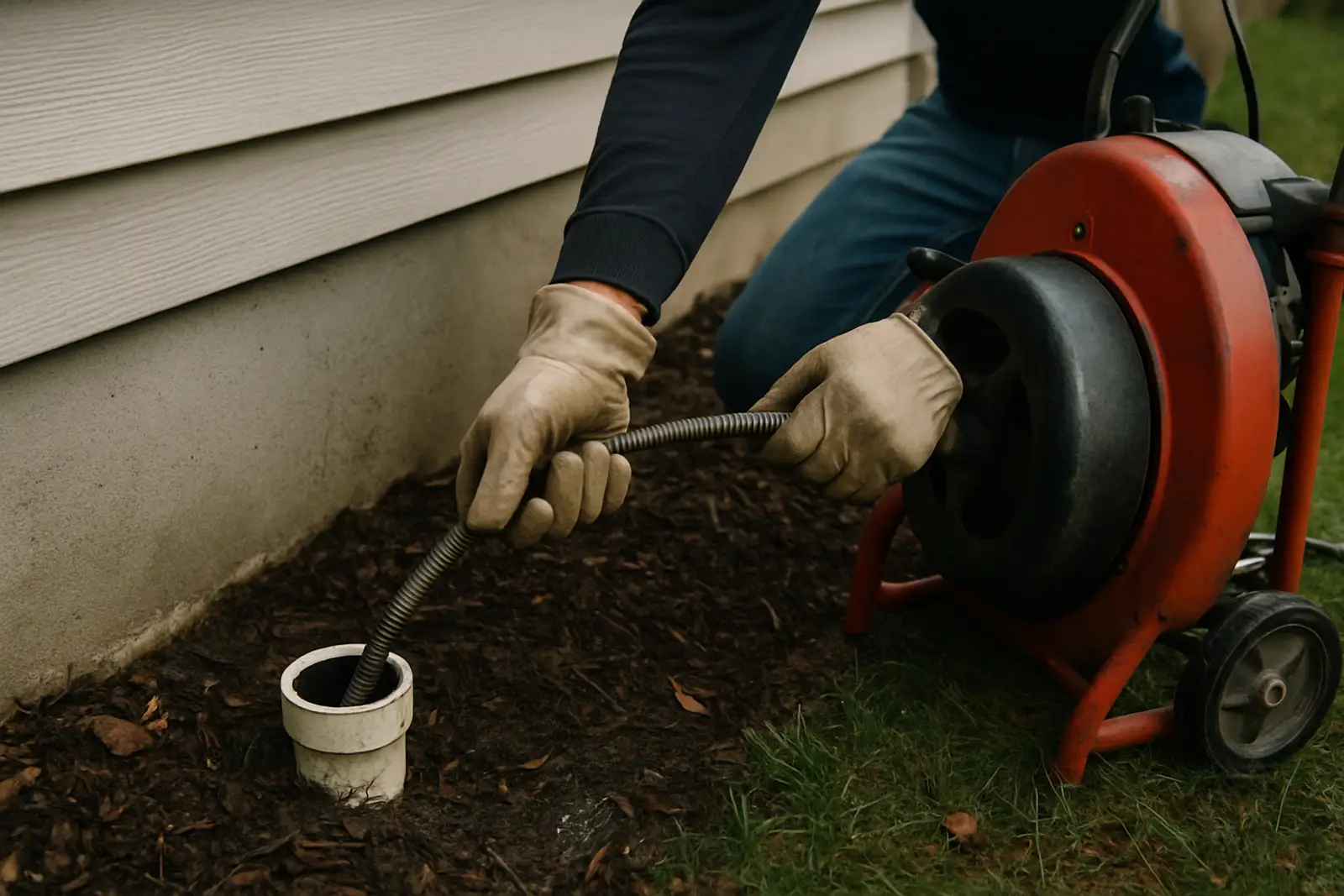
Houses and pipes in St. Paul
Summit Hill, Ramsey Hill, Cathedral Hill and Irvine Park have Victorian mansions and row houses from the 1850s through the 1910s, with basements and clay laterals.
The East Side, Payne-Phalen, Dayton's Bluff and the West Side have worker cottages, duplexes and older homes from the 1880s through the 1930s.
Mac-Groveland, Highland Park, St. Anthony Park and Como have bungalows and period revival homes from the 1910s through the 1950s.
Some St. Paul homes sit on bluffs above the Mississippi, with steep lots and long laterals.
St. Paul separated most of its combined sewers in the 1980s and 1990s, but cracked laterals still let groundwater in.
Who handles what in St. Paul
St. Paul Public Works maintains the city's sewers, and the Metropolitan Council treats the wastewater at the Metro plant on the Mississippi. St. Paul homeowners own the sewer service line from the house to the main.
Drain problems St. Paul homes see most
| Problem | Why it happens here |
|---|---|
| Roots in clay laterals | Summit Hill, Mac-Groveland and Highland Park |
| Frozen pipes and laterals | Minnesota winters |
| Steep laterals | Bluff neighborhoods |
| Duplex shared lines | East Side and Frogtown |
| Basement backups | Older homes |
| Cast iron corrosion | Century-old homes |
St. Paul drains through the year
Spring thaw floods the ground with meltwater and summer storms raise groundwater, while roots grow fastest in warm months.
Deep winter cold freezes pipes in porches, garages and exterior walls, and frost can reach shallow service lines.
What drain cleaning costs in St. Paul
| Job | Typical range |
|---|---|
| Sink, tub or toilet cleared | $135–$280 |
| Main line cleared from a cleanout | $205–$455 |
| Root cutting | $265–$605 |
| Hydro jetting | $345–$830 |
| Sewer camera inspection | $140–$285 |
| Frozen line thawing | $210–$520 |
Newer suburban-style homes go fast. Victorian homes on Summit Hill, steep bluff laterals and frozen lines take longer.
Before the plumber arrives
- 1
Stop the water
No laundry, dishes or showers for now.
- 2
Below zero?
A sudden stop during deep cold may be ice in the service line.
- 3
Duplex?
Let the other unit know to hold off on water too.
- 4
Find the cleanout
St. Paul basements usually have one where the line exits toward the street or alley.
Summit Hill
Summit Avenue, lined with Victorian mansions including the James J. Hill House and F. Scott Fitzgerald's boyhood homes, is the spine of Summit Hill and Ramsey Hill. Grand homes, row houses and carriage houses sit on streets lined with huge trees. Their clay laterals are often original, and roots are the leading cause of backups. Many big homes have been divided into apartments, adding heavy use.
The East Side
St. Paul's East Side, including Payne-Phalen and Dayton's Bluff, was built by Swedish, German, Italian and later Hmong and Latino families who worked in the breweries, rail yards and 3M's original plant. Small homes and duplexes there have old clay laterals, and some lack cleanouts.
Bluffs above the river
Dayton's Bluff, the West Side and the neighborhoods along Mississippi River Boulevard sit on bluffs. Homes on steep lots have long laterals that drop sharply. Steep runs can leave debris behind, and sandstone and limestone near the surface make digging hard.
Mac-Groveland and Highland Park
Mac-Groveland and Highland Park, near Macalester, St. Thomas and the river, have bungalows and period revival homes on tree-lined streets. Roots in clay laterals and student rentals near the colleges keep plumbers busy.
A typical St. Paul call
In early February, after a week of subzero nights, a family in a 1912 foursquare in Mac-Groveland finds the basement floor drain backing up. The plumber finds the service line frozen under the boulevard, thaws it with steam and then finds roots at a cracked joint on the camera. They book a liner for spring.
Winter
St. Paul winters are long, with weeks below zero and frost driving deep into the ground. Pipes in enclosed porches, garages and old additions freeze first. Keep the basement warm, insulate exposed pipe and leave a tap trickling during the coldest nights.
Frogtown and Rondo
Frogtown and the Rondo neighborhood, along University Avenue, have small homes and duplexes from the late 1800s and early 1900s. Rondo, a historic Black neighborhood, was cut in two by I-94 in the 1960s. Older laterals and some vacant homes mean roots and collapsed lines.
Spring thaw
When the snowpack melts, water floods into thawing ground and cracked laterals. Basements see water, and sump pumps run constantly. Moving snow away from foundations before the melt helps.
Restaurants on Grand Avenue
Grand Avenue, Selby Avenue, University Avenue's Hmong and Vietnamese restaurants and Lowertown's dining scene put a lot of grease into old lines. During the Winter Carnival and the State Fair, restaurants run at capacity, and pumping interceptors ahead of time prevents backups.
Students and rentals
St. Thomas, Macalester, Hamline, Concordia and the University of Minnesota's St. Paul campus bring students to rental houses across the city. Heavy use and old laterals mean more clogs at the start of each semester.
Owners who run a camera down the line during summer turnover catch roots before the new tenants arrive.
Como and St. Anthony Park
Como, near Como Lake and the zoo, and St. Anthony Park, near the university's St. Paul campus, have older homes on hilly, wooded streets. Long laterals and big trees mean roots.
Highland Park's postwar blocks
South of Ford Parkway, Highland Park filled in after World War II with brick Cape Cods and ramblers built for families working at the Ford assembly plant and the growing colleges. Their cast iron and clay service lines are now seventy-plus years old. With the Ford site redeveloped into the Highland Bridge neighborhood, new construction has brought heavy equipment and new connections near older lines, which can shake loose problems in aging pipe.
Alleys and rear laterals
Many St. Paul blocks have alleys behind the houses, and in some neighborhoods the sewer main runs in the alley rather than the street. The service line leaves through the back of the basement and crosses the back yard, often under a garage or a big tree. Homeowners sometimes don't know which way their line runs until there's a problem. Knowing whether the cleanout faces the street or the alley saves the plumber time, and a camera run can map the line so future repairs are easier to plan.
What to tell the plumber
Share the neighborhood, the home's age, whether it's a duplex or rental and whether the lot is steep. Mention whether it's been very cold or whether a thaw came first.
St. Paul ZIP codes
- 55101
- 55102
- 55103
- 55104
- 55105
- 55106
- 55107
- 55108
- 55114
- 55116
- 55117
- 55130
- 55155
St. Paul drain questions
Who handles sewer in St. Paul?+
St. Paul Public Works maintains the city sewers, and Met Council treats wastewater. The service line is the owner's.
Why do Summit Hill homes have root clogs?+
Their clay laterals are often more than a century old and run under very large boulevard trees.
Can a service line freeze in St. Paul?+
Yes. Frost can reach several feet down under plowed driveways and boulevards in a hard winter.
Is a sewer scope worth it before buying in St. Paul?+
Yes, especially for Victorian and early twentieth-century homes.