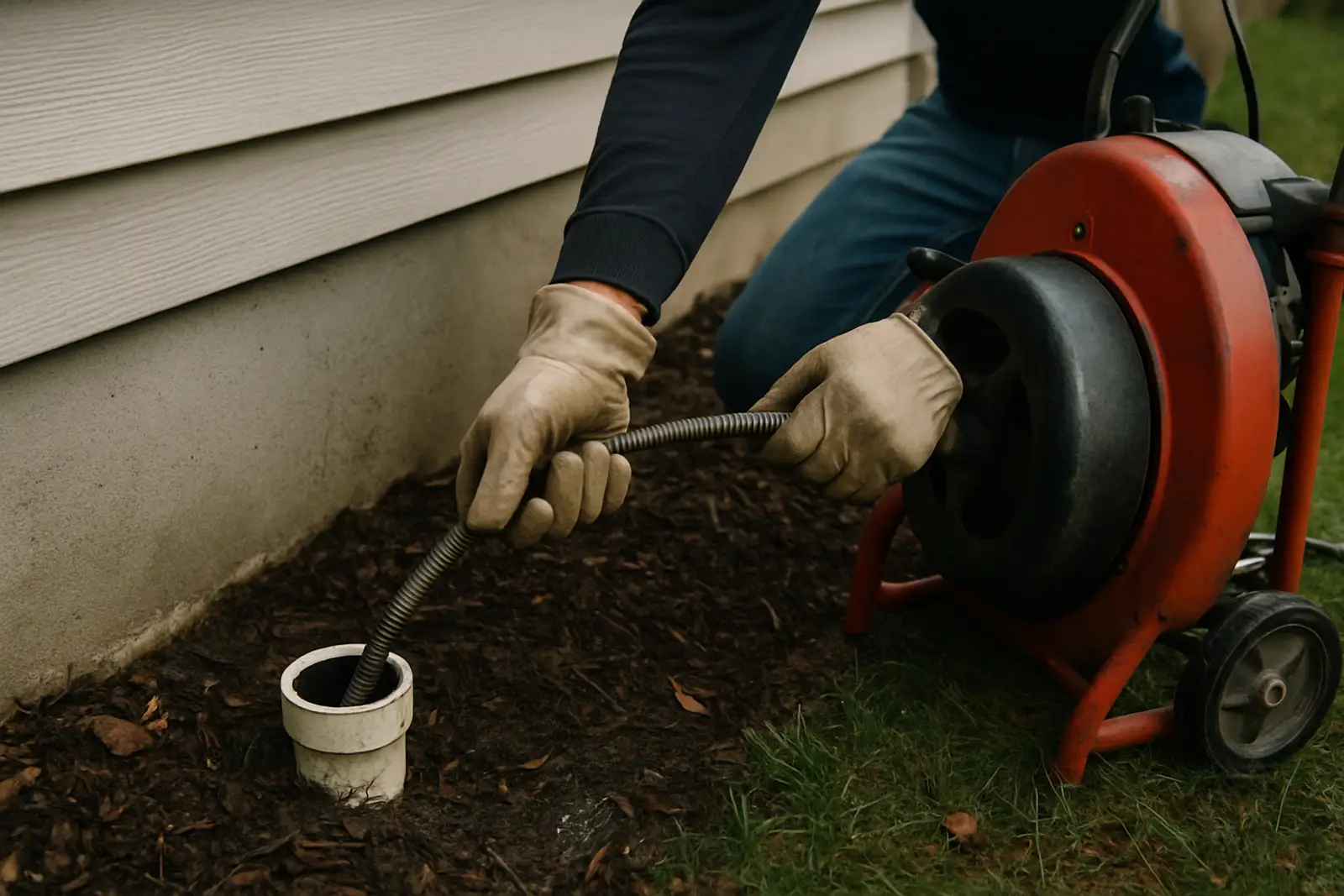
Houses and pipes in Thousand Oaks
Most of Thousand Oaks was built between the early 1960s and the late 1980s, as the Conejo Valley turned from ranch land into a planned suburb along the 101. The first tracts in the central valley, around Thousand Oaks Boulevard and the older parts of Newbury Park, often have clay or early cast iron laterals that are now sixty years old.
The city protects its native oaks by ordinance, so many lots have a heritage tree that cannot be removed without a permit. A camera often finds oak and sycamore roots packed into clay joints, and the usual fix is cutting on a schedule or lining the pipe rather than digging near a protected trunk.
Neighborhoods such as Lynn Ranch, Wildwood and the streets climbing toward the Santa Monica Mountains sit on slopes. Laterals there drop steeply or run long distances across terraced yards, and some homes have a pump or a cleanout tucked behind retaining walls.
Westlake Village, Dos Vientos and North Ranch came later, from the 1970s into the 2000s, with plastic pipe and accessible cleanouts. Calls there are mostly kitchen grease, wipes and hair, plus scale from the hard imported water the valley relies on.
The 2018 Woolsey and Hill fires burned into the city's edges. Some rebuilt homes have brand new drain systems connected to older laterals, and the joint where new meets old is a spot worth watching on camera.
Who handles what in Thousand Oaks
The City of Thousand Oaks operates sewer collection and the Hill Canyon treatment plant for most of the city; some areas, including parts of Newbury Park and the unincorporated edges, are served by Camrosa or Triunfo sanitation districts. The lateral from your house to the main is the owner's responsibility.
Drain problems Thousand Oaks homes see most
| Problem | Why it happens here |
|---|---|
| Oak and sycamore roots | Protected trees over clay laterals |
| Long hillside laterals | Terraced lots in the foothills |
| Hard water scale | Imported water heavy in minerals |
| Grease in kitchen lines | Large family kitchens and holiday cooking |
| Offset joints | Settling soil and old earthquake movement |
| Debris after fire rebuilds | New plumbing tied to older pipe |
Thousand Oaks drains through the year
Winter storms soak the clay soils and swell roots, so backups in older homes cluster from December through March. A heavy rain can also push groundwater into cracked laterals.
Long dry summers draw roots deeper toward any leaking joint. Thanksgiving and other holiday gatherings bring the year's worst grease clogs.
What drain cleaning costs in Thousand Oaks
| Job | Typical range |
|---|---|
| Sink, tub or toilet cleared | $150–$300 |
| Main line cleared from a cleanout | $225–$475 |
| Root cutting in a clay lateral | $300–$625 |
| Hydro jetting a main line | $400–$875 |
| Camera inspection with locating | $175–$425 |
Newer homes with plastic pipe and an outside cleanout stay near the low end. Long hillside laterals, roots under protected oaks and lines with no cleanout take longer and cost more.
Before the plumber arrives
- 1
Stop running water
Hold off on the dishwasher, washer and showers.
- 2
Check the lowest drain
Water in a downstairs tub or shower means the main line is backing up.
- 3
Find the cleanout
Look near the foundation or along the driveway for a capped pipe.
- 4
Note your trees
Tell the plumber about any big oak or sycamore near the sewer path.
The central valley tracts
The first wave of Thousand Oaks housing filled the flat land along Thousand Oaks Boulevard, Moorpark Road and Janss Road in the 1960s. These single-story ranch homes usually have clay laterals running under the front lawn to a main in the street. After six decades, joints have shifted and roots have found them. If a home there has never had its lateral scoped, the first camera inspection often explains years of slow drains in a single afternoon.
Newbury Park and the west end
Newbury Park, at the west end of the valley near the Conejo Grade, mixes 1960s tracts with neighborhoods from the 1980s and later. Older homes near Borchard Road share the same clay pipe issues as the central valley, while Dos Vientos and the newer neighborhoods along Reino Road have plastic pipe and few structural problems. Wind sweeping up from the grade dries yards fast in fall, and that's when roots push hardest toward any moisture in a leaking joint.
Westlake Village and North Ranch
Westlake Village straddles the Los Angeles County line, with homes built around the lake from the late 1960s onward. North Ranch, on the hills above, has larger custom homes, many with long laterals, multiple bathrooms and sometimes a sewage pump for lower levels. A failed pump alarm or water in a lower-level bath should be treated as urgent; pumps are best checked once a year so they do not quit during a holiday weekend.
Living with heritage oaks
Thousand Oaks takes its trees seriously, and a protected oak is a fixture of many backyards. Roots from a mature valley oak can spread far beyond the canopy and will find any crack in a clay pipe. Many homeowners cut roots every eighteen months to two years, and some line the lateral once to stop the cycle without disturbing the tree. Never pour root-killing chemicals near a protected tree without checking the rules first.
A typical Thousand Oaks call
On a rainy February evening, a family in a 1965 ranch home near Conejo Creek notices the hall bath tub filling with gray water whenever the washer drains. The plumber opens the front-yard cleanout, finds standing water and runs a root cutter, pulling back a mat of fine oak roots about forty feet out. The camera shows a cracked clay joint under the parkway, and the family schedules a lining quote rather than waiting for the next storm.
Hard water and fixture drains
Water in the Conejo Valley is imported and hard, leaving white scale on faucets and inside traps. Over a few years, bathroom drains narrow until hair catches on the crust. Pulling and cleaning traps and using a hair catcher in each shower prevents most of these calls. Kitchen disposals also struggle with scale, so run plenty of cold water with them.
Rebuilt homes after the fires
Homes rebuilt after the Woolsey and Hill fires often have new interior plumbing tied into the original lateral. If the lateral was not scoped during the rebuild, it may still hide roots or a cracked joint. Construction debris such as grout, drywall mud and packaging can also end up in new drains. A camera inspection in the first year is cheap insurance.
What to tell a Thousand Oaks plumber
Give your neighborhood, the year the home was built and whether the lot is sloped or terraced. Mention any protected oak near the sewer path, whether there's a lower-level pump and whether you're on the city system or a sanitation district. If this has happened before, say how far out the last clog was found; that saves real time.
Thousand Oaks ZIP codes
- 91320
- 91360
- 91361
- 91362
Thousand Oaks drain questions
Can roots from a protected oak be removed from my sewer line?+
Yes. Cutting roots inside the pipe does not harm the tree in a way the oak ordinance restricts. Digging near a protected trunk to replace the pipe may need city review, so lining is often the preferred repair.
Why do my drains clog every winter?+
Rain-soaked soil and active roots work into older clay joints. A camera inspection shows whether cutting, jetting or lining is the right answer.
Who handles sewer service in Newbury Park?+
Most of Newbury Park is on the city system, while some areas are served by the Camrosa Water District. Your bill lists the provider.
Do I need a camera inspection before buying in Thousand Oaks?+
For a home built before about 1980, it is a smart step. Root intrusion and offsets in older laterals are common and expensive to discover after closing.