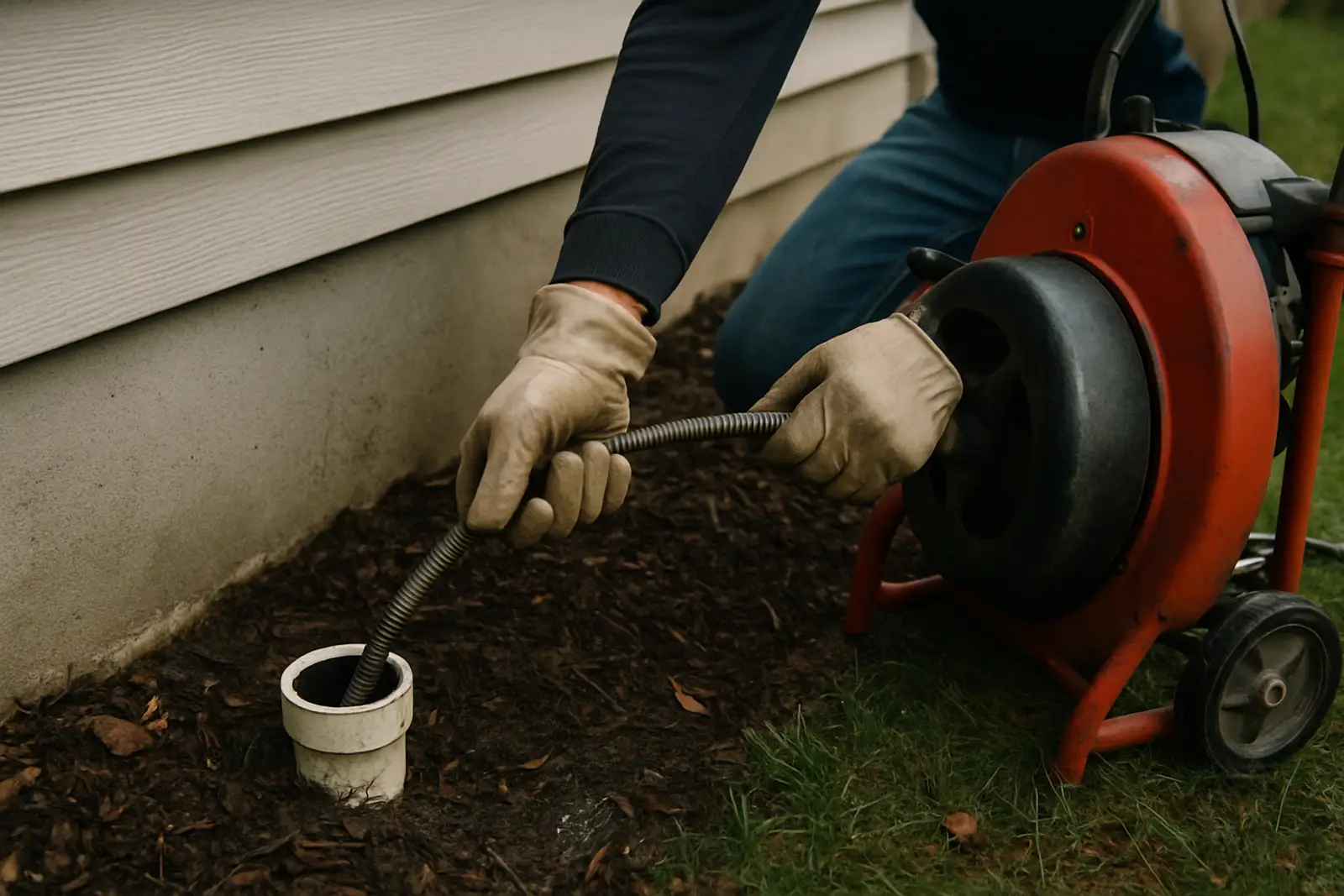
Houses and pipes in Tyler
Tyler's historic neighborhoods, including the Azalea District, Charnwood and Brick Streets, have homes from the 1890s through the 1940s. Many sit on pier-and-beam foundations with clay or cast iron laterals under towering pines, oaks and magnolias.
Postwar neighborhoods spread south through the 1950s and 1960s, mostly slab homes with cast iron drains under the floor and clay laterals out to the street.
South Tyler, along Broadway and toward Hollytree and the Cascades, grew from the 1970s onward with larger homes and plastic drains.
East Texas gets plenty of rain, about 45 inches a year, and the red sandy clay soil holds water and moves with wet and dry seasons.
Big trees are everywhere in Tyler, and their roots are the most common cause of main line backups in older neighborhoods.
Who handles what in Tyler
The City of Tyler's utilities department provides sewer service and treatment. The private lateral from the house to the city main is the owner's.
Drain problems Tyler homes see most
| Problem | Why it happens here |
|---|---|
| Roots in clay laterals | Pines, oaks and magnolias |
| Corroded cast iron | Postwar slab homes |
| Rainwater infiltration | Wet winters and springs |
| Grease | Family cooking and barbecue |
| Bellied laterals | Settling in red clay |
| Old patched lines | Azalea District homes |
Tyler drains through the year
Rainy winters and springs soak the soil and swell roots, so main line backups are most common from December through May. Azalea Trails in spring bring visitors.
Summer heat and drought shrink the clay, opening joints. The Texas Rose Festival in October fills restaurants.
What drain cleaning costs in Tyler
| Job | Typical range |
|---|---|
| Sink, tub or toilet cleared | $120–$255 |
| Main line cleared from a cleanout | $180–$420 |
| Root cutting | $245–$560 |
| Hydro jetting | $310–$750 |
| Camera inspection | $140–$370 |
South Tyler homes with plastic drains are quick to clear. Historic laterals with roots, corroded cast iron and homes without a cleanout take longer.
Before the plumber arrives
- 1
Stop water use
Pause showers, laundry and dishes.
- 2
Look outside
Big trees near the sewer path are the first suspect in older neighborhoods.
- 3
After rain?
Backups during wet spells often mean water is getting into cracked pipe.
- 4
Find the cleanout
Near the front porch, side yard or back steps on older homes.
The Azalea District
Tyler's Azalea and Brick Streets districts are famous for spring blooms, historic homes and huge trees. Laterals there are often a century old, clay or cast iron, running under pines and oaks. When a plumber runs a camera down one of these lines, it almost always shows fine pine roots at the joints, a dip or two where the clay settled and at least one crack. Lining is popular because it leaves the azaleas, the brick walks and the big trees untouched.
Mid-century Tyler
Neighborhoods built in the 1950s and 1960s south of downtown, around Bergfeld Park and along Fifth Street, have slab homes with cast iron drains that are now heavily scaled. Outside, the clay laterals running to the street are full of roots from big yard trees. A camera inspection from the yard cleanout shows whether the problem is under the house, in the yard or both, and that decides whether the fix is descaling, lining or root cutting.
South Tyler
South Tyler, along Broadway and out toward Hollytree, the Cascades and Lake Palestine, was built from the 1970s onward with larger homes and plastic drains. The pipe itself rarely fails, but pines and oaks planted when those neighborhoods were new are now fifty feet tall, and their roots find loose fittings. Clogs there also come from grease from family cooking and wipes in kids' bathrooms.
A typical Tyler call
After a week of March rain, the owners of a 1930s home in the Azalea District notice water seeping from the tub drain. The plumber clears the main from a cleanout near the back porch, cutting a dense mass of pine roots, then runs a camera that shows cracked clay joints and a belly. The owners schedule lining.
Red clay and rain
Tyler's red sandy clay holds water through wet winters and springs, then dries and shrinks in July and August. Over decades, laterals settle into it unevenly and their joints open a little more with each cycle. During long rainy spells, groundwater seeps into those cracked joints and adds to the flow, so a line that works fine in summer may back up every March. Sealing it with a liner usually ends the cycle.
Big trees
Tyler loves its trees, and loblolly pines, post oaks, water oaks and magnolias shade most yards. Their roots are the leading cause of main line backups in older homes. Most owners either have the roots cut out on a one- or two-year rotation or pay once for a liner that leaves them nothing to grow into. When planting new trees, keep them well away from the sewer path between the house and the street.
Barbecue and grease
East Texas cooking leans on smoked brisket, fried catfish, hush puppies and chicken-fried steak, and plenty of that grease heads for kitchen drains at home. Let fat cool in the pan, scrape it into a can and throw it in the trash, and wipe skillets with a paper towel before washing. A kitchen line that slows every holiday season needs jetting rather than another snake.
Rose Festival and restaurants
The Texas Rose Festival each October and the Azalea and Spring Flower Trail in spring bring visitors to Tyler, and the restaurants along Broadway Avenue and around the square fill up. Commercial kitchens need interceptors pumped on a regular schedule and lines jetted before the busy seasons.
Around the colleges and the medical district
Tyler Junior College, UT Tyler and the large medical centers along Beckham and Front Street bring students, nurses and residents who rent homes and apartments near downtown and in east Tyler. Many of those rentals are older homes with old laterals and heavy use. Landlords who scope and clean main lines between tenants avoid most emergency calls.
What to tell a Tyler plumber
Give your neighborhood and the home's age, whether it's on pier-and-beam or a slab and whether big trees are near the sewer path. Mention whether the trouble started after rain, whether roots have been cut before and how far out they were found.
Tyler ZIP codes
- 75701
- 75702
- 75703
- 75704
- 75705
- 75706
- 75707
- 75708
- 75709
Tyler drain questions
Who maintains Tyler's sewer?+
The city maintains public mains. The lateral to the main belongs to the owner.
Why do roots keep invading my Tyler lateral?+
Pines, oaks and magnolias send roots into cracked clay joints. Regular cutting or lining keeps them out.
Can I line a lateral under historic trees?+
Usually, yes. Lining avoids digging near big trees and historic landscaping.
Why does my drain back up in wet weather?+
Rainwater gets into cracked laterals and overloads them. Lining seals the cracks.