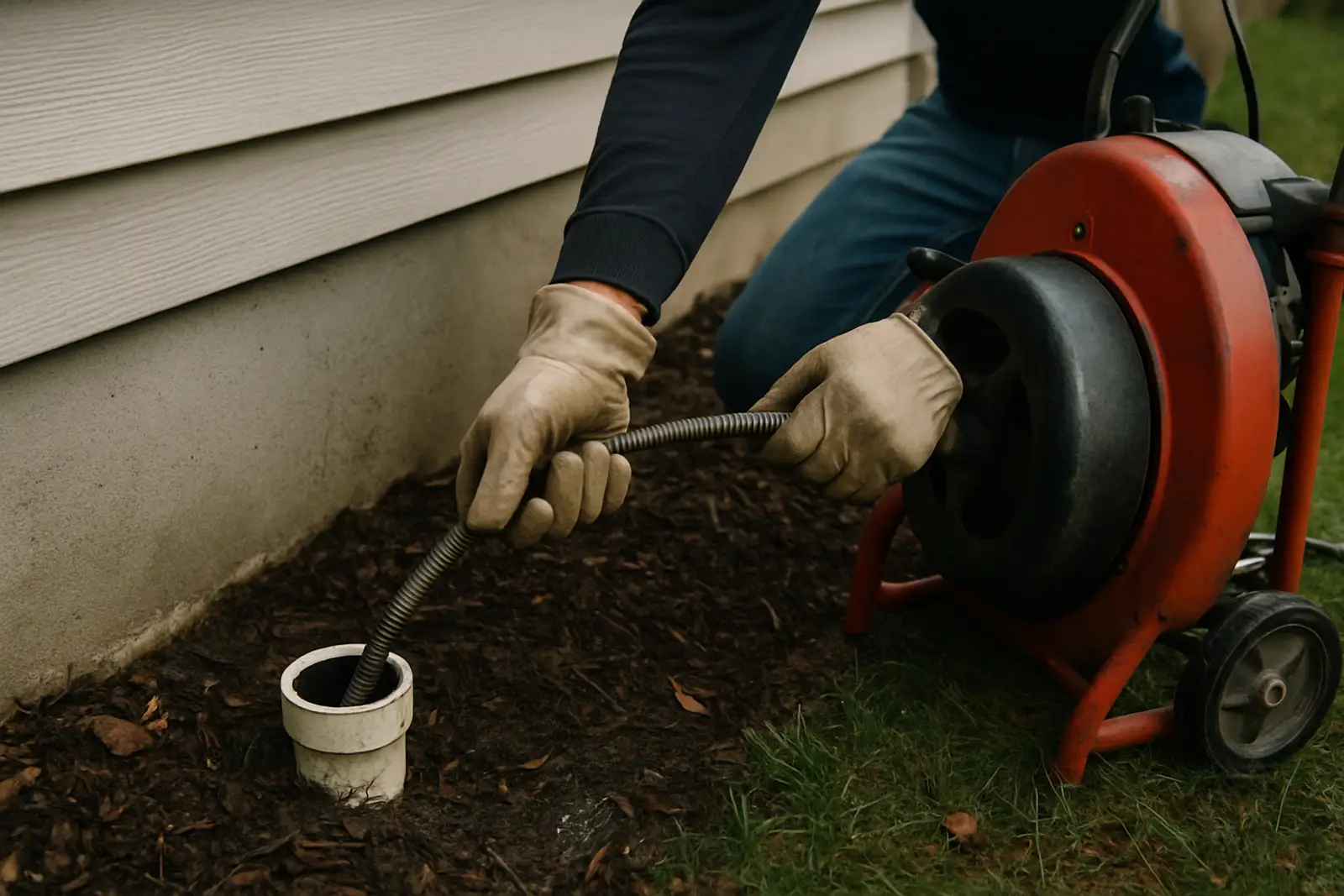
Houses and pipes in Albuquerque
Old Town, Downtown, the Huning Highlands and Barelas have adobe and brick homes from the 1880s through the 1930s, some with clay or cast iron lines.
Nob Hill, the University area and the near Northeast Heights were built from the 1920s through the 1950s with Pueblo Revival and Territorial-style homes.
The Northeast Heights, the near Westside and the South Valley filled in from the 1950s through the 1970s with ranches on slabs, many with cast iron or Orangeburg sewer lines.
The far Northeast Heights, Westside, Rio Rancho's edges and the Volcano Cliffs area grew from the 1980s onward with PVC drains.
Albuquerque sits at about 5,000 feet, with hard water, dry heat and occasional winter freezes.
Who handles what in Albuquerque
The Albuquerque Bernalillo County Water Utility Authority runs the sewer system and the Southside Water Reclamation Plant. Albuquerque property owners are responsible for the private sewer service line from the house to the public main.
Drain problems Albuquerque homes see most
| Problem | Why it happens here |
|---|---|
| Orangeburg pipe failure | 1950s and early 1960s homes |
| Cast iron under slabs | Midcentury homes |
| Roots from cottonwoods and elms | Older neighborhoods and the valley |
| Mineral scale | Hard water citywide |
| Grease and wipes | Busy kitchens and rentals |
| Frozen lines | Cold winter nights |
Albuquerque drains through the year
Summer heat drives tree roots toward water, and July and August monsoon storms can flood streets and arroyos.
Winter nights often drop into the teens, freezing exposed pipes in garages and on exterior walls.
What drain cleaning costs in Albuquerque
| Job | Typical range |
|---|---|
| Sink, tub or toilet cleared | $125–$265 |
| Main line cleared from a cleanout | $190–$425 |
| Root cutting | $250–$575 |
| Hydro jetting | $325–$785 |
| Sewer camera inspection | $130–$270 |
| Orangeburg line replacement estimate | $250–$550 |
Westside PVC lines go fast. Collapsing Orangeburg, cast iron under slabs and lines full of cottonwood roots take longer.
Before the plumber arrives
- 1
Shut off the washer
It dumps more water than anything else; stop it and the dishwasher first.
- 2
Midcentury home?
If the house was built in the 1950s, the sewer may be Orangeburg pipe; mention it.
- 3
Check the tub
On a slab home, the tub nearest the cleanout usually fills first.
- 4
Find the cleanout
Usually a capped pipe near the front of the house, sometimes in gravel landscaping.
Route 66 boom
After World War II, Albuquerque grew rapidly around Kirtland Air Force Base, Sandia National Laboratories and Route 66. Builders put up thousands of ranch homes on slabs across the Northeast Heights and beyond. Some used Orangeburg pipe for sewer lines, a cheap material made of wood fiber and coal tar, and many used cast iron. Seventy years later, Orangeburg is often flattened or collapsing, and cast iron is scaled and cracked.
Orangeburg
Orangeburg pipe was used widely in the late 1940s and 1950s because metal was scarce after the war. It was supposed to last fifty years, and it has outlived that. Over time it softens, deforms into an oval and blisters inside, catching debris. Roots crush it easily. A camera inspection quickly shows whether a line is Orangeburg. Replacement or pipe bursting is usually the only lasting fix, since lining needs a round host pipe.
Old Town and the valley
Old Town, founded in 1706, Barelas and the North and South Valley neighborhoods along the Rio Grande have adobe homes, many on acequia-irrigated lots with big cottonwoods and elms. Cottonwood roots travel far for water and find cracked laterals easily. Older lines here are often clay or cast iron.
Nob Hill and the University
Nob Hill, along Central Avenue east of UNM, has Pueblo Revival and Territorial-style homes from the 1920s through the 1940s, along with Route 66 shops and restaurants. Old laterals under mature trees and heavy use in student rentals near UNM cause most problems.
A typical Albuquerque call
In July, a family in a 1955 slab ranch in the Northeast Heights notices every drain slowing down and a sewer smell in the yard. The plumber opens the cleanout and runs a camera that shows Orangeburg pipe flattened into an oval and partly collapsed about twenty feet out, with roots from an old elm. They plan to replace it with PVC by pipe bursting.
Hard water
Albuquerque's water is hard, and mineral scale builds up inside drain pipes over the years, especially kitchen and laundry lines. Scale narrows the pipe and gives grease a place to cling. Jetting removes both.
Monsoon season
July and August monsoon storms drop heavy rain on hard desert ground, and water runs off into streets and arroyos. Low areas can flood, and storm water can enter sewers through damaged cleanouts or manholes.
Westside and newer homes
The Westside, Volcano Cliffs and the far Northeast Heights grew from the 1980s onward with PVC drains. On the Westside, a blocked kitchen line or a toddler's toy in the toilet is a far more likely culprit than a root.
Green chile and restaurants
Albuquerque's restaurants, from Old Town and Nob Hill to the busy corridors along Central, Menaul and Montgomery, serve a lot of green chile, enchiladas and fried food. During the Balloon Fiesta every October, restaurants and rentals overflow. Commercial kitchens keep running with interceptors pumped on schedule.
Winter nights
Albuquerque's elevation means cold winter nights, often in the teens. Exposed pipes in garages, on exterior walls and for evaporative coolers and irrigation freeze first. Drain swamp cooler lines before winter and insulate exposed pipe.
Swamp cooler supply lines run up exterior walls to the roof, and a forgotten one can split during the first hard freeze and leak into the ceiling.
Caliche and soils
Much of Albuquerque sits on sandy soil with caliche layers that can be hard to dig through. Sandy soil can also settle, letting laterals sag. A camera shows sags and offsets.
Military and lab families
Kirtland Air Force Base and Sandia National Laboratories bring many families who move in and out. A camera inspection when buying or renting a midcentury home can reveal Orangeburg or cast iron problems before they become emergencies.
When you call
Share the neighborhood and the year the home was built, whether it's on a slab and which drains are slow. Mention any big cottonwoods or elms near the line.
Albuquerque ZIP codes
- 87101
- 87102
- 87104
- 87105
- 87106
- 87107
- 87108
- 87109
- 87110
- 87111
- 87112
- 87113
- 87114
- 87116
- 87120
- 87121
- 87122
- 87123
Albuquerque drain questions
Who handles sewer in Albuquerque?+
The Albuquerque Bernalillo County Water Utility Authority. The private service line is the homeowner's.
What is Orangeburg pipe?+
A tar-paper and wood-fiber pipe used in the 1940s and 1950s. It softens, flattens and blisters over time, and most of it is failing now.
Why do cottonwood roots cause so many clogs?+
Cottonwoods need a lot of water and send roots long distances. Near the Rio Grande they're common, and cracked joints attract them.
Is a camera inspection worth it before buying in Albuquerque?+
Yes, especially for homes from the 1950s and 1960s.