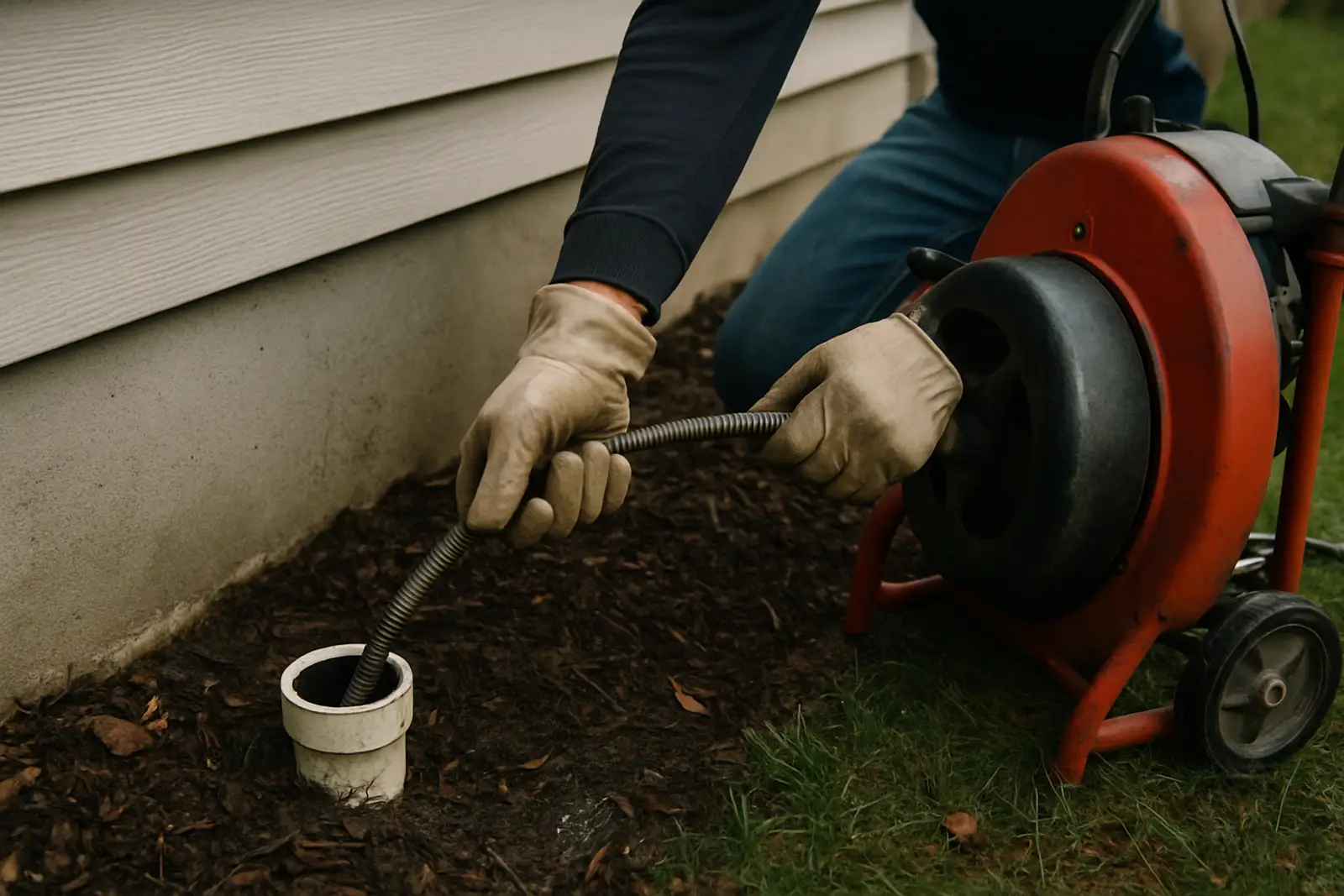
Houses and pipes in Berkeley
Much of Berkeley was built between 1890 and 1930, before and after the 1906 earthquake sent San Francisco residents across the bay. Neighborhoods such as Elmwood, Claremont, North Berkeley and the flats west of San Pablo Avenue are full of homes from that era, many still draining through original clay or cast iron laterals.
Big old trees are part of Berkeley's character. Oaks, redwoods, eucalyptus, magnolias and fruit trees line streets and fill backyards, and their roots have had a century to find their way into old joints.
The Berkeley Hills rise steeply above campus. Homes there sit on narrow, winding streets, often well above or below the road, with long laterals that cross retaining walls, steps and terraced gardens. Some hillside homes have pumps or unusual connections that only show up on camera.
Around the university, older houses have been carved into apartments, student co-ops and shared rentals. One lateral may serve six or eight bathrooms and several kitchens, all used by people who don't think about where drains go.
The 1991 Oakland Hills fire burned into the Berkeley side of the hills, and homes rebuilt since then have newer plumbing, though some still connect to old laterals near the street.
Who handles what in Berkeley
The City of Berkeley maintains the sewer mains, and EBMUD treats wastewater. Berkeley property owners are responsible for the full lateral, and under the regional private sewer lateral ordinance, a lateral must be tested and certified when a home is sold, remodeled above a set value or the water meter is upsized.
Drain problems Berkeley homes see most
| Problem | Why it happens here |
|---|---|
| Roots in century-old laterals | Large trees across the city |
| Cracked and bellied clay pipe | Laterals from before 1930 |
| Rainwater infiltration | Old joints in wet winters |
| Overloaded shared lines | Houses split into apartments and co-ops |
| Long hillside laterals | Steep lots in the Berkeley Hills |
| Grease in kitchen lines | Shared and restaurant kitchens |
Berkeley drains through the year
Rainy winters from November through March push groundwater into old joints and swell roots, so main line backups cluster in storm season.
Move-in weeks at the start of each semester bring a burst of clogs in shared houses. Holidays bring grease to family kitchens.
What drain cleaning costs in Berkeley
| Job | Typical range |
|---|---|
| Sink, tub or toilet cleared | $160–$325 |
| Main line cleared from a cleanout | $250–$525 |
| Root cutting in an old lateral | $325–$700 |
| Hydro jetting | $425–$950 |
| Camera inspection with locating | $185–$450 |
Old laterals, steep lots, tight access and missing cleanouts are common in Berkeley, so many jobs land in the middle of these ranges. Homes with a newer lateral and an outside cleanout stay near the low end.
Before the plumber arrives
- 1
Stop water use
Pause the washer, dishwasher and showers, and tell housemates.
- 2
Check the basement
Water rising from a basement or lower-level drain points to the main.
- 3
Find the cleanout
It may be in the front yard, a basement or near the sidewalk.
- 4
Check your lateral paperwork
Look for a lateral compliance certificate if the home was sold or remodeled recently.
Elmwood, Claremont and the south side
Elmwood and Claremont are full of brown-shingle and Craftsman homes built in the early 1900s. Their laterals often run under mature gardens and street trees, and camera inspections regularly show roots, cracked joints and sags. Many of these homes have already been through the lateral certification process once; if yours has, the paperwork tells you what was replaced and when.
North Berkeley and the flats
North Berkeley's tree-lined streets and the flatlands west toward the bay have smaller older homes, many converted to duplexes or with an in-law unit added. Laterals in the flats run shorter and flatter, but they're just as old. Low slope means solids settle more easily, and a sag that would drain fine on a hill can hold water and catch paper.
The Berkeley Hills
In the hills, homes cling to slopes with long stairways and narrow streets where a service truck has trouble parking. Laterals may run fifty or a hundred feet down to the main, sometimes through a neighbor's easement. Access can be the biggest part of the job, so describe the stairs, parking and where the cleanout sits when you call. A locating camera helps map where a hillside lateral actually goes.
Shared houses and co-ops
Near campus, a big old house may hold a dozen residents. Shower drains collect hair, kitchens collect grease, and wipes get flushed by people who assume it's fine. Regular trap cleaning, hair catchers in every shower and a clear sign about what not to flush go a long way. House managers who schedule main line jetting before each semester avoid most move-in week emergencies.
A typical Berkeley call
During a stormy week in February, residents of a 1912 house in South Berkeley notice the basement laundry sink filling with water. The plumber opens a cleanout near the front steps and cuts a mass of roots about thirty feet out, near an old magnolia. The camera shows cracked clay joints and a sag under the sidewalk. Because the owner is planning a remodel, the lateral will need to be certified anyway, and they schedule lining.
Lateral certification
Berkeley participates in the East Bay private sewer lateral program, which requires a lateral to pass a test or be fixed when a property is sold, when remodeling exceeds a set dollar amount or when the water meter is upsized. If you're planning any of these, get a camera inspection early. Knowing whether you need a liner, a spot repair or a full replacement lets you plan the cost and schedule instead of scrambling at closing.
Restaurants and shared kitchens
Telegraph Avenue, Shattuck Avenue and the Gourmet Ghetto have many restaurants in older buildings with old pipes. Grease traps need regular pumping, and kitchen lines benefit from periodic jetting. Shared commercial kitchens and co-op kitchens see heavy grease loads, and the same habits that protect a restaurant line protect a home one.
What to tell a Berkeley plumber
Give your neighborhood and the home's age, whether it's split into units or a shared house and whether there's a basement. Describe stairs, parking and where the cleanout is, and mention big trees near the sewer path. If the lateral has been certified or replaced, have that paperwork ready; it changes what the plumber expects to find.
Berkeley ZIP codes
- 94702
- 94703
- 94704
- 94707
- 94708
- 94709
- 94710
- 94720
Berkeley drain questions
Do I need a sewer lateral certificate to sell my Berkeley home?+
Yes. Under the regional private sewer lateral program, the lateral must pass a test before a sale or major remodel. A camera inspection beforehand shows what work may be needed.
Who is responsible for the sewer line from my house?+
The property owner owns the full lateral to the city main. The city maintains the main and EBMUD treats the wastewater.
Why does my old house back up when it rains?+
Rain and groundwater get into cracked clay joints and overwhelm the line, especially when roots are already narrowing it.
Can a lateral be lined instead of dug up?+
Often, yes. Lining avoids digging through gardens, steps and retaining walls, though badly collapsed sections may need to be opened.