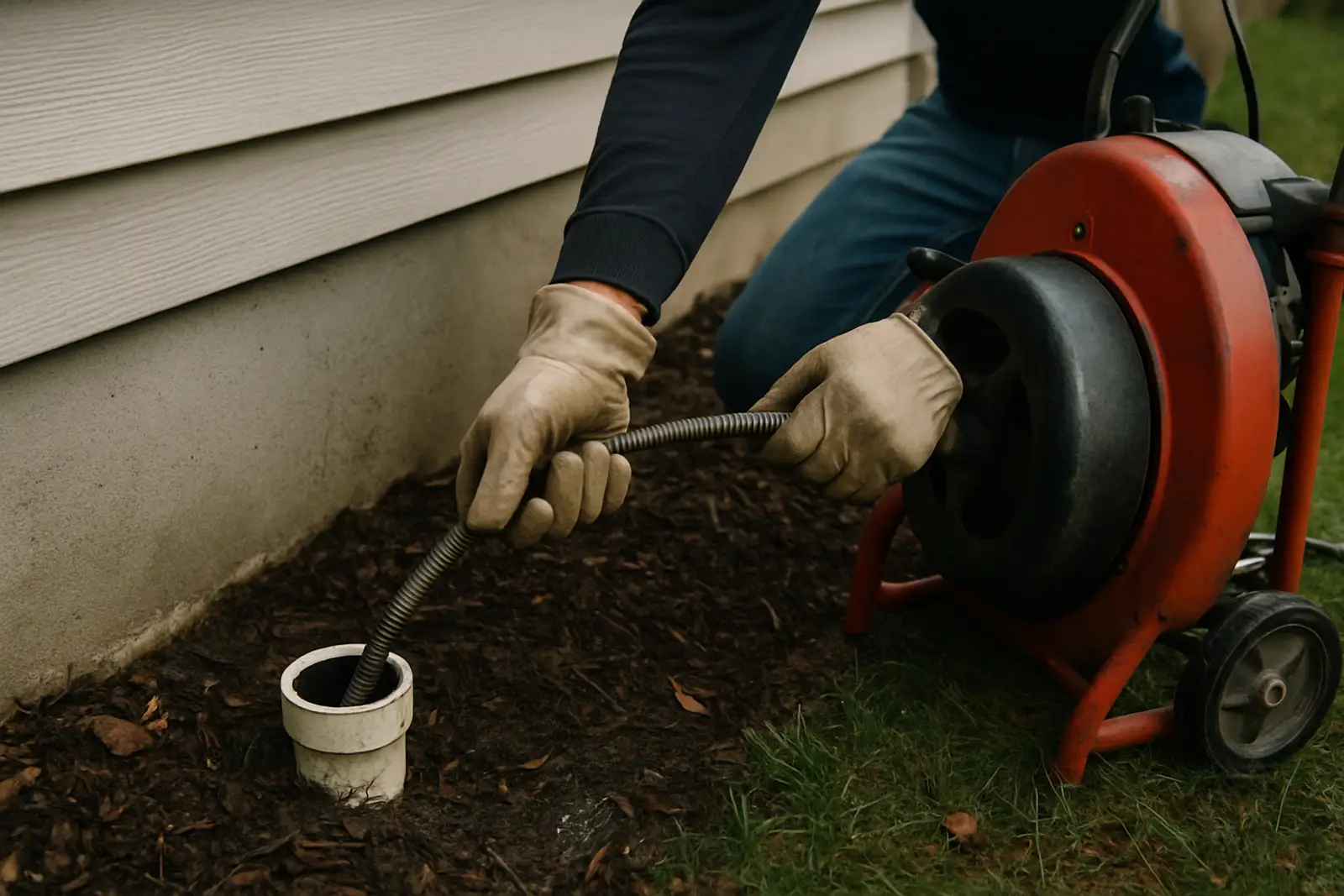
Houses and pipes in Concord
Before World War II, Concord was a crossroads of walnut orchards and ranches around Todos Santos Plaza. Between 1950 and 1975 tract builders filled the valley with ranch homes, and the population went from a few thousand to more than eighty thousand.
Most of those homes have clay laterals running under front lawns to mains in the street. After sixty or seventy years, joints have shifted, and the walnut, ash, sycamore and liquidambar trees planted along streets and in yards have sent roots into many of them.
The oldest homes near downtown and the Plaza, some from the early 1900s, may have clay or cast iron laterals that have been patched more than once. Homes built from the 1980s onward, in neighborhoods such as Crystyl Ranch and around the Concord Pavilion, have plastic pipe.
Concord gets hot in summer, regularly topping 95 degrees, and its clay soil shrinks and cracks when dry, then swells in winter. That seasonal movement stresses older joints.
Many homes along Clayton Road, Ygnacio Valley Road and Treat Boulevard have converted garages or added units, which put extra load on laterals sized for one family.
Who handles what in Concord
Central Contra Costa Sanitary District, known as Central San, collects and treats sewage for Concord. The owner is responsible for the lateral from the house to the main, and Central San offers guidance and requires permits for lateral work.
Drain problems Concord homes see most
| Problem | Why it happens here |
|---|---|
| Roots in clay laterals | Mature street and yard trees |
| Joint offsets | Shrinking and swelling clay soil |
| Grease in kitchen lines | Family meals and holiday cooking |
| Overloaded laterals | Garage conversions and added units |
| Wipes | Busy households and rentals |
| Hard water scale | Mineral buildup in fixtures |
Concord drains through the year
Winter rain swells roots and pushes groundwater into cracked joints, so main line calls climb from December through March.
Hot, dry summers shrink the clay soil and widen gaps at joints. Holiday cooking brings grease clogs from Thanksgiving through New Year.
What drain cleaning costs in Concord
| Job | Typical range |
|---|---|
| Sink, tub or toilet cleared | $140–$285 |
| Main line cleared from a cleanout | $210–$460 |
| Root cutting | $280–$600 |
| Hydro jetting | $375–$825 |
| Camera inspection | $160–$400 |
A home with a front-yard cleanout and light roots stays near the low end. Heavy roots, no cleanout or an older patched lateral raise the cost.
Before the plumber arrives
- 1
Stop water use
Hold off on laundry, dishes and showers.
- 2
Check the lowest drain
A tub or shower filling up means the main is blocked.
- 3
Find the cleanout
Usually near the front of the house or in the lawn.
- 4
Recall earlier work
Note past root cutting or camera reports.
The postwar tracts
Neighborhoods like Dana Estates, Holbrook Heights and the streets between Clayton Road and Ygnacio Valley Road were built fast in the 1950s and 1960s. Ranch homes there almost always started with clay laterals. If a home in these tracts has never had a camera inspection, there's a good chance roots are already inside, even if drains still work.
Downtown and Todos Santos Plaza
The blocks around the Plaza include Concord's oldest homes and small commercial buildings. Laterals there can be close to a century old, with bellies and patched sections from past repairs. Restaurants and cafes near the Plaza contend with grease, and older buildings share laterals in ways that aren't always obvious until something backs up.
Clayton Valley and the eastern hills
Toward the Clayton line and below Mount Diablo, neighborhoods built from the 1970s through the 1990s mix clay and plastic laterals depending on age. Some lots slope noticeably, and laterals run longer to reach the street. Oak and pine trees on these lots can be just as aggressive with roots as the street trees in the flats.
A typical Concord call
On a December weekend, a family in a 1958 home off Monument Boulevard finds water coming up in the shower whenever the toilet flushes. The plumber clears the main from the front cleanout, cutting a thick root mass forty feet out, near a big ash tree in the parkway. The camera shows two cracked joints, and the family books a lining estimate with Central San's permit requirements in mind.
Summer heat and clay soil
Concord's clay soil shrinks in summer heat and swells when the rain returns. That annual movement opens gaps at clay joints and can shift a lateral slightly each year. Watering deeply around the foundation in long dry spells helps a little, and a camera check every few years shows whether joints are getting worse.
Grease and family kitchens
Large family gatherings test Concord's kitchen lines, especially in older homes where the kitchen drain runs a long way to the main. Pour cooled fat into a can, wipe pans before washing and run a full sink of hot water down the drain after big meals. If the kitchen sink slows every holiday season, jetting once a year clears the buildup better than a cable.
Selling a home in Concord
Buyers increasingly ask for a sewer camera report on Concord homes from the 1950s and 1960s. Sellers who scope early can fix or price in a lateral problem on their own timeline. Keep the video and the report to hand over at closing.
Near the Naval Weapons Station
North Concord, around the former Naval Weapons Station land and the North Concord BART station, has a mix of postwar homes and newer townhomes, with large redevelopment planned for the base property. Pipe age varies block by block there. Older homes near Port Chicago Highway share the clay lateral issues of the rest of the city, while the townhomes mostly see grease and wipes in shared building lines.
In a shared building line, one unit's habits affect every neighbor downstream, so homeowner associations that schedule regular jetting tend to see far fewer emergency calls.
What to tell a Concord plumber
Share your neighborhood and the year the home was built, and whether a garage conversion or added unit uses the same lateral. Mention trees near the sewer path and whether the trouble started after rain. If you've had root cutting before, say how far out the roots were found.
Concord ZIP codes
- 94518
- 94519
- 94520
- 94521
Concord drain questions
Who handles sewer service in Concord?+
Central Contra Costa Sanitary District collects and treats wastewater. The lateral from your house to the main is the owner's to maintain.
Why do roots keep coming back?+
Cutting clears the pipe but doesn't seal the cracked joints roots use to get in. Most Concord homes with clay pipe need cutting every year or two, or a liner.
Do I need a permit to replace my lateral?+
Yes. Central San requires a permit and inspection for lateral repair or replacement.
Can a garage conversion cause backups?+
It can. An added bathroom and laundry put more flow into a lateral that may already have roots or offsets.