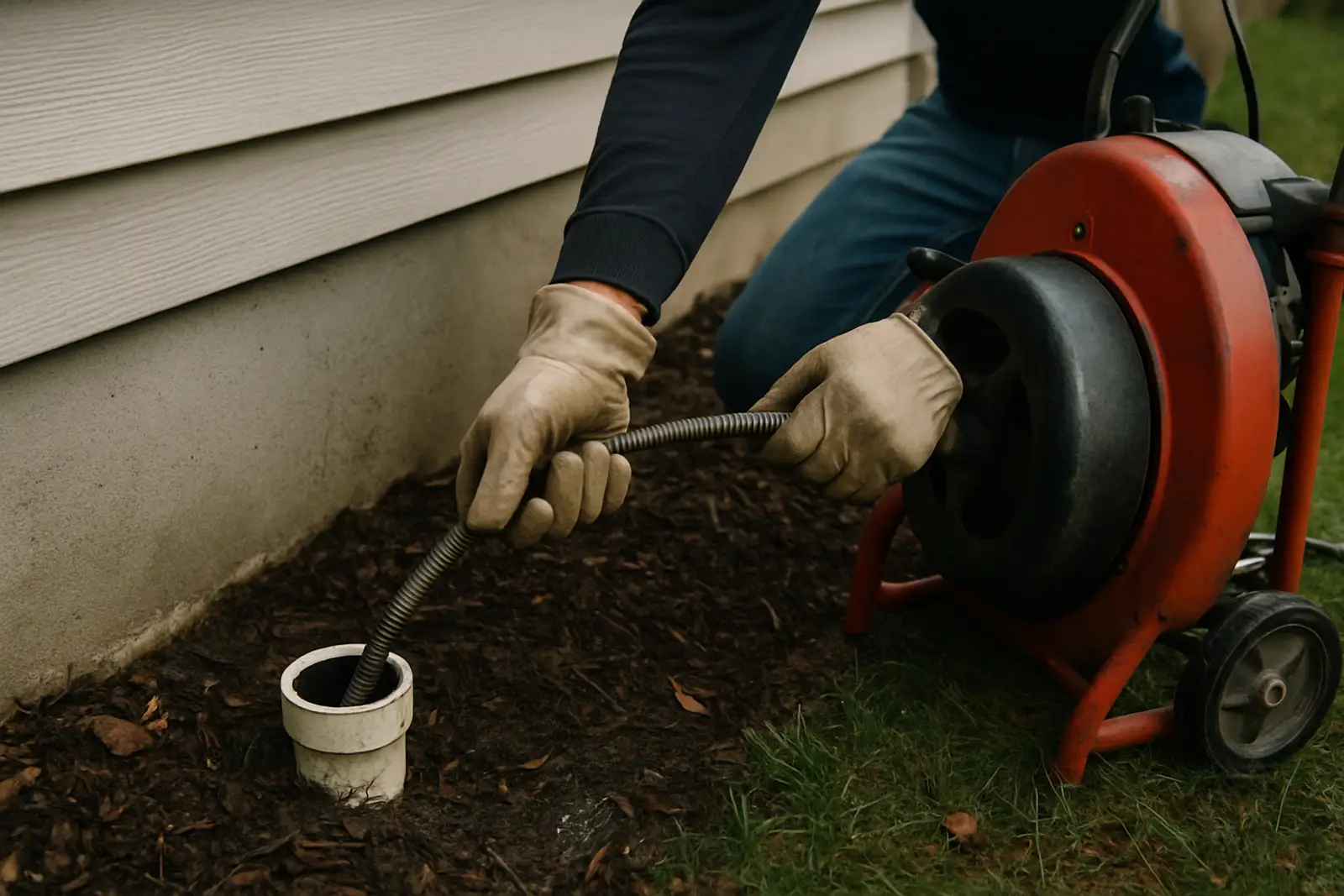
Houses and pipes in Fairfield
Fairfield is the Solano County seat, with a small historic core around Texas Street and the county buildings. Homes there date from the early twentieth century through the 1950s and often have clay laterals, some with cast iron sections added during repairs.
Travis Air Force Base, just east of town, drove much of Fairfield's growth after the war. Neighborhoods built for military families in the 1960s and 1970s spread north and east, mostly single-story homes on clay or early plastic laterals.
Cordelia, Green Valley and Paradise Valley on the west side came later, from the 1980s into the 2000s, with plastic pipe. Homes there see grease, wipes and lint far more often than pipe failure.
Newer subdivisions keep going up along the edges, especially toward the Train Station area on the east side, and those homes start out with modern drains and accessible cleanouts.
Fairfield summers are hot and windy, and the clay soil cracks when it dries out. Mature trees in the older neighborhoods follow those cracks straight to leaking joints.
Who handles what in Fairfield
Fairfield-Suisun Sewer District treats wastewater and maintains the trunk lines, while the city maintains local mains. Homeowners own and maintain the lateral from the house to the main.
Drain problems Fairfield homes see most
| Problem | Why it happens here |
|---|---|
| Roots in older laterals | Mature trees in established neighborhoods |
| Joint offsets in clay soil | Seasonal shrinking and swelling |
| Grease in kitchen lines | Family meals and holiday cooking |
| Wipes and lint | Busy family and military households |
| Debris in new construction | First-year homes on the city edge |
| Hard water scale | Mineral buildup in fixture drains |
Fairfield drains through the year
Winter rain swells roots and pushes groundwater into cracked laterals, so main line backups peak from December to March.
Hot, windy summers dry out the clay soil and widen gaps in older joints. Military moves in summer bring new families into homes with unknown drain history.
What drain cleaning costs in Fairfield
| Job | Typical range |
|---|---|
| Sink, tub or toilet cleared | $135–$280 |
| Main line cleared from a cleanout | $200–$450 |
| Root cutting | $275–$600 |
| Hydro jetting | $350–$800 |
| Camera inspection | $150–$400 |
A west side or east side home from the last thirty years, with a reachable cleanout, usually lands at the cheaper end. Heavy roots, older clay laterals or homes without a cleanout cost more.
Before the plumber arrives
- 1
Stop using water
Hold off on laundry, dishes and showers.
- 2
Check the lowest drain
Water rising in a tub or shower points to the main.
- 3
Find the cleanout
Look near the front of the house or along the side yard.
- 4
Check your lease or orders
Base housing and rentals may have a set process for repairs.
Downtown and the older core
The blocks around Texas Street, Union Avenue and the county government center hold Fairfield's oldest homes. Laterals there may be eighty or ninety years old, with clay joints that have shifted and roots from large shade trees. A camera inspection often shows a patchwork of materials where earlier owners repaired one section at a time. For homes like these, lining or full replacement may cost less over ten years than repeated root cutting.
Military families and Travis
Travis Air Force Base is the region's biggest employer, and many service members rent or buy off base in Fairfield. Families move every few years, and drain history rarely travels with the house. If you've just moved in, find the cleanout, ask the landlord or seller about the last main line service and keep a small trash can by every toilet. A short note left for the next family saves them the same search.
Cordelia and Green Valley
On the west side, Cordelia and Green Valley sit closer to the hills and the Interstate 80 corridor. Homes there are newer, many from the 1980s and 1990s, with plastic laterals and outside cleanouts. Hillside lots in Green Valley sometimes have long laterals that run down to the street, and a low spot from settling soil can catch wipes. Large custom homes may also have more than one cleanout and longer runs from the kitchen.
A typical Fairfield call
A family in a 1968 home near Sullivan Middle School notices the toilets gurgling and the shower draining slowly after a week of January rain. The plumber clears the main from the front cleanout, cutting roots from a large mulberry tree about thirty-five feet out. A camera shows two offset joints. The family schedules root cutting every spring and starts saving for a liner.
The Delta breeze and dry soil
Afternoon wind pours through Fairfield most summer days, drying lawns and cracking clay soil. As soil shrinks away from pipes, older joints lose support and can shift. Deep watering near the sewer path in long dry spells helps a little, and catching small offsets early on camera keeps them from turning into backups during the first big winter storm.
New construction on the east side
Fairfield's newest neighborhoods, especially near the Fairfield-Vacaville train station, are full of homes only a few years old. Drains there rarely fail, but construction leftovers can lodge in the lateral and cause a backup in the first year or two. If that happens, keep the camera video and contact the builder while the warranty applies.
Rentals and shared lines
Duplexes and small apartment buildings in central Fairfield often share one lateral between units. A grease or wipe clog from one tenant can back up into the unit next door. Owners who schedule regular main line cleaning and post clear rules about flushing see far fewer late-night calls.
Suisun Valley and the rural edges
North and west of the city, Suisun Valley's vineyards and ranch properties sit outside the sewer system, and many homes there use septic tanks. If your Fairfield address is on a rural road, check whether you're on sewer before you call; a septic backup needs a different crew and a pump truck rather than a drain cable.
What to tell a Fairfield plumber
Share your neighborhood and roughly when the home was built, whether it's a rental or base-area home and whether there's a big tree near the sewer path. Mention if the trouble started after rain and if you've had root cutting before. If the home is brand new, say so; it changes what the plumber will look for.
Fairfield ZIP codes
- 94533
- 94534
- 94535
Fairfield drain questions
Who maintains sewer lines in Fairfield?+
The city maintains local mains and the Fairfield-Suisun Sewer District handles treatment and trunk lines. The lateral from your home to the main is the owner's responsibility.
I live in base housing at Travis. Who do I call?+
On-base housing has its own maintenance process through the housing office. Off-base rentals follow your lease, and owners call a plumber directly.
Why does my new home already have a clog?+
Construction debris such as grout and drywall mud sometimes ends up in new drains. A camera inspection can show it, and the builder's warranty may cover the fix.
How often should clay laterals be cleaned?+
Homes with roots usually need cutting every year or two. A camera inspection helps decide whether lining would end the cycle.