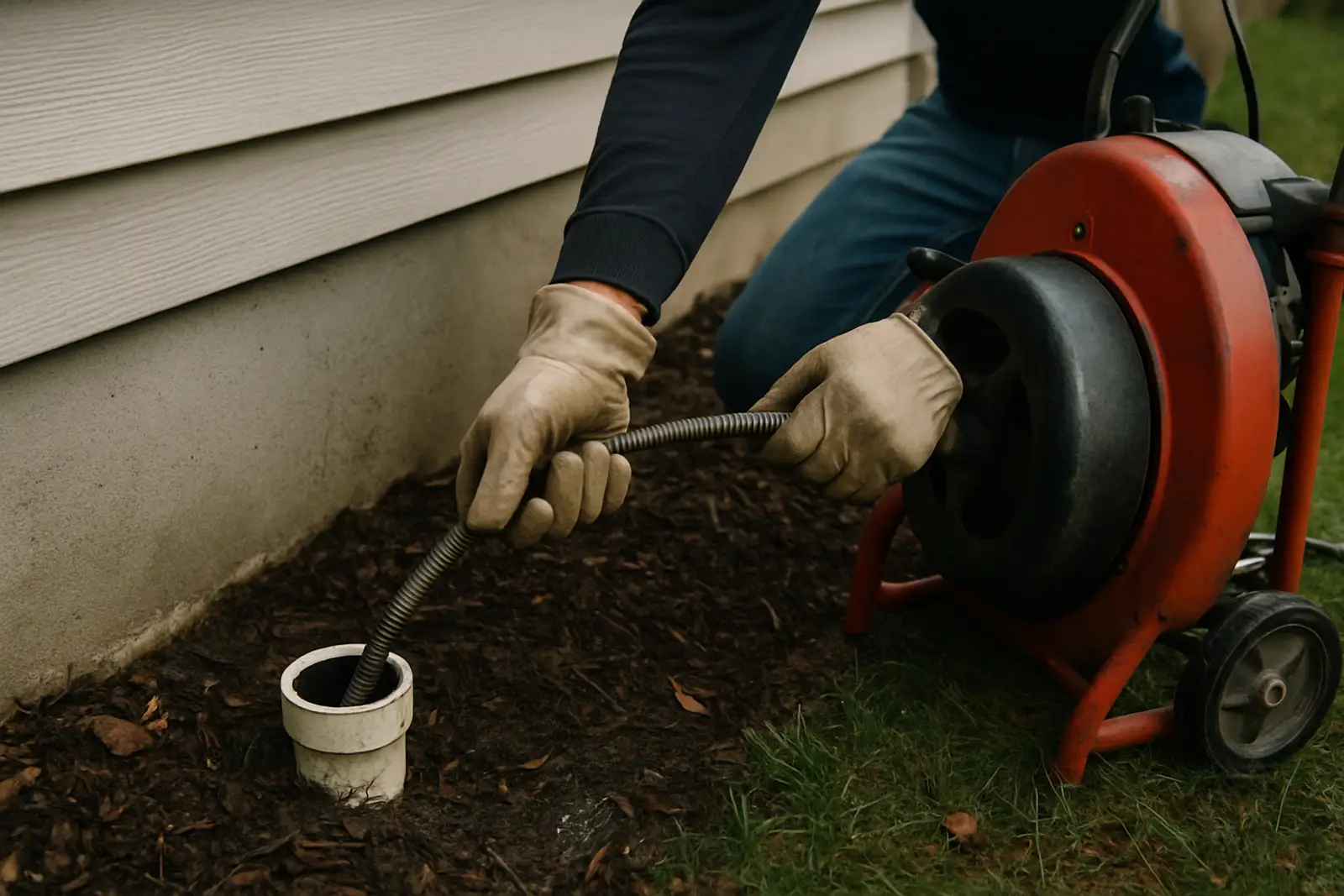
Houses and pipes in Independence
The neighborhoods around the historic square, the Truman Home and the Englewood area have homes from the 1850s through the 1920s, with basements and clay laterals.
Most of Independence was built from the 1940s through the 1970s with ranches, Cape Cods and split-levels for families working in Kansas City and at the Lake City plant.
East and south Independence grew from the 1980s onward with newer subdivisions.
Independence sits on clay soils over limestone east of Kansas City, with bluffs above the Missouri River on its north side.
Some properties on the city's eastern edges still use septic.
Who handles what in Independence
Independence's Water Pollution Control Department runs the city sewer system and treatment plants. Independence property owners are responsible for the lateral running from the house to the public main.
Drain problems Independence homes see most
| Problem | Why it happens here |
|---|---|
| Cast iron corrosion | Postwar ranches |
| Roots in clay laterals | Historic neighborhoods near the square |
| Clay soil movement | Shrinking and swelling soils |
| Basement backups | Older homes during storms |
| Grease and wipes | Family households |
| Frozen pipes | Winter cold |
Independence drains through the year
Spring storms soak the clay and push water into cracked laterals, and roots grow fastest in summer heat.
Winter cold snaps freeze pipes in garages and exterior walls.
What drain cleaning costs in Independence
| Job | Typical range |
|---|---|
| Sink, tub or toilet cleared | $125–$265 |
| Main line cleared from a cleanout | $190–$430 |
| Root cutting | $250–$575 |
| Hydro jetting | $325–$790 |
| Sewer camera inspection | $130–$270 |
| Backwater valve installation | $850–$2,600 |
Newer east side homes clear fast. Postwar cast iron, century-old clay near the square and basements without cleanouts take longer.
Before the plumber arrives
- 1
Pause the washer
Laundry sends the most water down the line at once.
- 2
Check the basement
Water at the floor drain is the usual first sign in Independence homes.
- 3
Sewer or septic?
A few homes on the eastern edge use septic; mention it if yours does.
- 4
Find the cleanout
Usually on the front basement wall or outside near the foundation.
The historic square
Independence's square, with its courthouse where Harry Truman began his political career, is surrounded by neighborhoods of Victorian and early 1900s homes, including the Truman Home on Delaware Street. These homes have basements and clay laterals under big trees, and roots, cracks and sags are common. Lining protects historic yards and walks.
Trail days
In the 1840s, Independence was the jumping-off point for wagon trains heading west, and the town grew around outfitters and merchants. Some of the oldest homes date from that era or the decades after the Civil War. Their plumbing was added much later, and laterals can be a mix of clay, cast iron and newer pipe.
Postwar growth
After World War II, Independence boomed with ranches, Cape Cods and split-levels for families working in Kansas City's plants, the Lake City Army Ammunition Plant and the Bendix plant. Those homes have cast iron drains and clay laterals now sixty to eighty years old. Heavy scale inside the cast iron and roots in the clay are the usual findings.
Clay soil
Independence sits on clay that shrinks in hot, dry summers and swells in wet springs. That movement shifts laterals, cracks joints and creates sags where debris collects.
A typical Independence call
In July, a family in a 1958 ranch on the south side notices the basement floor drain bubbling when the dishwasher drains. The plumber opens the cleanout and clears scale and roots about twenty-five feet out. The camera shows the cast iron under the basement floor heavily scaled and the clay beyond the foundation cracked. They plan descaling and a liner.
Englewood and the west side
Englewood, on the west side near Kansas City, has a small arts district and older homes from the early twentieth century. Old clay laterals and big trees are common.
Storms and basements
Independence's spring and summer storms can drop heavy rain quickly. Saturated clay pushes water into cracked laterals, and many older homes have downspouts or footing drains tied into the sewer. Disconnecting them and adding a backwater valve help keep basements dry.
East Independence
East Independence and the areas toward Blue Springs grew from the 1980s onward with newer homes and PVC drains. Kitchen grease and wipes cause most problems there.
Restaurants on Noland Road
Noland Road, 23rd Street and the area around the square have many restaurants and diners. Diners on Noland that fry all day need their grease interceptors emptied often, or the backup lands in their own floor drains.
Winter
Independence winters bring cold snaps that drop below zero. A laundry hookup on a garage wall or a bathroom over an unheated porch is the usual freeze point. Keep garage doors closed and leave a tap trickling on the coldest nights.
Postwar ranches often have the kitchen sink on an exterior wall, and opening the cabinet doors on a cold night lets warm air reach those pipes.
The Missouri River bluffs
North Independence sits on bluffs above the Missouri River, and some homes there are on sloping lots with long laterals. Steep runs can leave debris behind, and hillside soil can shift pipe.
Family households
Independence is a family town, and busy kitchens and kids' bathrooms produce plenty of clogs. Bacon grease in a can rather than the sink, and wipes in the trash rather than the toilet, prevent most of them.
Fairmount and the old streetcar line
Fairmount, on the western edge of Independence along the old streetcar line to Kansas City, grew in the early 1900s with modest homes on small lots. Many were built by working families who later added bathrooms and kitchens as they could afford them, and those additions were tied into the original lateral wherever it was convenient. Plumbers here often find odd connections, abandoned lines and sections of different pipe joined together. Every transition is a place where roots and grease can catch, so a camera run is the best way to understand what's actually under the yard.
Truman-era bungalows
The blocks around the Truman Home and the old Independence Square include bungalows and small foursquares from the 1910s and 1920s, much like the house Truman's neighbors lived in. Their basements are often unfinished, with a floor drain near the furnace and a laundry tub by the stairs. When the lateral slows, that laundry tub is where water appears, often gray and smelling of sewage. Clearing the line from the basement cleanout and checking it with a camera tells the owner whether roots or a cracked joint caused it.
When you call
Share the neighborhood, the home's age, whether the basement is finished and whether you're on sewer or septic. Mention big trees near the line.
Independence ZIP codes
- 64016
- 64050
- 64052
- 64053
- 64054
- 64055
- 64056
- 64057
- 64058
Independence drain questions
Who handles sewer in Independence?+
The city's Water Pollution Control Department. The lateral to the main is the property owner's.
Why do postwar Independence homes have drain problems?+
Many have cast iron drains and clay laterals that are now sixty to eighty years old, with scale, cracks and roots.
Does clay soil affect sewer lines?+
Yes. Eastern Jackson County clay heaves in wet years and pulls back in droughts, and buried pipe moves with it until joints open.
Is a camera inspection worth it before buying in Independence?+
Yes, especially for homes built before 1975.