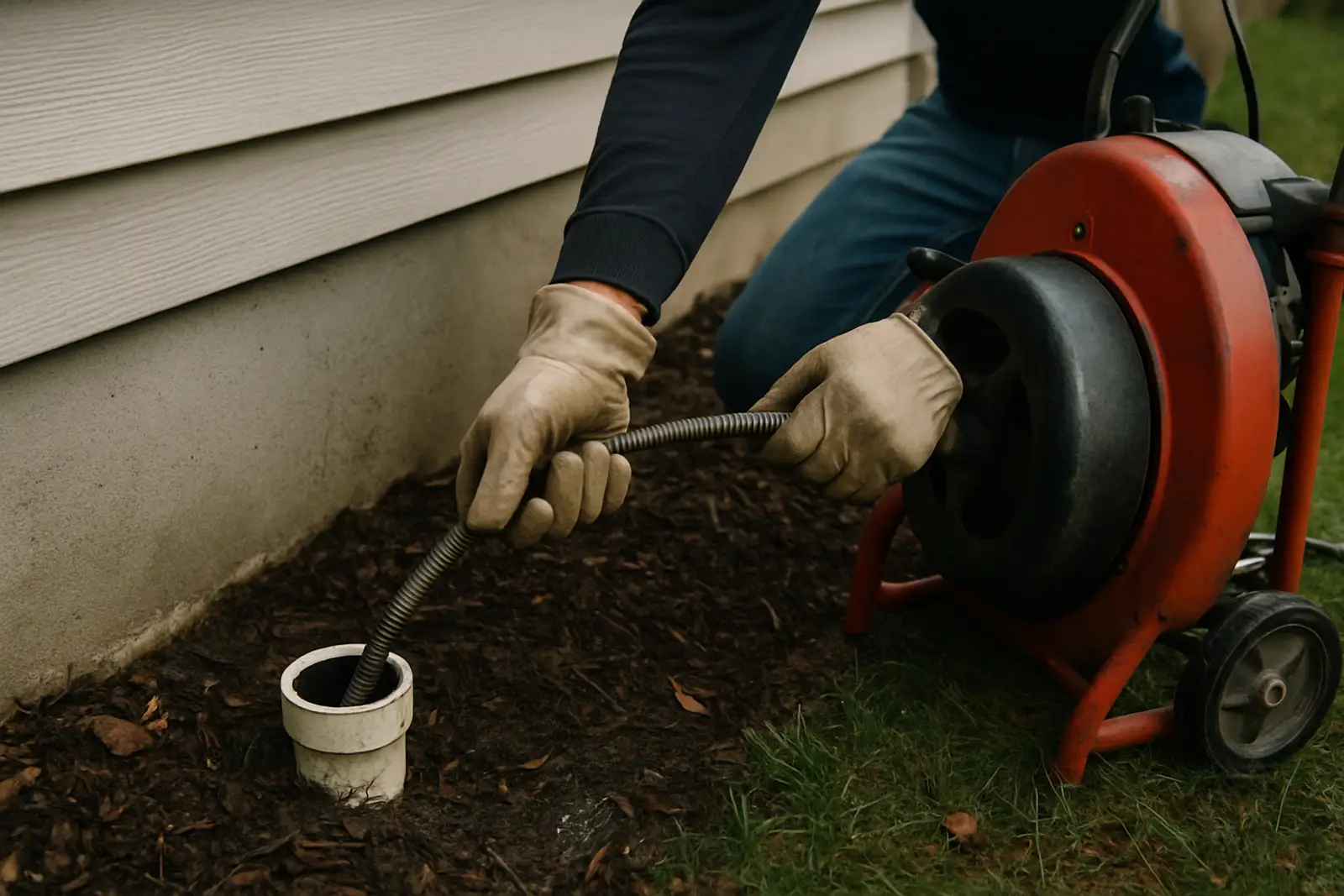
Houses and pipes in Topeka
Potwin, Holliday Park, Central Park and the neighborhoods near the Capitol have homes from the 1880s through the 1920s, many with basements and clay laterals.
College Hill, near Washburn University, and Westboro have bungalows and period revival homes from the 1910s through the 1940s.
West and southwest Topeka filled in from the 1950s through the 1980s with ranches and split-levels.
North Topeka, across the Kansas River, has older homes on lower ground near the levees.
Topeka sits on clay soils along the Kansas River, with hot summers, cold winters and spring storms.
Who handles what in Topeka
The City of Topeka's Utilities Department runs the sewer system and the Oakland and North Topeka treatment plants. Topeka property owners keep up the lateral that connects the house to the city sewer.
Drain problems Topeka homes see most
| Problem | Why it happens here |
|---|---|
| Roots in clay laterals | Potwin, Central Park and College Hill |
| Basement backups | Older homes during storms |
| Clay soil movement | Shrinking and swelling soils |
| Cast iron corrosion | Midcentury homes |
| Groundwater near the river | North Topeka |
| Frozen pipes | Winter cold snaps |
Topeka drains through the year
Spring storms soak the clay and raise the river, and summer heat sends roots looking for water.
Winters bring cold snaps that freeze pipes in garages, porches and exterior walls.
What drain cleaning costs in Topeka
| Job | Typical range |
|---|---|
| Sink, tub or toilet cleared | $120–$250 |
| Main line cleared from a cleanout | $180–$405 |
| Root cutting | $240–$555 |
| Hydro jetting | $310–$760 |
| Sewer camera inspection | $125–$260 |
| Backwater valve installation | $800–$2,500 |
Newer southwest homes go fast. Century-old clay under Potwin's elms, basements without cleanouts and lines near the river take longer.
Before the plumber arrives
- 1
Pause the water
No more flushing or laundry until it's cleared.
- 2
Washburn rental?
Contact your landlord before calling a plumber.
- 3
Check downstairs
The basement floor drain is where Topeka backups usually show up.
- 4
Find the cleanout
Older homes have it inside the basement, low on the front wall.
Potwin
Potwin Place, once its own town and annexed by Topeka in 1899, is known for its brick streets, Victorian homes and traffic circles planted with trees. It's one of the most distinctive neighborhoods in Kansas. Clay laterals under its huge elms and oaks are often original, and roots are the leading cause of backups. Lining protects the neighborhood's trees and brick streets.
Central Park and Holliday Park
Central Park and Holliday Park, near the Capitol, have Victorian and early 1900s homes, many divided into apartments over the years. Apartment-level use on century-old clay, under elms planted when the houses were new, keeps plumbers coming back.
College Hill and Washburn
College Hill and the neighborhoods around Washburn University have bungalows and Tudors on tree-lined streets, and many homes nearby are rented to students. Roots in clay laterals and heavy use cause most problems.
The 1951 flood and North Topeka
The 1951 flood put North Topeka under water, and levees now protect it. The neighborhood still sits on low ground near the Kansas River, and groundwater rises after heavy rain. Cracked laterals there take in water, and basements see more moisture.
A typical Topeka call
In June, a family in a 1915 home in Potwin finds water seeping across the basement floor from the drain. The plumber opens the basement cleanout and cuts roots from a big elm about forty feet out, under the brick street's edge. The video shows cracked clay. They choose a liner to avoid digging up the brick.
The 1966 tornado
In June 1966, a tornado cut across Topeka, destroying much of Washburn University and many homes. Neighborhoods along its path were rebuilt in the late 1960s, so some areas have newer homes mixed among older ones. Lines in rebuilt homes may connect to older mains.
Westboro and west Topeka
Westboro, a planned neighborhood from the 1920s, and the west side's later subdivisions have homes from the 1920s through the 1980s. Cast iron and clay from the middle of that span are now aging, with scale and roots common.
Clay soil
Topeka's clay soil shrinks in hot, dry summers and swells in wet springs, moving foundations and buried pipe. Older laterals crack and shift. Watering around the foundation in drought helps.
State workers and families
Topeka's large state government workforce and families keep many older homes occupied. Busy kitchens and bathrooms produce plenty of clogs in newer homes, mostly grease and wipes.
Restaurants and downtown
Downtown Topeka's revived Kansas Avenue, NOTO arts district and the busy corridors along Wanamaker Road serve state workers and families. Restaurants there keep interceptors pumped to stay open.
Winter
Topeka winters bring cold snaps below zero and occasional ice storms. A laundry drain in an attached garage or plumbing in an old back porch freezes first. Keep the basement warm and sleeve exposed pipe before the first deep cold.
Older homes on brick streets often have a single cleanout deep in an unheated part of the basement, and keeping that area above freezing protects the line where it exits.
Storms and downspouts
Spring storms in Topeka can drop heavy rain quickly. Many older homes have downspouts or footing drains tied into the sanitary lateral. Sending that roof and foundation water into the yard instead, and putting a one-way valve on the main, keeps most Topeka basements dry.
Oakland and the Santa Fe shops
Oakland, on Topeka's east side, and the neighborhoods near the old Santa Fe railroad shops grew up in the early 1900s with homes for shop workers and their families, many of them Mexican immigrants who came to work on the railroad. Their small frame houses and bungalows have clay laterals that are now a century old, sometimes without an outside cleanout. Roots, cracked joints and settling near Shunganunga Creek are common findings. Adding a cleanout outside makes each future visit faster and cheaper.
Brick streets
Topeka still has many brick streets in its older neighborhoods, and residents value them. When a lateral breaks under one, repairing it the old-fashioned way means pulling up and relaying bricks. That's one reason trenchless lining and pipe bursting have become popular here: they can renew the pipe through small access points at the house and near the main, leaving the bricks and the trees in place.
Rentals and duplexes
Central Topeka has many older homes converted to duplexes and apartments, often with a single lateral serving several units. When it clogs, the lowest unit gets the backup. Owners who schedule regular jetting avoid most of the late-night calls.
Helpful details
Mention the neighborhood, the home's age, whether it's a rental and whether there's a basement cleanout. Note big trees near the line.
Topeka ZIP codes
- 66603
- 66605
Topeka drain questions
Who handles sewer in Topeka?+
The City of Topeka's Utilities Department. The homeowner keeps up the lateral to the city sewer.
Why do Potwin homes have root clogs?+
Potwin's clay laterals are more than a century old and run under some of the biggest elms in the city.
Does Kansas clay affect sewer lines?+
Yes. It swells when wet and shrinks when dry, cracking joints and shifting pipe.
Should Topeka buyers get a sewer scope?+
Yes, especially for homes built before 1960.