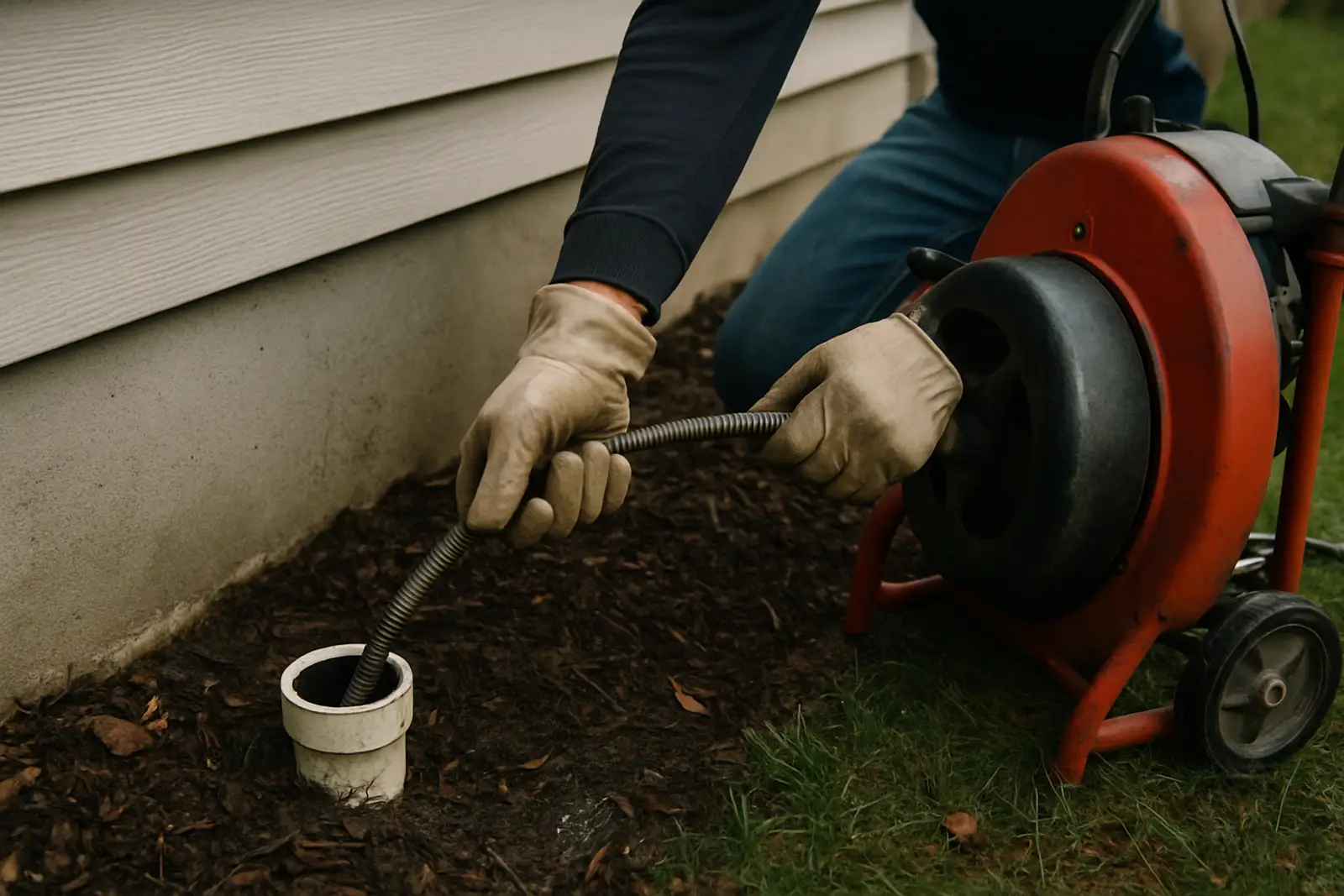
Houses and pipes in Nampa
Downtown Nampa and the neighborhoods around the old railroad depot have homes from the 1900s through the 1940s, many with basements or crawlspaces and clay laterals.
Neighborhoods built from the 1950s through the 1980s, including areas near Northwest Nazarene University, have ranches with cast iron and clay lines.
Much of Nampa has been built since the 1990s, with large subdivisions spreading in every direction.
Some properties on the edges of the city still use septic.
Nampa sits on flat farmland with irrigation canals, hard water, cold winters and hot summers.
Who handles what in Nampa
The City of Nampa's Wastewater Division runs the sewer system and its treatment plant. Nampa homeowners own the private lateral from the house to the public sewer.
Drain problems Nampa homes see most
| Problem | Why it happens here |
|---|---|
| Roots in clay laterals | Downtown and older neighborhoods |
| Grease and wipes | Busy family households |
| Mineral scale | Hard water |
| Frozen lines | Winter cold snaps |
| Cast iron corrosion | Midcentury homes |
| Canal-area groundwater | Irrigation season |
Nampa drains through the year
Irrigation season raises groundwater near canals, and hot summers drive roots toward water.
January inversions can hold the valley below freezing for a week, icing up garage laundries and crawlspace drains.
What drain cleaning costs in Nampa
| Job | Typical range |
|---|---|
| Sink, tub or toilet cleared | $125–$265 |
| Main line cleared from a cleanout | $190–$430 |
| Root cutting | $250–$575 |
| Hydro jetting | $325–$790 |
| Sewer camera inspection | $130–$270 |
| Frozen line thawing | $185–$470 |
Newer subdivision lines go quickly. Old clay near downtown, frozen pipes and septic work take longer.
Before the plumber arrives
- 1
Stop the water
Pause laundry and dishes.
- 2
Frigid night?
If several drains stopped after a hard freeze, the line may be frozen.
- 3
Sewer or septic?
Some Nampa-area homes use septic; tell the plumber.
- 4
Find the cleanout
Look near the front of the house or in the crawlspace.
Railroad and sugar town
Nampa was founded in the 1880s where the Oregon Short Line railroad met a branch line, and it grew as a railroad hub and farming center, with a large sugar beet factory. The neighborhoods around the depot and downtown have homes from the early 1900s, many with clay laterals under big trees. Roots and cracks are common.
Midcentury neighborhoods
Nampa grew after World War II with ranches near Northwest Nazarene University and along Nampa Boulevard. Cast iron and clay lines from that era are aging, with scale and roots common.
Rapid growth
Since the 1990s, Nampa has more than tripled in population as families moved to the Treasure Valley for lower costs. New subdivisions have PVC drains, and grease, wipes and kids' bathrooms cause most of the clogs there.
Hard water
Nampa's water is hard, and scale builds up in drain lines, water heaters and fixtures. Jetting removes scale and grease buildup in kitchen and laundry lines.
A typical Nampa call
In July, a family in a 1940s home near downtown notices the bathtub filling with gray water when the washer drains. The plumber opens the cleanout and clears roots from a big silver maple about thirty feet out. On the camera, the clay is cracked at several joints. They plan a liner.
Canals and irrigation
Nampa is laced with irrigation canals that carry water to farms and yards from spring through fall. Groundwater near the canals rises during irrigation season, and cracked laterals take in water.
Winter
Nampa winters bring inversions and cold snaps. A crawlspace with its vents left open or a garage with the door up is where Nampa pipes freeze first, so shut both before a cold snap.
Northwest Nazarene and the College of Western Idaho
Northwest Nazarene University and the College of Western Idaho bring students to Nampa, and older homes nearby are often rentals. Heavy use in old lines means more clogs.
Family households
Nampa has many young families and multigenerational households, and busy kitchens send grease and food scraps down drains. A grease container and a sink strainer help prevent clogs.
Restaurants and downtown
Downtown Nampa's revived restaurants and the busy corridors along Nampa-Caldwell Boulevard and Garrity serve a growing population. Interceptors pumped on schedule keep kitchens open.
The Snake River Stampede rodeo each July brings big crowds and busy restaurants.
Septic on the edges
Some properties around Nampa, especially in unincorporated Canyon County, use septic systems. A full tank slows every drain in the house. Regular pumping keeps systems working.
Crawlspace homes
Many Nampa homes, old and new, sit on crawlspaces. Drain lines under the floor can freeze in winter or leak over time. A plumber can check them while clearing the main.
The old sugar factory neighborhoods
For decades, the Amalgamated Sugar factory and the rail yards were among Nampa's biggest employers, and the modest homes built for their workers still line the streets east and south of downtown. Many have been passed down through families or sold to new arrivals, and their laterals are often original clay, sometimes with no outside cleanout. Roots from the shade trees planted generations ago fill the joints. Adding an outside cleanout makes each future visit faster and cheaper.
Lakeview Park and the north side
The neighborhoods around Lakeview Park, north of downtown, have homes from the 1920s through the 1960s on tree-lined streets. Cast iron under the floor and clay out to the street are typical, and scale and roots are the usual findings on camera. Many of these homes have finished basements, where a backup can do real damage.
Basements in older homes
Unlike most newer Treasure Valley houses, many older Nampa homes have full or partial basements, some dug into the old farmland soil before modern waterproofing. The basement floor drain is the lowest opening in the plumbing, so it's where a lateral backup shows up first. During irrigation season, groundwater can also seep through older basement walls. A sump pump and a sealed lateral help keep these basements dry.
Commuters to Boise
Many Nampa residents commute along I-84 to jobs in Boise and Meridian, and morning and evening routines stack showers, laundry and dishes into short windows. A partly blocked line that copes during the day can overflow when the whole household gets ready at once.
Garbage disposals and rice
Many Nampa households cook rice, beans and tortillas daily, and starchy scraps sent down the disposal swell and stick to grease in the line. Scraping plates into the trash, using the disposal sparingly and running plenty of cold water keep kitchen lines open.
When you call
Share the neighborhood, the home's age, whether it's on a crawlspace and whether you're on sewer or septic. Mention big trees near the line.
Nampa ZIP codes
- 83651
- 83686
- 83687
Nampa drain questions
Who handles sewer in Nampa?+
Nampa's Wastewater Division. The lateral is the homeowner's.
Why do older Nampa homes have root clogs?+
Their clay laterals are often seventy to a hundred years old and run under mature trees.
Does hard water cause clogs?+
It contributes. Scale narrows pipes and gives grease something to stick to.
Should Nampa buyers order a sewer scope?+
Yes, especially for older homes near downtown.