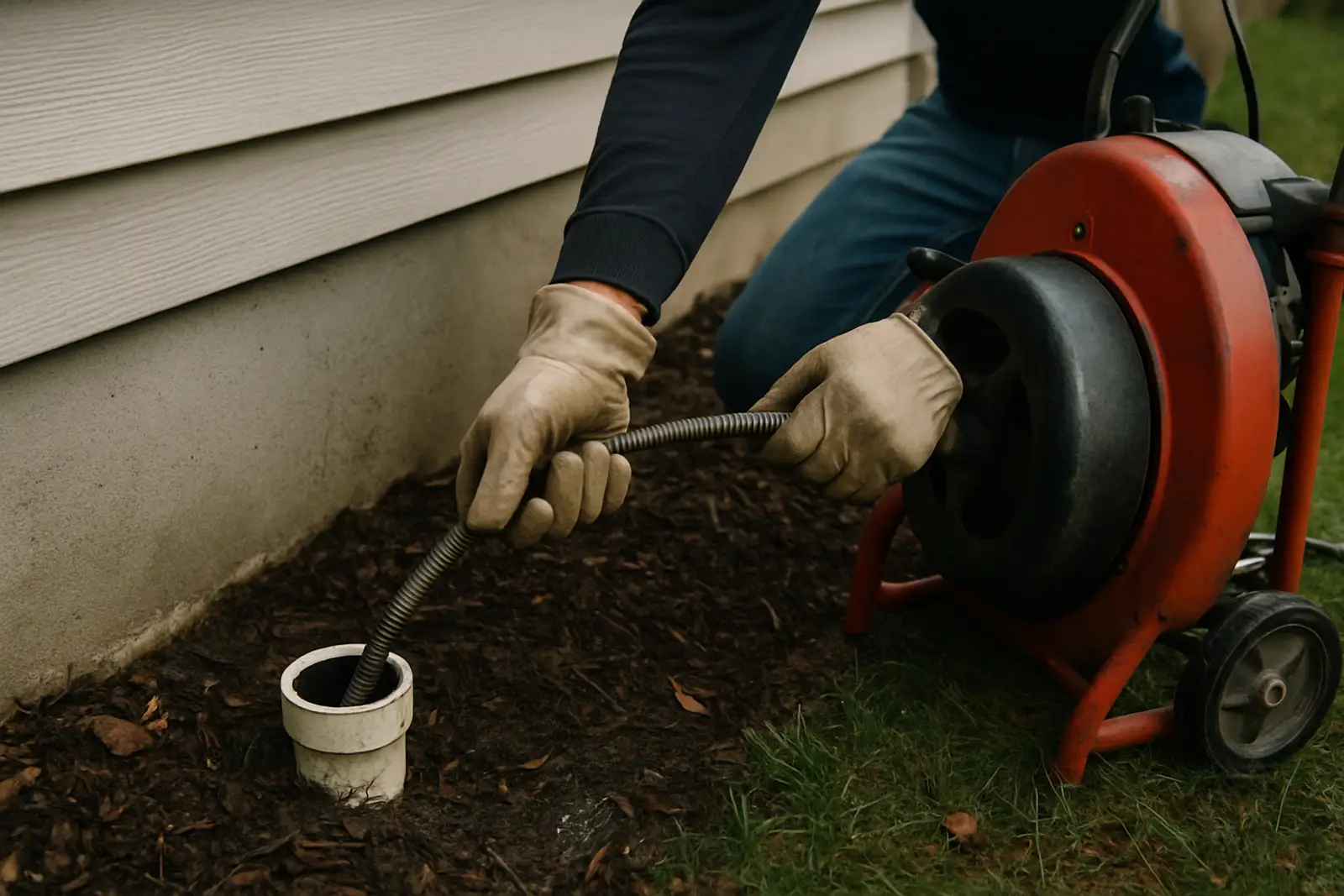
Houses and pipes in Rockford
The neighborhoods around downtown, Churchill's Grove, Haight Village, Signal Hill and the near southeast side have homes from the 1870s through the 1920s, many with basements and clay tile laterals under big parkway trees.
Swedish and Italian immigrant neighborhoods on the east and south sides, including the old Seventh Street area and the blocks around Kishwaukee Street, were built from the 1890s through the 1930s with frame houses and clay sewer lines.
Postwar neighborhoods on the northeast and east sides were built from the 1940s through the 1970s with ranches, Cape Cods and split-levels over full basements.
East of Alpine Road and out toward I-90, Rockford grew from the 1970s onward with PVC drains, sump pumps and finished basements.
The Rock River splits the city into east and west sides, and many older neighborhoods sit on low ground near the river or its creeks, where heavy rain can push water into old sewers.
Who handles what in Rockford
The City of Rockford maintains the public sewers, and the Four Rivers Sanitation Authority treats the wastewater. A Rockford home's lateral, from the foundation out to the main, is owned by the property owner.
Drain problems Rockford homes see most
| Problem | Why it happens here |
|---|---|
| Roots in clay tile | Older east and west side neighborhoods |
| Basement backups | Homes near the river and creeks |
| Collapsed or sagging laterals | Century-old clay pipe |
| Cast iron corrosion | Postwar homes |
| Grease and wipes | Busy households and rentals |
| Frozen drains | Northern Illinois winters |
Rockford drains through the year
Spring thaw and heavy spring and summer rain soak the ground near the river, and roots grow fastest from May through August.
Northern Illinois winters bring long cold snaps that freeze drains in garages, enclosed porches and crawlspaces.
What drain cleaning costs in Rockford
| Job | Typical range |
|---|---|
| Sink, tub or toilet cleared | $125–$270 |
| Main line cleared from a cleanout | $195–$430 |
| Root cutting | $255–$580 |
| Hydro jetting | $330–$790 |
| Sewer scope inspection | $135–$275 |
| Sump pump replacement | $320–$850 |
Newer east side homes clear quickly. Century-old clay, homes without a cleanout and sagging laterals near the river take more time.
Before the plumber arrives
- 1
Stop running water
Hold off on laundry, showers and dishes.
- 2
Look at the floor drain
Dirty water at the basement floor drain means the main is blocked.
- 3
Rental?
Call your landlord first; many older Rockford homes are rentals.
- 4
Find the cleanout
Often a capped pipe in the basement near the front wall, if there is one.
A factory town's neighborhoods
In the early 1900s Rockford was one of the busiest manufacturing cities in the Midwest, known for furniture, knitting mills, machine tools and the Rockford sock. Workers, many of them Swedish and Italian immigrants, lived in frame houses close to the factories on both sides of the river. Those homes were built quickly, with clay tile sewer lines laid shallow under narrow lots. A century later, many of those laterals have cracked, sagged or filled with roots.
Because many of these homes have changed hands many times and been converted to rentals, the sewer lines have often been patched rather than replaced. A camera inspection usually shows a mix of old clay, short sections of newer pipe and transitions where clogs start.
Churchill's Grove and Haight Village
Rockford's historic districts, including Churchill's Grove on the west side and Haight Village near downtown, have Victorian and early 1900s homes on tree-lined streets. The big maples and elms that shade them also send roots into clay laterals. Lining or pipe bursting can renew those lines without digging up historic yards.
Postwar east side
After World War II, Rockford spread east with ranches, Cape Cods and split-levels, many with cast iron under the house and clay laterals. At sixty to seventy years old, those lines commonly show scale in the cast iron and roots or cracks in the clay. Basement floor drains near the laundry are usually the first place trouble shows.
Near the river
Neighborhoods close to the Rock River, Keith Creek and Kent Creek sit on lower ground where heavy rain raises groundwater. Cracked clay laterals let that water in, and during big storms the public sewers can surcharge. A backwater valve can protect a finished basement, and keeping sump pumps and gutters out of the sanitary sewer helps the whole system.
A typical Rockford call
On a hot July afternoon, a family in a 1912 frame house on the southeast side finds water rising through the basement floor drain while the washer runs. There's no cleanout, so the plumber pulls the basement toilet and runs a root cutter, clearing a heavy mass of roots about thirty-five feet out. The camera shows a sag where the clay has settled near the curb. The family adds a cleanout and gets a quote for replacing the sagging section.
Newer east side homes
East of Alpine Road and along the I-90 corridor, homes built from the 1970s onward have PVC drains, cleanouts and sump pumps. Root intrusion is rare. Most calls are about grease, wipes and sump pumps that fail during heavy storms.
Rentals and heavy use
Many older Rockford homes have been split into apartments or rented to large households. More people means more water through an old lateral that was never designed for it. Landlords who jet the main every year or two prevent most emergencies.
Restaurants and downtown
Downtown Rockford's revived restaurants and bars along the river, along with corridors on East State Street, Alpine Road and Perryville Road, have many commercial kitchens. Interceptors pumped on schedule and lines jetted regularly keep them flowing.
Winter in Rockford
Rockford winters are long and cold, with arctic air that can hold temperatures below zero for days. Drains in garages, enclosed back porches and crawlspaces freeze first. Wrap exposed pipe, keep garage doors closed and let faucets drip on the coldest nights. Thaw frozen lines gently, never with an open flame.
Buying in Rockford
A sewer scope is one of the best investments when buying an older Rockford home. Ask the inspector to run the camera to the main, watch the full video and look for roots, cracks, sags and offsets. A repair estimate before closing can save thousands.
What to tell a Rockford plumber
Share your neighborhood and the home's age, whether there's a basement cleanout, and where the water appeared. Mention whether the home is near the river, whether there are big parkway trees and whether the trouble started after rain.
Rockford ZIP codes
- 61101
- 61102
- 61103
- 61104
- 61107
- 61108
- 61109
- 61112
- 61114
Rockford drain questions
Who handles sewer in Rockford?+
The city maintains public sewers and the Four Rivers Sanitation Authority treats the wastewater. The lateral from your house to the main is yours.
Why do old Rockford homes have so many root clogs?+
Their clay tile laterals are often more than a century old, with joints that let roots in, and parkway trees have grown huge over them.
My house has no cleanout. Is that a problem?+
The line can still be cleared through a toilet or vent, but adding a cleanout makes future service faster and cheaper.
Should I scope the sewer before buying in Rockford?+
Yes. Older homes here often have roots, sags or cracked clay that can be expensive to fix.