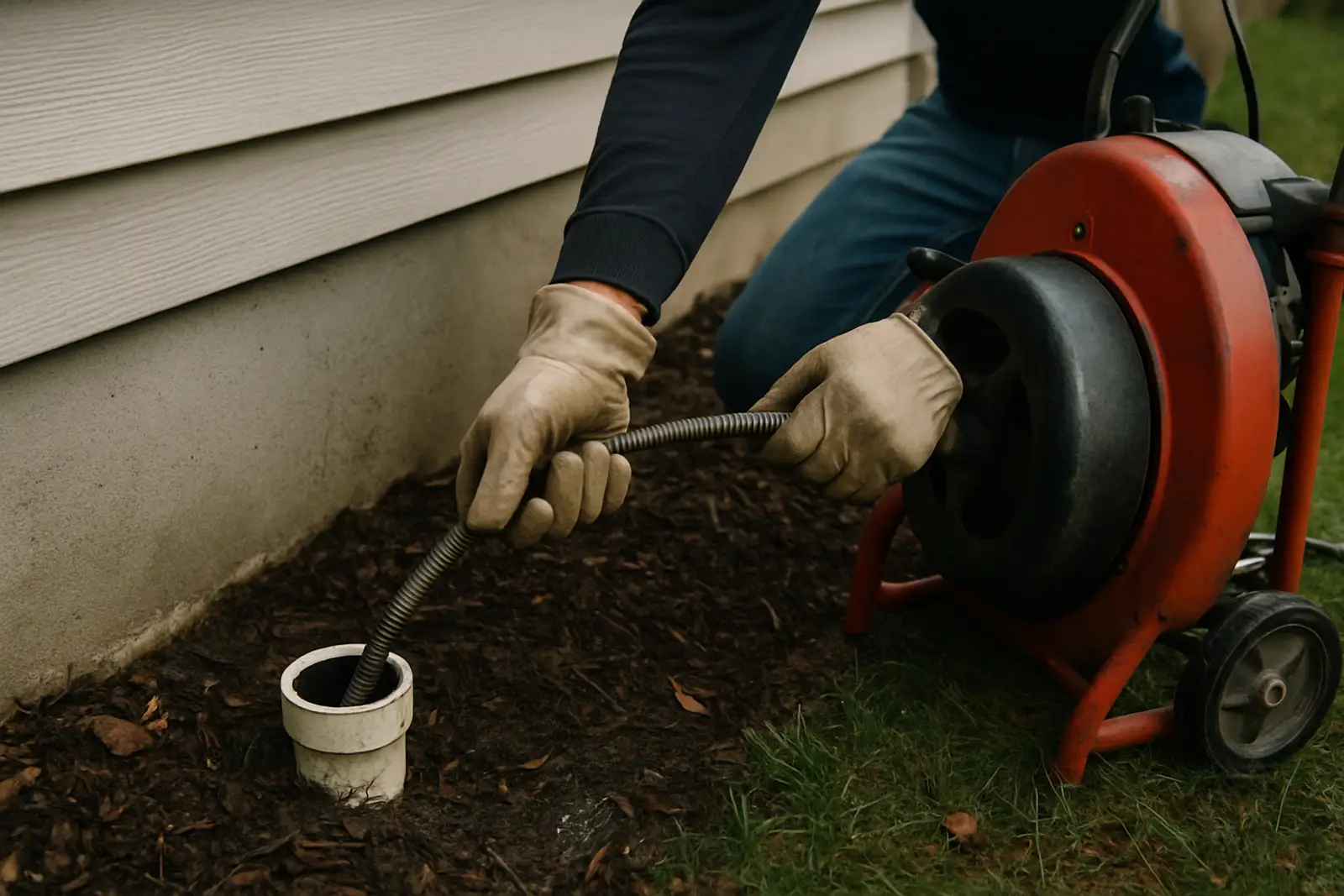
Houses and pipes in Springfield
The neighborhoods near downtown, the Lincoln Home area, Enos Park, the Old Aristocracy Hill district and the near south side have homes from the 1850s through the 1920s, with basements or cellars and clay tile laterals.
Neighborhoods like Harvard Park, Vinegar Hill and the older blocks east of downtown were built in the 1900s through the 1940s with bungalows, foursquares and frame houses.
Postwar Springfield spread west and south from the 1950s through the 1970s with ranches and split-levels over basements, often with cast iron and clay laterals.
West Springfield, out toward Chatham and along Veterans Parkway, has grown since the 1980s with PVC drains, sump pumps and finished basements.
Much of the older city drains through combined or aging sewers that can be overwhelmed by heavy central Illinois thunderstorms, and Lake Springfield and Sugar Creek shape the south side.
Who handles what in Springfield
The Springfield Metro Sanitary District operates the trunk sewers and treatment plants serving the city. The private service line from a Springfield home out to the public sewer belongs to the homeowner.
Drain problems Springfield homes see most
| Problem | Why it happens here |
|---|---|
| Roots in clay tile | Enos Park, Aristocracy Hill and older neighborhoods |
| Basement backups after storms | Older homes on aging sewers |
| Collapsed clay sections | Century-old laterals |
| Cast iron corrosion | Postwar homes |
| Grease and wipes | Large households and rentals |
| Frozen drains | Central Illinois cold snaps |
Springfield drains through the year
Spring and early summer thunderstorms bring the heaviest rain and the most basement backups, and roots grow fastest from May through August.
Winter cold fronts sweep across the prairie and can freeze drains in garages, crawlspaces and enclosed porches.
What drain cleaning costs in Springfield
| Job | Typical range |
|---|---|
| Sink, tub or toilet cleared | $125–$265 |
| Main line cleared from a cleanout | $190–$425 |
| Root cutting | $250–$570 |
| Hydro jetting | $325–$780 |
| Sewer scope inspection | $130–$270 |
| Sump pump replacement | $315–$840 |
Newer west side homes clear quickly. Old clay near downtown, homes without a cleanout and collapsed sections take longer.
Before the plumber arrives
- 1
Hold off on water
Stop the washer, dishwasher and showers.
- 2
Check the cellar or basement
Water at the floor drain usually means the main line is blocked.
- 3
Storm in progress?
If neighbors also have water after heavy rain, the public sewer may be overloaded.
- 4
Find the cleanout
Older homes may not have one; check near the front basement wall.
Lincoln's city
Springfield's oldest neighborhoods grew up around the Old State Capitol, the Lincoln Home and the downtown square in the mid 1800s. Aristocracy Hill, just west of downtown, was where the city's wealthy families built their mansions, and Enos Park to the north filled with Victorians and workers' homes as the railroads and coal mines brought jobs. Many of these houses were built before indoor plumbing, and their sewer laterals were added later, often clay tile laid shallow under brick streets and parkways. Over a century or more, roots, settling and freeze cycles have broken many of those joints.
Repairs in the historic areas often require care around brick sidewalks, old trees and protected facades. Trenchless lining or bursting is usually the preferred approach when the pipe is badly damaged.
Enos Park and the near north side
Enos Park has seen a lot of restoration in recent years, with owners bringing grand old houses back from decades as rooming houses and apartments. Those decades of heavy use left many laterals in rough shape, and a camera inspection is often one of the first things new owners order. Roots, cracked clay and sections that have collapsed into ovals are common findings.
Postwar Springfield
After World War II, Springfield expanded west and south with ranches, split-levels and bungalow-style homes, many for state workers. Most have basements with a floor drain near the laundry, cast iron under the floor and clay out to the street. At this age, cast iron scale and clay roots are the leading causes of main line clogs.
Storms and old sewers
Central Illinois gets intense spring and summer thunderstorms, and Springfield's older sewer areas can be overwhelmed when several inches of rain fall in a few hours. Water from cracked laterals, old downspout connections and the public system pushes back toward basement drains. A backwater valve, disconnecting downspouts from the sewer and a floor drain plug can all help keep the basement dry.
A typical Springfield call
In early June, after an evening thunderstorm, a family in a 1910 foursquare in Enos Park finds water rising from the basement floor drain. The plumber finds no cleanout, removes the basement toilet and runs a cable with a root cutter, clearing a thick mass of roots from a silver maple about forty feet out. The camera shows a cracked joint and a section near the curb that has dropped. The family adds a cleanout and gets quotes for lining and a spot repair.
West Springfield and Chatham
West of Veterans Parkway and south toward Chatham, homes built since the 1980s have PVC drains, cleanouts and sump pumps. Most calls there are about grease, wipes, hair and sump pumps that fail during storms. Some homes have finished basements with bathrooms served by ejector pumps.
State workers, students and rentals
Springfield is home to thousands of state employees and students at the University of Illinois Springfield and nearby colleges, and many older homes near downtown are rentals. Several tenants in an old house push more water and debris through a lateral than it was built for. An owner who books a jetting between tenants, before the new lease starts, usually avoids the midnight call from a renter standing in a wet basement.
Restaurants and the horseshoe
Springfield's restaurants, from downtown spots near the Capitol to the diners famous for the horseshoe sandwich, add a lot of grease to the sewer system. Corridors along MacArthur Boulevard, Wabash Avenue and Dirksen Parkway hold many more kitchens. Commercial kitchens need grease traps pumped regularly and lines jetted to keep them flowing, especially during the Illinois State Fair.
Winter on the prairie
Springfield's winters bring cold fronts that can drop temperatures below zero, with wind sweeping across the flat prairie. The washer line on an enclosed back porch and the drain in an unheated garage are usually the first to ice up, followed by pipes in crawlspaces under old additions. Foam sleeves, a closed garage door and a trickling faucet on subzero nights prevent most of it.
What to tell a Springfield plumber
Share your neighborhood and the home's age, whether there's a basement or cellar and whether there's a cleanout. Mention whether the trouble started after heavy rain, whether neighbors also have water and whether large trees grow near the sewer path.
Springfield ZIP codes
- 62701
- 62702
- 62703
- 62704
- 62706
- 62707
- 62711
- 62712
Springfield drain questions
Who handles sewer in Springfield?+
The Springfield Metro Sanitary District runs the trunk sewers and treatment plants. Your service line to the public sewer is your responsibility.
Why does my old Springfield house back up after storms?+
Aging sewers and cracked clay laterals take in rain and groundwater. In heavy storms the public lines fill and water rises through the lowest drain in the house.
Can a cracked clay line be fixed without digging?+
Often, yes. Lining or pipe bursting can renew the pipe through small access points.
Should I scope the sewer before buying an older Springfield home?+
Yes. Roots, cracks and collapsed sections are common in pre-1950 homes.