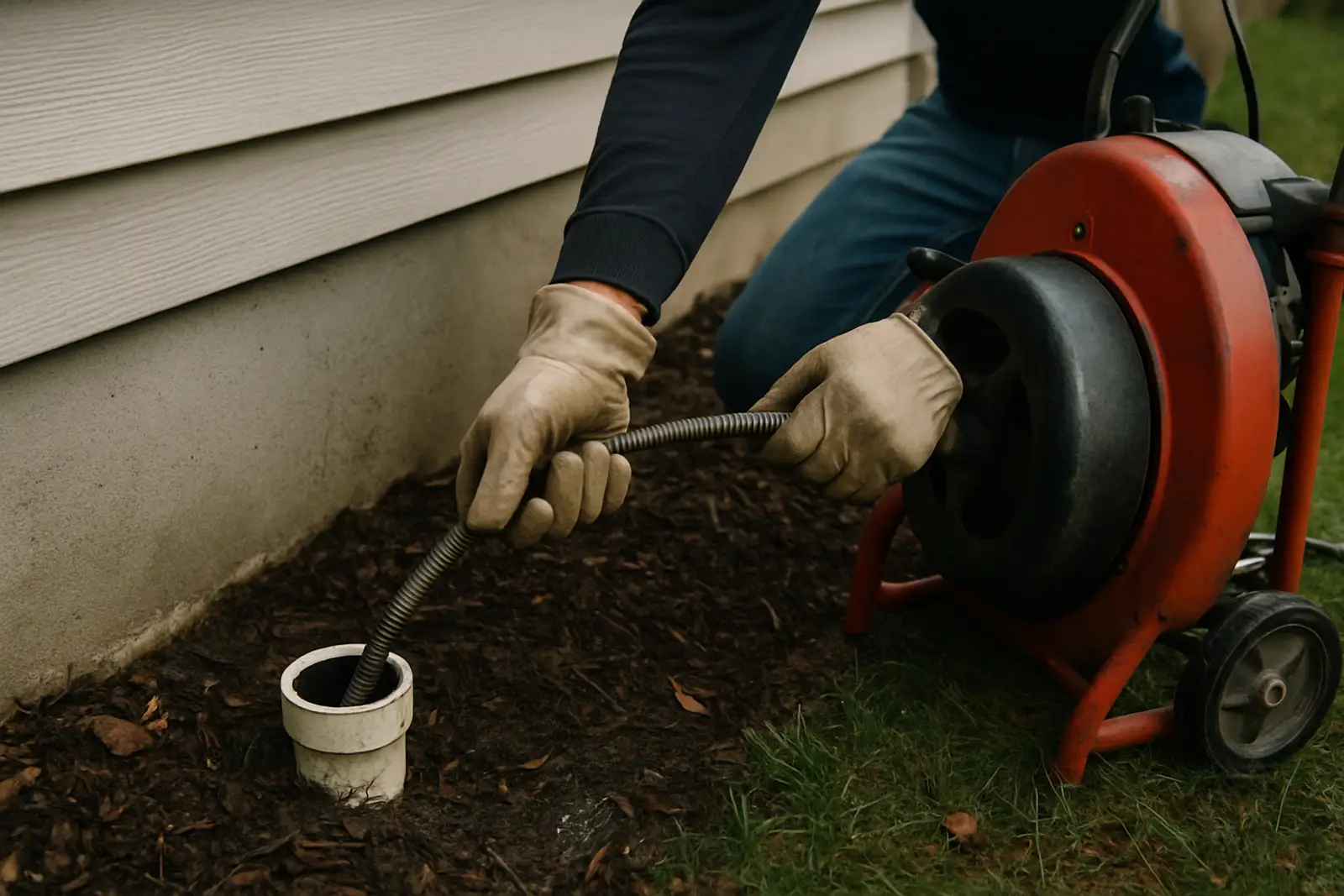
Houses and pipes in Richmond
The Fan, the Museum District, Church Hill, Jackson Ward and Union Hill have rowhouses, townhouses and Victorians from the 1840s through the 1920s, many with English basements or crawlspaces and old clay or cast iron laterals.
Northside neighborhoods like Bellevue, Ginter Park and Barton Heights were built from the 1900s through the 1930s with foursquares, bungalows and Colonial Revivals.
The West End inside the city, Windsor Farms, Westover Hills and Forest Hill have homes from the 1910s through the 1950s on larger lots with big trees.
South Richmond and the neighborhoods annexed from Chesterfield were built largely from the 1940s through the 1970s with ranches and Cape Cods.
About a third of Richmond, mostly the older core, is served by combined sewers that carry storm water and sewage together.
Who handles what in Richmond
Richmond's Department of Public Utilities runs the city's wastewater collection system and treatment plant on the James. Richmond homeowners own their sewer lateral up to the connection with the public main.
Drain problems Richmond homes see most
| Problem | Why it happens here |
|---|---|
| Roots in clay pipe | The Fan, Museum District and Northside |
| Combined sewer surcharges | The older city core |
| Cast iron corrosion | Rowhouses and older homes |
| Shared or alley laterals | Rowhouse blocks |
| Grease and wipes | VCU rentals and restaurants |
| Frozen lines | Occasional winter cold |
Richmond drains through the year
Summer thunderstorms and tropical remnants bring heavy rain that overloads the combined sewers in the old city, and roots grow fastest from spring through summer.
Occasional winter cold snaps can freeze drains in crawlspaces, enclosed back porches and exterior walls of older homes.
What drain cleaning costs in Richmond
| Job | Typical range |
|---|---|
| Sink, tub or toilet cleared | $140–$290 |
| Main line cleared from a cleanout | $210–$465 |
| Root cutting | $275–$620 |
| Hydro jetting | $360–$850 |
| Sewer camera inspection | $145–$290 |
| Cleanout installation | $700–$2,000 |
Newer lines clear quickly. Century-old clay in the Fan, alley laterals, rowhouses without a cleanout and corroded cast iron take longer.
Before the plumber arrives
- 1
Stop water use
Hold off on showers, laundry and dishes.
- 2
Check the lowest level
Water at an English basement floor drain or ground floor tub points to the lateral.
- 3
Heavy rain?
In the older city, a backup during a storm may be the combined sewer surcharging.
- 4
Find the cleanout
Look in the basement, the back yard or near the alley.
The Fan and the Museum District
The Fan District, named for the way its streets fan out from Monroe Park, has thousands of brick rowhouses and townhouses from the late 1800s and early 1900s. The Museum District, just west, continues that pattern. Many homes have English basements, small back yards and alleys behind them where the sewer mains run. Laterals are often clay or cast iron, more than a century old, and the big trees along the sidewalks and in back yards send roots into them. Lining is often the best way to renew a lateral without disturbing tight rowhouse yards and alleys.
Church Hill and Union Hill
Church Hill, where Patrick Henry gave his liberty or death speech at St. John's Church, has some of Richmond's oldest homes, from Greek Revival and Italianate townhouses to modest frame cottages. Union Hill, next door, has similar old homes. Many have been restored after decades of neglect, and the sewer lateral is often one of the last systems to be replaced. Roots, cracks and collapsed sections are common.
Combined sewers and the James
Richmond built a combined sewer system in its older core, and during heavy rain, overflows send diluted sewage into the James River. The city has invested heavily in storage and treatment to reduce overflows. For homeowners in the combined sewer area, heavy rain can surcharge the system and push water back into basements and low fixtures. A backwater valve and disconnecting downspouts from the sewer help.
Rowhouse quirks
In some rowhouse blocks, laterals from several homes join before reaching the main, or a lateral passes under a neighbor's yard to reach the alley. That can make it hard to tell whose line is clogged. A camera inspection traces the line and shows where problems are and who owns that section.
A typical Richmond call
After a summer thunderstorm, a couple in a 1910 rowhouse in the Fan finds water rising through the floor drain in their English basement. The plumber opens the cleanout in the back yard and clears roots about twenty-five feet out, near the alley. The camera shows cracked clay and a sag where the line meets the alley main. The couple books lining and asks about a backwater valve.
Northside
Bellevue, Ginter Park and Barton Heights on the Northside have foursquares, bungalows and Colonial Revival homes from the early 1900s, shaded by huge oaks and maples. Clay laterals and roots are a common pairing here. Many homes have basements or crawlspaces with cast iron drains that may be heavily scaled.
Forest Hill and Westover Hills
South of the James, Forest Hill and Westover Hills have 1910s through 1940s homes on hilly, wooded lots. Laterals can be long and steep, and the mature oaks and poplars send roots far. Jetting and lining keep these lines working.
VCU and student rentals
Virginia Commonwealth University sits in the middle of the Fan and Oregon Hill, and many old rowhouses nearby are rented to students. A house with five roommates on a hundred-year-old lateral is asking a lot of the pipe. Landlords who jet lines before each school year avoid many September emergencies.
Restaurants in Scott's Addition and Carytown
Richmond's food scene has exploded, with breweries and restaurants in Scott's Addition, Carytown, Church Hill, Jackson Ward and downtown. Many are in old buildings with old sewer lines. Grease interceptors pumped on schedule and lines jetted regularly keep them running.
Southside ranches
South Richmond and the neighborhoods annexed from Chesterfield County were built mostly after World War II with ranches and Cape Cods on crawlspaces or slabs. Cast iron drains and clay laterals from that era are now aging, with scale and roots the most common problems.
Winter cold
Richmond's winters are generally mild, but a few cold snaps each year drop temperatures into the teens. Old rowhouses with uninsulated crawlspaces, back porches and exterior walls are vulnerable. Open cabinet doors under sinks on exterior walls and let faucets drip on the coldest nights.
Calling a Richmond plumber
Give your neighborhood and the home's age, whether it's a rowhouse, and whether the lateral runs to the street or the alley. Mention whether the backup happened during rain, where the cleanout is and whether big trees grow near the line.
Richmond ZIP codes
- 23173
- 23219
- 23220
- 23221
- 23222
- 23223
- 23224
- 23226
- 23227
- 23230
- 23234
- 23237
- 23298
Richmond drain questions
Who handles sewer in Richmond?+
Richmond's Department of Public Utilities. Your lateral up to the public main is yours.
What is Richmond's combined sewer area?+
Much of the older city, including the Fan, Church Hill and downtown, has sewers that carry rain and sewage together. Heavy rain can overload them.
Why does my Fan rowhouse sewer run to the alley?+
Many rowhouse blocks have sewer mains in the alleys behind the homes, so the lateral runs out the back rather than the front.
Should I scope the line before buying in Richmond?+
Yes, especially in older neighborhoods where laterals are often a century old.