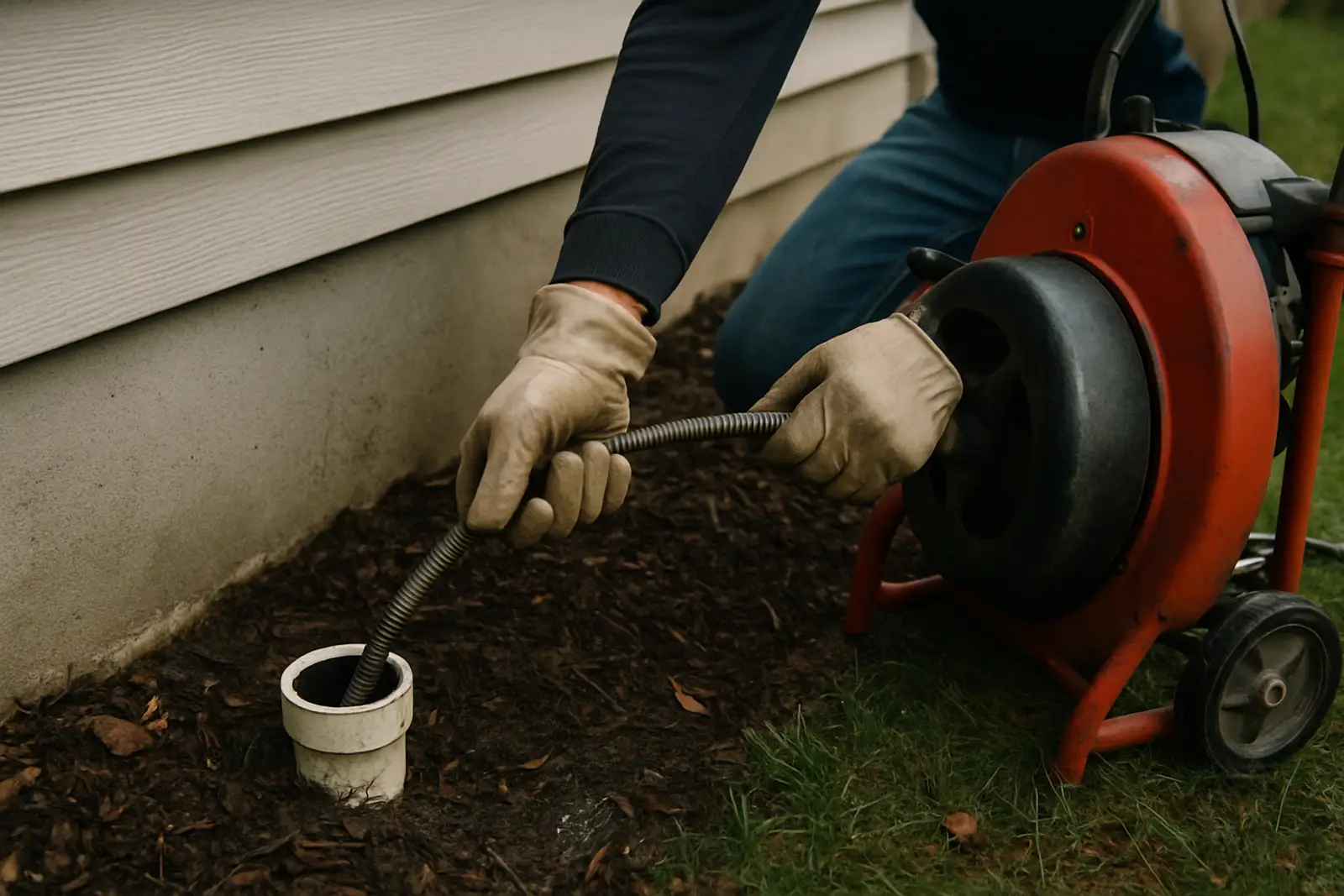
Houses and pipes in Brockton
The neighborhoods around downtown, Campello and the North Side have two-families, triple-deckers and worker cottages from the 1880s through the 1920s, with basements and clay or cast iron laterals.
The West Side and the area around D.W. Field Park have larger Victorian and Colonial Revival homes on tree-lined streets.
The East Side, Montello and the city's edges filled in from the 1940s through the 1970s with Cape Cods, ranches and split-levels.
Some outlying parts of Brockton still use septic systems.
Brockton has large Cape Verdean, Haitian and Irish communities, and many households are large and multigenerational.
Who handles what in Brockton
Brockton's Department of Public Works runs the city's sewer system and its Advanced Water Reclamation Facility. In Brockton, the building sewer from a property to the public main is the owner's to maintain.
Drain problems Brockton homes see most
| Problem | Why it happens here |
|---|---|
| Shared lines in multi-families | Downtown, Campello and the North Side |
| Roots in clay laterals | The West Side and older neighborhoods |
| Basement backups | Older homes with floor drains |
| Cast iron corrosion | Century-old buildings |
| Grease buildup | Large family kitchens |
| Frozen pipes | New England winters |
Brockton drains through the year
March meltwater and July thunderstorms both push extra water into Brockton's old laterals, and the shade trees on the West Side put on most of their root growth in early summer.
Winter cold freezes pipes in back porches, unheated basements and exterior walls.
What drain cleaning costs in Brockton
| Job | Typical range |
|---|---|
| Sink, tub or toilet cleared | $140–$290 |
| Main line cleared from a cleanout | $210–$465 |
| Root cutting | $275–$620 |
| Hydro jetting | $360–$850 |
| Sewer camera inspection | $145–$290 |
| Septic line clearing | $210–$490 |
Postwar single-family homes are the quickest. Multi-families with shared lines, century-old clay and homes without cleanouts take longer.
Before the plumber arrives
- 1
Let the other units know
In a two- or three-family, all households need to stop running water.
- 2
Sewer or septic?
Some homes on the city's edges use septic; tell the plumber which you have.
- 3
Check the basement
Water around the floor drain or laundry sink points to the building sewer.
- 4
Find the cleanout
Brockton basements usually have one low on the front wall.
Shoe City
By the early 1900s, Brockton's factories made shoes for soldiers, workers and fashionable buyers around the world, and the city filled with workers from Ireland, Sweden, Lithuania, Italy and later Cape Verde. Builders put up two-families, triple-deckers and cottages close to the factories. Those buildings have cast iron stacks and clay laterals that are now a century old. Roots, cracks and heavy scale are common.
Multi-family homes
A large share of Brockton's housing is two- and three-family buildings, where several households share one building sewer. More people means more water, grease and wipes through old pipe, and the basement or first-floor unit gets the water when it clogs. Owners who jet lines regularly avoid many emergencies.
The West Side
The West Side, near D.W. Field Park and the old shoe barons' homes, has larger Victorians and Colonial Revivals on tree-lined streets. Those deep lots mean long clay laterals, and the old maples and oaks above them have had a century to work into the joints.
A typical Brockton call
On a Sunday in July, the first-floor family in a 1915 two-family in Campello finds water spreading from the basement floor drain while the upstairs family runs the washer. The owner calls a plumber, who opens the cleanout and clears a mix of grease and roots about thirty feet out. On the monitor, the clay has split where it passes beneath the sidewalk, so the owner schedules a liner for the fall.
Cape Verdean and Haitian families
Brockton has one of the largest Cape Verdean communities in the country, along with a large Haitian community. Many households are big and multigenerational, with lots of home cooking. Grease and food scraps are leading causes of kitchen clogs. A grease can and a sink strainer help.
Postwar neighborhoods
The East Side, Montello and the city's edges filled in after World War II with Cape Cods, ranches and split-levels. Cast iron and clay laterals from that era are now aging, with scale and roots common.
Septic on the edges
Some outlying parts of Brockton still use septic systems. A full tank, a clogged baffle or a failing leach field can look like a clogged sewer line. Regular pumping keeps systems working.
Groundwater and storms
Parts of Brockton sit on low, wet ground near the Salisbury Plain River and its brooks. Spring thaw and heavy rain raise groundwater, which seeps into cracked laterals and old foundations. Sump pumps and sealed laterals help keep basements dry.
Restaurants downtown and on Main Street
Downtown Brockton's restaurants and the Cape Verdean, Haitian and Brazilian restaurants along Main Street and Belmont Street put a lot of grease into the sewers. Kitchens stay open by pumping grease traps on schedule.
Winter
Brockton winters bring cold snaps and nor'easters. In old wooden multi-families, back porches and rear kitchens freeze first. Heat the basement and insulate exposed pipe.
Kitchen stacks
In two- and three-family homes, kitchens are often stacked at the back of the building, sharing one cast iron kitchen stack. Grease from several households coats that pipe, and it can clog at the base in the basement before the main does. If the first-floor kitchen sink fills with water from upstairs, jetting the kitchen stack usually fixes it.
Because the stack serves everyone, a grease problem from one household affects the whole building. Owners who remind tenants about grease see fewer calls.
Old cellars
Many older Brockton homes have fieldstone or brick cellars with dirt or thin concrete floors. Floor drains there may connect directly to the building sewer, and water from a backup can spread quickly. A backwater valve and a floor drain plug add protection.
Campello and the old factory district
Campello, on Brockton's south side, grew up around the shoe factories along the railroad and Main Street, and its streets are lined with two-families and triple-deckers built for the workers. Many of the factories are gone or converted, but the houses remain, with laterals running under narrow front yards and sidewalks to mains that are as old as the neighborhood. Some buildings were converted to more apartments than they were designed for, and the lateral was never upgraded. When an owner finds the line clogging every few months, the camera usually shows a combination of roots, cracked clay and grease, and lining the run is often the most practical fix.
Because so many Campello buildings are close together, a sinkhole or soft spot in the sidewalk over a lateral is worth reporting quickly, since it can mean the pipe underneath has collapsed.
Useful details
Mention the neighborhood, the building type and age, how many units share the line, whether you're on sewer or septic and where the cleanout is.
Brockton ZIP codes
- 02301
- 02302
Brockton drain questions
Who handles sewer in Brockton?+
Brockton's DPW runs the public sewers and the reclamation facility. The building sewer is the owner's.
Why do multi-family homes back up so often?+
Several households share one old building sewer, so more water and grease go through it, and the basement unit gets the backup.
Are there septic systems in Brockton?+
Yes, in some outlying areas. A full septic tank can look like a clog.
Should I get a camera inspection before buying in Brockton?+
Yes, especially for multi-families and homes built before 1950.