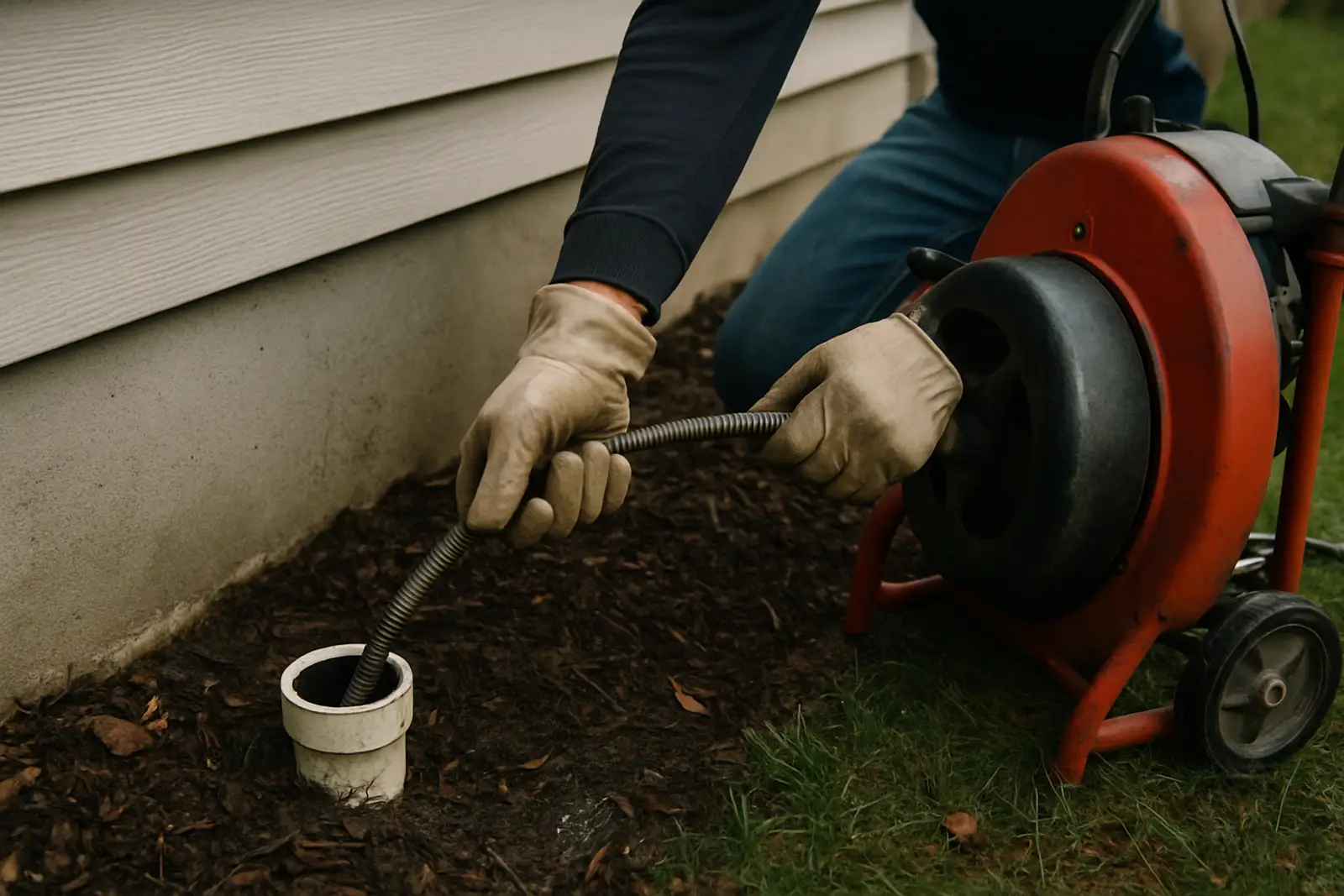
Houses and pipes in Springfield
McKnight, Forest Park, Maple-High Six Corners and the Ridgewood and Lower Maple historic districts have Victorian homes from the 1870s through the 1910s, with basements and clay laterals.
The North End, the South End, Indian Orchard and Sixteen Acres have two-families, triple-deckers and single homes from the 1890s through the 1950s.
East Forest Park, Sixteen Acres and Pine Point filled in after World War II with Cape Cods and ranches.
Much of the older city has combined sewers, and the Springfield Water and Sewer Commission is working to reduce overflows into the Connecticut and Chicopee rivers.
Springfield sits on the Connecticut River floodplain and the terraces above it.
Who handles what in Springfield
The Springfield Water and Sewer Commission runs the city's sewer system and the Bondi's Island treatment plant. Springfield homeowners maintain the building sewer from the house to the public main.
Drain problems Springfield homes see most
| Problem | Why it happens here |
|---|---|
| Roots in clay laterals | McKnight, Forest Park and Maple-High |
| Basement backups in storms | Combined sewer neighborhoods |
| Shared lines | Two-families and triple-deckers |
| Cast iron corrosion | Century-old homes |
| Frozen pipes | New England winters |
| Groundwater infiltration | Low areas near the rivers |
Springfield drains through the year
Spring thaw and summer thunderstorms overload combined sewers and raise groundwater, and roots grow fastest in June and July.
Cold winters freeze pipes in unheated basements, back porches and exterior walls.
What drain cleaning costs in Springfield
| Job | Typical range |
|---|---|
| Sink, tub or toilet cleared | $140–$290 |
| Main line cleared from a cleanout | $210–$465 |
| Root cutting | $275–$620 |
| Hydro jetting | $360–$850 |
| Sewer camera inspection | $145–$290 |
| Backwater valve installation | $950–$2,850 |
Postwar Cape Cods with a clear cleanout go quickly. Century-old clay under big trees in McKnight and Forest Park, and multi-family buildings, take longer.
Before the plumber arrives
- 1
Stop the water
Ask every unit in the building to hold off.
- 2
Heavy rain?
If neighbors have water too during a storm, the combined sewer may be surcharged.
- 3
Check the basement
Water at the floor drain or laundry tub means the building sewer is backing up.
- 4
Find the cleanout
Springfield basements usually have a round plug low on the street-side wall, sometimes behind the oil tank or boiler.
McKnight and the Victorian neighborhoods
McKnight, laid out in the 1870s as one of the first planned residential neighborhoods in the country, has hundreds of Victorian homes on tree-lined streets. Forest Park, Maple-High Six Corners and the Ridgewood district have similar homes. Clay laterals under those big trees are often original, and roots are the leading cause of backups. Lining protects historic yards and trees.
Combined sewers
Springfield's older neighborhoods are served by combined sewers that overflow into the Connecticut and Chicopee rivers during heavy rain. The Springfield Water and Sewer Commission has been investing in a long-term plan to reduce overflows. During storms, low basements can take on water. A backwater valve and disconnected downspouts help.
Multi-family homes
The North End, the South End and Indian Orchard have two-families and triple-deckers built for workers at the Armory, the Indian Motocycle factory and the mills. All units share one building sewer, and the basement gets the water when it clogs.
A typical Springfield call
After a July thunderstorm, a family in an 1890s Victorian in McKnight finds water around the basement floor drain. The plumber opens the cleanout and clears roots about thirty-five feet out, near a big maple on the tree belt. The camera shows cracked clay joints. They plan a liner and a backwater valve.
Forest Park
Forest Park, around the huge city park of the same name, has Victorians, Colonial Revivals and Tudors on wooded streets. Long clay laterals under big trees mean roots. Many homes have finished basements.
Postwar neighborhoods
East Forest Park, Sixteen Acres and Pine Point filled in after World War II with Cape Cods and ranches. Cast iron and clay laterals from that era are aging, with scale and roots common.
River floodplain
Parts of Springfield sit on the Connecticut River floodplain, protected by dikes since the floods of 1936 and 1938. Groundwater is higher in those areas, and cracked laterals take in water during wet springs.
Downtown and the casino
Downtown Springfield's restaurants, MGM Springfield and the areas around the Basketball Hall of Fame bring crowds. Kitchens in older buildings stay open by keeping grease traps pumped.
Winters
Springfield winters bring long cold spells. Pipes in back porches, unheated basements and exterior walls freeze first, especially in old wooden multi-families. Heat the basement and insulate exposed pipe.
Indian Orchard and the east side
Indian Orchard, a former mill village on the Chicopee River, has worker housing from the late 1800s and early 1900s, along with multi-families. Old clay laterals, cast iron and proximity to the river mean roots, scale and groundwater infiltration.
Many of these homes sit close together on small lots, and some share a lateral with a neighbor before reaching the street. A camera inspection traces the line and shows who owns which section.
Spring thaw
When snow melts in March and April, groundwater rises and seeps into cracked laterals and old fieldstone foundations. Combined sewers fill with meltwater and rain. Low basements can see water from both directions, through the walls and up the floor drain.
The Armory and the North End
The Springfield Armory made rifles for the U.S. Army from the 1790s until 1968, and the neighborhoods around it, along with the North End's Puerto Rican community near Main Street, grew up in the late 1800s with brick blocks, two-families and triple-deckers. Many buildings there have cast iron stacks and clay laterals more than a century old, and several have been divided into more units than they were built for. Heavy use, grease and old pipe make clogs common, and owners who schedule regular jetting save themselves emergency calls.
Basements and fieldstone
Older Springfield homes often have fieldstone or brick basement walls, with a floor drain near the furnace and laundry. When the building sewer clogs, that floor drain is the first place water appears. Some basements have been partly finished over the years, hiding the cleanout behind paneling or shelving. Make sure you can reach it before you need it.
Helpful details
Mention the neighborhood, the home's type and age, how many units share the line and whether it rained hard first. Note big trees near the lateral, too.
Springfield ZIP codes
- 01028
- 01103
- 01104
- 01105
- 01107
- 01108
- 01109
- 01118
- 01119
- 01128
- 01129
- 01144
- 01151
Springfield drain questions
Who handles sewer in Springfield?+
The Springfield Water and Sewer Commission. The building sewer to the main is the owner's.
Why do Springfield basements flood in heavy rain?+
Older neighborhoods have combined sewers that fill during storms and can push water back into basements.
Are McKnight homes prone to root clogs?+
Yes. Their clay laterals are often over a century old and run under large street trees.
Should I get a camera inspection before buying an older home?+
Yes, especially in the Victorian neighborhoods and multi-family buildings.