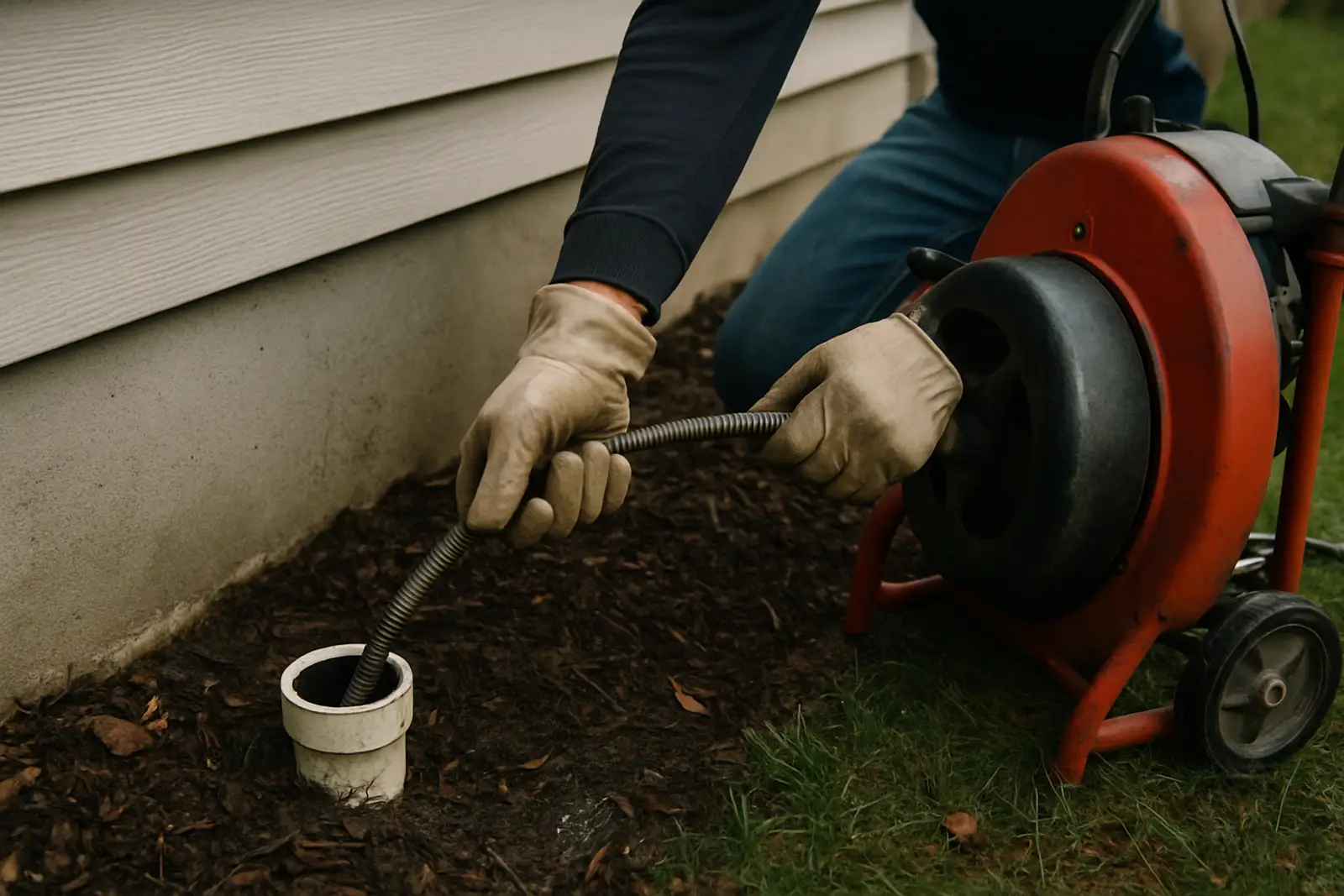
Houses and pipes in Hartford
Asylum Hill, Frog Hollow, Parkville and the South End have perfect sixes, triple-deckers and two-families from the 1890s through the 1920s, with basements and old laterals.
The West End and Blue Hills have larger Victorians, Tudors and Colonial Revivals on tree-lined streets.
Behind the Rocks, Southwest and the North End have homes from the 1910s through the 1950s.
Much of Hartford's housing stock is multi-family, with several households per building.
The Metropolitan District's Clean Water Project has built a deep tunnel under Hartford to store combined sewer overflow.
Who handles what in Hartford
The Metropolitan District, MDC, runs sewers and treatment for Hartford and surrounding towns. Hartford property owners maintain the building sewer from the house to the MDC main.
Drain problems Hartford homes see most
| Problem | Why it happens here |
|---|---|
| Multi-family shared lines | Frog Hollow, Parkville and the South End |
| Basement flooding in storms | Combined sewer neighborhoods |
| Roots in clay laterals | The West End and Blue Hills |
| Cast iron corrosion | Century-old buildings |
| Kitchen stack clogs | Perfect sixes and triple-deckers |
| Frozen pipes | Connecticut winters |
Hartford drains through the year
Spring rain, summer thunderstorms and nor'easters load the combined sewers and flood low basements, while roots grow fastest in summer.
Cold winters freeze back-porch plumbing and pipes on exterior walls.
What drain cleaning costs in Hartford
| Job | Typical range |
|---|---|
| Sink, tub or toilet cleared | $150–$310 |
| Main line cleared from a cleanout | $225–$495 |
| Root cutting | $290–$655 |
| Hydro jetting | $385–$905 |
| Sewer camera inspection | $155–$310 |
| Backwater valve installation | $1,000–$3,000 |
Single-family West End homes go quickest. Perfect sixes with six households on one line and century-old clay take longer.
Before the plumber arrives
- 1
Tell every apartment
A perfect six has six units draining into one building sewer.
- 2
Storm happening?
If neighbors have water during heavy rain, the combined sewer may be surcharged; report it to MDC.
- 3
Look in the basement
Water at the floor drain or laundry sink means the line is blocked.
- 4
Find the cleanout
Usually on the front basement wall, sometimes near an old house trap.
The perfect six
Hartford's perfect six is a brick building with two apartments on each of three floors and stacked porches front and back, built by the hundreds in the early 1900s for insurance clerks and factory workers. Six households share one building sewer and usually two kitchen stacks. When the main clogs, water comes out in the basement; when a kitchen stack clogs, the first-floor kitchen gets the upstairs dishwater. Regular jetting of both keeps tenants dry.
Frog Hollow and Parkville
Frog Hollow, near the Capitol, and Parkville, to the west, have perfect sixes, triple-deckers and old factory buildings. Large Puerto Rican, Portuguese and Latin American communities live there today. Grease from many kitchens and old laterals cause most backups.
Combined sewers and the tunnel
Hartford's older neighborhoods have combined sewers, and for decades heavy rain sent overflows into the Park River and Connecticut River and sewage into basements. MDC's Clean Water Project has separated sewers in many areas and built the South Hartford Conveyance and Storage Tunnel to hold overflow. Backups have dropped, but backwater valves remain a good idea for low basements.
The West End
The West End, near the University of Hartford's old campus and Elizabeth Park, has large Victorians, Tudors and Colonial Revivals on tree-lined streets. Long clay laterals under big trees fill with roots, and many homes have been divided into condos.
A typical Hartford call
After an August thunderstorm, the first-floor tenant in a 1915 perfect six in Parkville finds water spreading from the basement floor drain. The landlord's plumber opens the cleanout and pulls out grease and wipes, then cables toward the street and finds roots under the sidewalk. The camera shows cracked clay. A liner and a backwater valve go on the landlord's list before the next storm season.
Asylum Hill and Mark Twain's neighborhood
Asylum Hill, home to the Mark Twain House and the Harriet Beecher Stowe Center, has Victorian mansions and multi-family buildings near the insurance headquarters. Many old homes are now apartments or offices with heavy use on old lines.
Blue Hills and the North End
Blue Hills and the North End have single-family homes and two-families from the 1910s through the 1950s, home to Hartford's large West Indian and African American communities. Their clay laterals sit under big street trees, and roots are the usual reason the plumber gets called.
Restaurants
Park Street's Latin American restaurants, Franklin Avenue's Italian spots and downtown's dining scene keep kitchens busy. Restaurants there pump grease traps on schedule to stay open.
Kitchen stacks
In multi-family buildings, kitchens are stacked on top of each other with one cast iron stack serving them all. Grease from several households coats that pipe and can clog it at the base in the basement. Jetting the stack restores flow.
If the first-floor sink fills up when someone upstairs drains the dishwasher, the kitchen stack is almost always the culprit.
Winter
Hartford winters bring long cold spells and nor'easters. Back-porch kitchens and pipes along exterior walls freeze first. Keep the basement heated and insulate exposed lines.
Behind the Rocks and the South End
Behind the Rocks and the South End, south of downtown along Franklin Avenue, were home to Italian families for much of the twentieth century and are now home to Puerto Rican, Peruvian, Bosnian and many other families. Dense blocks of two-families and triple-deckers sit on old clay laterals under street trees. Roots, grease and the occasional collapsed section turn up on camera, and some buildings have no cleanout at all.
Insurance city
Hartford calls itself the Insurance Capital of the World, and the clerks, actuaries and managers who worked in its offices filled the perfect sixes and two-families of Asylum Hill, Parkville and the West End. Many of those buildings have passed through several owners and been divided into condos, but the original building sewers often remain. A camera inspection is the best way to know what's really underground.
The Park River
The Park River once flowed through downtown Hartford before it was buried in conduits after devastating floods in the 1930s. Neighborhoods along its old path still sit on lower ground where groundwater collects, and cracked laterals there take in water during wet spells.
Condo associations
Many Hartford multi-families have been converted into condos, with each unit owned separately. The shared building sewer is a common element, so the association is usually responsible for repairs. Associations that budget for periodic camera inspections avoid emergency special assessments.
When you call
Share the neighborhood, the building type, how many units share the line and whether it rained hard first.
Hartford ZIP codes
- 06095
- 06103
- 06105
- 06106
- 06112
- 06114
- 06120
Hartford drain questions
Who handles sewer in Hartford?+
The Metropolitan District, known as MDC, runs the public system. Repairs to the pipe between your building and the MDC main are on the owner.
What is a perfect six?+
A three-story brick building with two apartments per floor, common in Hartford. All six units share one building sewer.
What is MDC's Clean Water Project?+
A long-term program, including a deep tunnel under Hartford, to reduce combined sewer overflows and basement backups.
Should Hartford buyers get a sewer scope?+
Yes, especially for multi-family buildings.