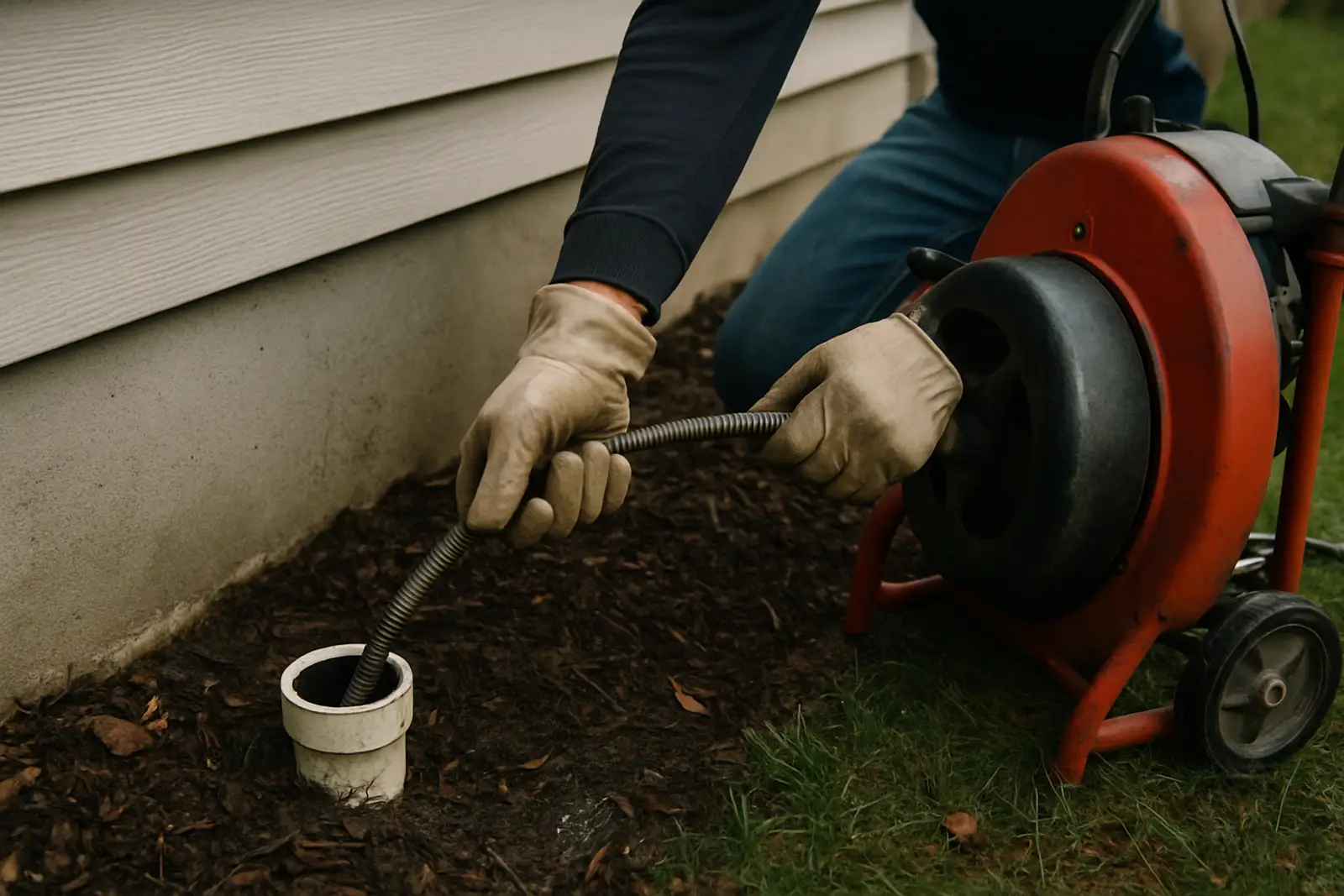
Houses and pipes in Worcester
Worcester has more triple-deckers than almost any city in New England, concentrated in neighborhoods like Main South, Vernon Hill, Grafton Hill, Green Island and Union Hill.
The West Side, around Elm Park, Salisbury Street and the colleges, has larger Victorian and Colonial Revival homes from the 1880s through the 1930s.
Neighborhoods like Tatnuck, Burncoat and Indian Lake have single-family homes from the 1920s through the 1960s.
Steep hills, granite ledge and glacial till make digging difficult, and many laterals drop steeply to the street.
Parts of the older city have combined sewers, and wastewater is treated at the Upper Blackstone Clean Water plant in Millbury.
Who handles what in Worcester
Worcester's Department of Public Works and Parks maintains the city's sewers, and the Upper Blackstone Clean Water district treats the wastewater. The building sewer from a Worcester property to the public main is the owner's responsibility.
Drain problems Worcester homes see most
| Problem | Why it happens here |
|---|---|
| Triple-decker shared lines | Main South, Vernon Hill and Grafton Hill |
| Steep laterals | Hillside streets citywide |
| Roots in clay pipe | The West Side and Tatnuck |
| Frozen pipes | Central Massachusetts winters |
| Cast iron corrosion | Century-old buildings |
| Ledge and rocky soil | Hilltop neighborhoods |
Worcester drains through the year
Spring thaw and summer storms load the sewers and raise groundwater, and roots grow fastest in June and July.
Worcester's winters are colder and snowier than Boston's, freezing pipes in back porches, unheated basements and exterior walls.
What drain cleaning costs in Worcester
| Job | Typical range |
|---|---|
| Sink, tub or toilet cleared | $150–$310 |
| Main line cleared from a cleanout | $225–$495 |
| Root cutting | $295–$655 |
| Hydro jetting | $390–$910 |
| Sewer camera inspection | $160–$315 |
| Frozen pipe thawing | $210–$520 |
Single-family homes with easy access go quickest. Triple-deckers, steep laterals, ledge and frozen lines take longer.
Before the plumber arrives
- 1
Alert all three floors
In a triple-decker, every unit drains into the same pipe.
- 2
Frozen?
If it's well below freezing and back-porch or kitchen drains stopped, the pipe may be frozen.
- 3
Check the basement
Water at the floor drain or laundry sink means the building sewer is blocked.
- 4
Find the cleanout
Look along the street-side foundation wall in the basement.
City of triple-deckers
Worcester's factories, which made everything from wire and grinding wheels to valentines and the first monkey wrenches, drew immigrants from Ireland, Sweden, Poland, Lithuania, Armenia and beyond. Builders housed them in triple-deckers, three-family wooden houses with stacked porches. Thousands still stand in Main South, Vernon Hill, Grafton Hill, Green Island and Union Hill. All three apartments share one building sewer, often clay or cast iron about a century old, and the basement gets the water when it clogs.
Seven hills
Worcester is famously hilly, and many triple-deckers sit on steep streets. Laterals drop sharply from house to main, and water can run ahead of solids, leaving paper and grease behind where the slope flattens near the street. Long, steep runs also have more joints for roots. Jetting cleans them more thoroughly than a cable.
Ledge
Central Massachusetts is full of granite ledge and glacial till packed with boulders. Many Worcester sewer lines were laid shallow or cut through rock. Digging to repair them can mean jackhammering or blasting, so trenchless lining and pipe bursting are popular.
The West Side
The West Side, around Elm Park, Salisbury Street and the neighborhoods near WPI and Becker, has large Victorian and Colonial Revival homes built by factory owners and professionals. Big trees and clay laterals mean roots are the leading cause of backups.
A typical Worcester call
In late June, the first-floor tenant in a 1912 triple-decker on Vernon Hill finds water around the basement floor drain while the upstairs families do laundry. The owner calls a plumber, who opens the cleanout and clears roots about twenty-five feet out, near the sidewalk maple. The camera shows a cracked clay joint and a section sitting on ledge. The owner books a liner.
Central Massachusetts winters
Worcester sits higher and colder than Boston, with more snow and longer cold spells. In triple-deckers, the back porches and kitchens along exterior walls are the first to freeze. Keep the basement heated, insulate pipes along exterior walls and leave a faucet dripping during deep cold.
Colleges and rentals
Worcester has a dozen colleges, including Clark, WPI, Holy Cross and UMass Chan Medical School, and many students rent apartments in triple-deckers near campus. Heavy use and frequent turnover mean more clogs. A jetting in July, before the September lease turnover, heads off most of the backups that otherwise arrive with the new tenants.
Combined sewers
Parts of Worcester's older core have combined sewers that carry rain and wastewater together. During big storms, low basements can take on water. Disconnecting downspouts and adding a backwater valve helps.
Canal District restaurants
The Canal District, Shrewsbury Street's restaurant row and the area around Polar Park have revived restaurants in old industrial buildings. Kitchens there stay open by pumping grease traps on a regular schedule.
Tatnuck and Burncoat
Tatnuck, Burncoat and the neighborhoods around Indian Lake have single-family homes from the 1920s through the 1960s, many on wooded lots. Clay and cast iron laterals there have roots and scale.
Spring thaw
When the snowpack melts in March and April, groundwater rises and seeps into cracked laterals and old foundations. Basements see more water, and sump pumps run more often. Repairing cracked laterals reduces infiltration.
In many older homes, the cellar walls are fieldstone or old brick, and meltwater comes through them as readily as through the pipe. A dehumidifier and a working sump help keep the space usable.
Back porches and kitchen stacks
A Worcester triple-decker usually has its kitchens stacked one above the other at the back of the building, with a single cast iron kitchen stack running down to the basement. Three households of cooking grease, coffee grounds and food scraps all travel through that one stack. Over decades, the inside of the cast iron builds up a coating of grease and scale, and the stack can clog at the bottom bend in the basement before the main ever does. When the first-floor kitchen sink backs up with water from upstairs, the kitchen stack is usually the culprit. Jetting the stack from the roof vent or a basement cleanout clears it.
Lake Quinsigamond and the east side
Neighborhoods on the east side near Lake Quinsigamond and the Shrewsbury line sit lower, with higher groundwater around the lake and its feeder brooks. Cracked laterals and old fieldstone foundations let water in during wet springs. Sump pumps and sealing cracked pipe help keep basements dry.
When you call
Share the neighborhood, the building type and age, how many units it has and whether it's on a steep lot. Mention whether it's freezing out or whether a thaw or storm came first.
Worcester ZIP codes
- 01545
- 01583
- 01602
- 01603
- 01604
- 01605
- 01606
- 01607
- 01608
- 01609
- 01610
Worcester drain questions
Who handles sewer in Worcester?+
The city's DPW maintains public sewers, and Upper Blackstone treats wastewater. The building sewer is the owner's.
Why are triple-decker backups so common?+
Three households share one aging building sewer, and when it clogs, water from upper floors comes out in the basement.
Does ledge make repairs harder?+
Yes. Granite and rocky till near the surface make digging slow and costly, so lining is often preferred.
Should I get a camera inspection before buying a triple-decker?+
Yes. Old laterals under multi-family homes can hide costly problems.