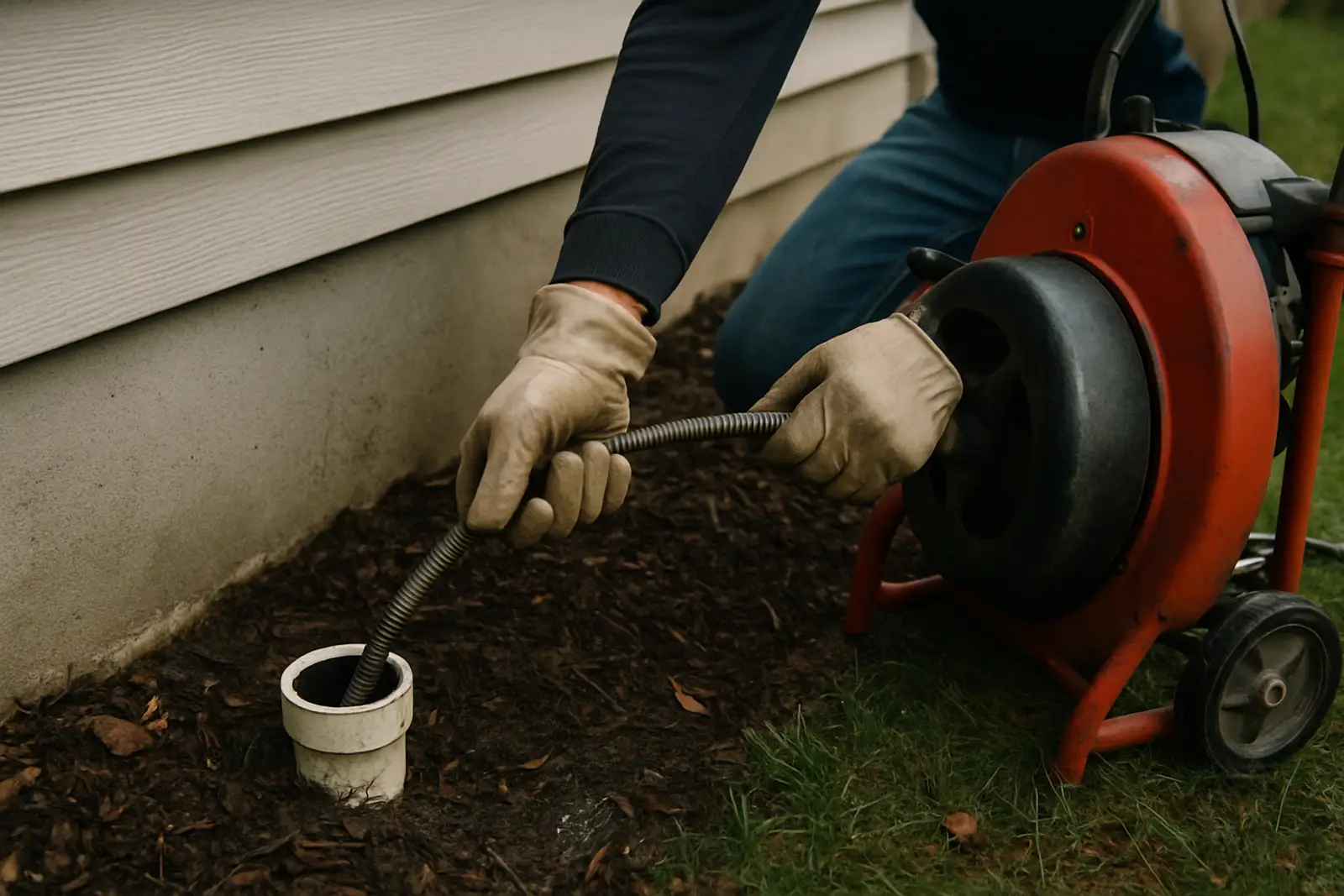
Houses and pipes in Providence
College Hill, Fox Point and the East Side have homes from the 1700s through the 1920s, many on steep lots with basements and old clay or cast iron laterals.
The West End, Federal Hill, Elmwood and Armory have Victorian homes, two-families and triple-deckers from the 1870s through the 1920s.
Mount Pleasant, Elmhurst and the north end have bungalows and Colonial Revivals from the 1910s through the 1950s.
Many neighborhoods are dense with triple-deckers, three-family homes with stacked porches sharing one basement and lateral.
Providence has combined sewers in its older core, and the Narragansett Bay Commission's tunnel program captures overflows that once went into the bay.
Who handles what in Providence
The Narragansett Bay Commission treats Providence's wastewater and runs the interceptors and deep tunnels, while the City of Providence maintains local sewers. Providence property owners maintain the building sewer from the house to the public main.
Drain problems Providence homes see most
| Problem | Why it happens here |
|---|---|
| Triple-decker shared lines | West End, Elmwood and Federal Hill |
| Basement flooding in storms | Combined sewer neighborhoods |
| Roots in clay laterals | College Hill, Elmhurst and Mount Pleasant |
| Steep laterals | East Side hillside homes |
| Cast iron corrosion | Century-old buildings |
| Heavy use in student rentals | Near Brown, RISD and PC |
Providence drains through the year
Nor'easters, spring rain and summer thunderstorms load the combined sewers and push water into low basements, and roots grow fastest in summer.
New England winters freeze pipes in back porches, unheated basements and exterior walls of old wood-frame houses.
What drain cleaning costs in Providence
| Job | Typical range |
|---|---|
| Sink, tub or toilet cleared | $155–$320 |
| Main line cleared from a cleanout | $235–$515 |
| Root cutting | $305–$675 |
| Hydro jetting | $400–$930 |
| Sewer camera inspection | $165–$325 |
| Backwater valve installation | $1,050–$3,100 |
Single-family homes with an accessible cleanout go quickest. Triple-deckers with shared lines, steep East Side laterals and century-old clay take longer.
Before the plumber arrives
- 1
Let the other floors know
In a triple-decker, everyone above you drains into the same basement pipe.
- 2
Nor'easter or downpour?
If neighbors also have water during heavy rain, the combined sewer may be full.
- 3
Check the basement
Gray water at the floor drain or laundry sink means the building sewer is blocked.
- 4
Find the cleanout
Usually low on the front foundation wall in the basement.
College Hill and the East Side
College Hill, home to Brown University and RISD, has one of the finest collections of colonial and federal-era homes in the country, along with Victorian houses climbing steep streets. Laterals drop sharply to the street, and big trees send roots into old clay. Many homes are now student rentals or divided into apartments, adding heavy use. Lining protects historic yards and walls.
Triple-deckers
Providence has thousands of triple-deckers, especially in the West End, Elmwood, Federal Hill and Olneyville. Built for immigrant mill workers from Ireland, Italy, Portugal, Cape Verde and later the Dominican Republic and Guatemala, they house three households over one basement. When the building sewer clogs, upper-floor water comes out the basement floor drain. Owners who jet lines regularly avoid most emergencies.
Combined sewers and the tunnel
Providence's older neighborhoods have combined sewers, and for generations heavy rain sent overflows into the Providence River and Narragansett Bay. The Narragansett Bay Commission built a deep tunnel under the city, opened in 2008, and has expanded the system since to store overflow. Local sewers can still surcharge in big storms, and backwater valves help.
Federal Hill and the West End
Federal Hill, Providence's Little Italy, and the West End have Victorian homes and multi-families on dense blocks. Old laterals and cast iron stacks, along with grease from busy family kitchens and Atwells Avenue restaurants, cause most clogs.
A typical Providence call
After a September nor'easter, the first-floor tenant in a 1905 triple-decker in Elmwood finds water around the basement floor drain. The owner calls a plumber, who opens the cleanout and clears roots and grease about twenty-five feet out under the sidewalk. The camera shows cracked clay. The owner books a liner.
Steep East Side laterals
The East Side's hills mean many homes sit high above the street. Steep laterals let water outrun solids, leaving deposits where the slope flattens. Jetting scours those spots.
Students
Brown, RISD, Providence College and Johnson and Wales bring tens of thousands of students, many in older rentals. September brings a rush of clogs as new tenants move in.
Mount Pleasant and Elmhurst
Mount Pleasant and Elmhurst, on the north side, have bungalows and Colonial Revivals from the early twentieth century on tree-lined streets. Clay laterals and big trees mean roots.
Restaurants on Atwells and Thayer
Atwells Avenue's Italian restaurants, Thayer Street, Wickenden Street and downtown's dining scene put a lot of grease into old lines. Kitchens there stay open by keeping grease traps pumped.
New England winters
Providence winters bring nor'easters and cold snaps. In triple-deckers, back porch kitchens and pipes along exterior walls freeze first. Heat the basement and insulate exposed pipe.
Old wood-frame houses on the hills catch wind off the bay, and pipes on the windward side freeze sooner than you'd expect.
Fox Point and the waterfront
Fox Point, once home to Cape Verdean and Portuguese longshoremen, sits near the waterfront where groundwater is higher and storm surge from hurricanes has flooded low streets. Cracked laterals there take in water.
Olneyville and the mills
Olneyville grew around textile mills along the Woonasquatucket River, with triple-deckers and worker housing. Many mills have been converted to lofts, and old laterals serve both old homes and new apartments.
Kitchen stacks in triple-deckers
In a Providence triple-decker, the three kitchens are usually stacked at the back of the building, all draining into one cast iron kitchen stack. Decades of grease from three households coat that pipe, and it often clogs at the bottom bend in the basement before the main line does. When the first-floor kitchen sink fills with water from upstairs dishes, jetting the kitchen stack usually fixes it.
Condo conversions
Many East Side and West End multi-family homes have been converted to condos, with each floor owned separately. The shared building sewer is a common element, and the condo association is usually responsible for it. Associations that budget for periodic camera inspections avoid surprise assessments.
When you call
Share the neighborhood, the building type and age, how many units share the line and whether the lot is steep. Mention whether a storm came first.
Providence ZIP codes
- 02903
- 02904
- 02905
- 02906
- 02907
- 02908
- 02909
- 02911
- 02912
- 02918
- 02919
Providence drain questions
Who handles sewer in Providence?+
The city maintains local sewers, and the Narragansett Bay Commission runs the tunnels and treatment. The building sewer is the owner's.
What is the NBC tunnel?+
A deep tunnel under Providence that stores combined sewer overflow during storms instead of letting it spill into Narragansett Bay.
Why does my Providence triple-decker keep backing up in the basement?+
Three or more households share one century-old building sewer, and the basement gets the water when it clogs.
Is a sewer scope worth it before buying in Providence?+
Yes, especially for multi-family homes and older East Side houses.