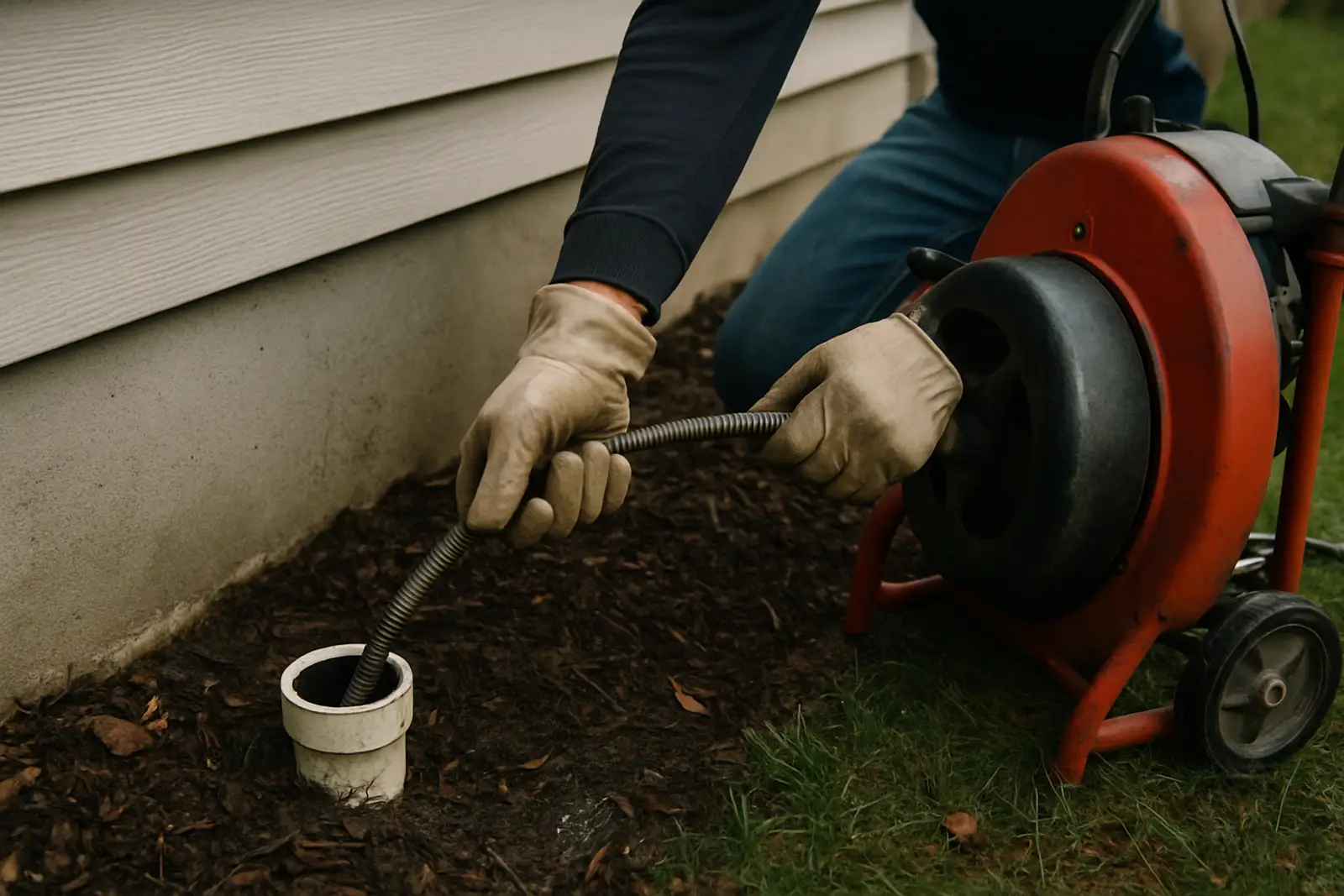
Houses and pipes in Cleveland
Ohio City, Tremont, Detroit-Shoreway and Slavic Village have homes from the 1860s through the 1920s, many wood-frame singles and up-and-down doubles with basements and clay laterals.
Neighborhoods like Kamm's Corners, Old Brooklyn, Collinwood and Glenville were built from the 1900s through the 1940s with Cleveland doubles, colonials and bungalows.
Many Cleveland homes are the classic Cleveland double, a two-family house with one unit stacked on top of the other, sharing one sewer lateral.
Most of the city is served by combined sewers that carry rain and sewage together, and the regional sewer district is building massive tunnels to reduce overflows.
Lake-effect snow off Lake Erie brings long, snowy winters, especially on the east side.
Who handles what in Cleveland
The Northeast Ohio Regional Sewer District operates the large interceptors and treatment plants, and the city maintains local sewers. A Cleveland property owner is responsible for the lateral from the house to the public sewer.
Drain problems Cleveland homes see most
| Problem | Why it happens here |
|---|---|
| Basement flooding in storms | Combined sewers citywide |
| Roots in clay laterals | Neighborhoods with big tree lawns |
| Shared laterals in doubles | Up-and-down two-family homes |
| Cast iron corrosion | Century-old homes |
| Collapsed or sagging laterals | Very old clay pipe |
| Frozen lines | Lake-effect winters |
Cleveland drains through the year
Summer thunderstorms and heavy spring rain overload the combined sewers and send water into basements, and roots grow fastest in warm months.
Lake-effect snow and long cold stretches freeze drains in garages, porches and exterior walls, especially on the east side.
What drain cleaning costs in Cleveland
| Job | Typical range |
|---|---|
| Sink, tub or toilet cleared | $130–$275 |
| Main line cleared from a cleanout | $200–$445 |
| Root cutting | $260–$595 |
| Hydro jetting | $340–$815 |
| Sewer scope inspection | $135–$280 |
| Backwater valve installation | $850–$2,650 |
Clear access to the basement cleanout keeps costs down. Century-old clay, doubles with shared lines and homes without a cleanout take longer.
Before the plumber arrives
- 1
Stop the water
In a double, tell the other unit to hold off too.
- 2
Raining hard?
If neighbors also have water during a storm, the combined sewer may be surcharged.
- 3
Check the floor drain
Water rising at the basement floor drain is the usual sign.
- 4
Find the cleanout
Look on the front basement wall near the floor, sometimes behind old shelving.
The Cleveland double
Walk through almost any older Cleveland neighborhood and you'll see the Cleveland double, a wood-frame house with one apartment on the first floor and another on the second, each with its own front porch. Built by the thousands for immigrant factory workers from the 1890s through the 1920s, doubles let families live in one unit and rent the other. Both units share one basement and one sewer lateral. When that lateral clogs, water from the upstairs unit drains down and comes out the basement floor drain, affecting both households.
Ohio City and Tremont
Ohio City and Tremont, on the near west side, are some of Cleveland's oldest neighborhoods, with Victorian homes, churches and cottages from the mid 1800s. Both have seen a lot of restoration and new restaurants. Their laterals are often very old clay or cast iron, and roots and collapsed sections are common findings on camera.
Combined sewers and Project Clean Lake
Most of Cleveland is served by combined sewers that carry rain and sewage together. In heavy rain, they overflow into the Cuyahoga River and Lake Erie and can back water into basements. The regional sewer district's Project Clean Lake is building enormous storage tunnels under the city to capture overflows. For homeowners, a backwater valve, a floor drain plug and disconnected downspouts are the main protections.
Slavic Village and the east side
Slavic Village, once home to Polish and Czech steelworkers, and east side neighborhoods like Collinwood, Glenville and Union-Miles have many older wood-frame homes. Some have sat vacant or been through foreclosure, and their laterals may be root-filled or collapsed. Anyone buying or renovating should get a camera inspection first.
A typical Cleveland call
After a July thunderstorm, the downstairs tenant in a 1915 double in Old Brooklyn finds water spreading from the basement floor drain. The owner calls a plumber, who opens the cleanout on the front basement wall and cuts out a heavy mass of roots about thirty-five feet out, near the maple on the tree lawn. On the monitor, the clay is split at two joints and dips where it crosses under the sidewalk. The owner budgets for a liner before the next storm season.
West Park and Old Brooklyn
West Park, Kamm's Corners and Old Brooklyn have colonials, bungalows and doubles from the 1910s through the 1940s, many on tree-lined streets. Clay laterals and big trees mean root clogs are common. A lot of these basements have been finished into family rooms, so one bad storm can mean new carpet and drywall.
Lake-effect winters
Cleveland's winters bring lake-effect snow, especially on the east side's Snow Belt edges, and long stretches below freezing. Drains in garages, enclosed back porches and exterior walls freeze first. Keep porches and basements heated, wrap exposed pipe and let faucets drip on the coldest nights.
Restaurants in Ohio City and Tremont
West 25th Street in Ohio City, Tremont's Professor Avenue, the Gordon Square Arts District and downtown's East 4th Street are packed with restaurants and breweries. Many are in very old buildings with old lines. Grease traps pumped on schedule and regular jetting keep them running.
Cast iron and old basements
Inside many older Cleveland homes, cast iron stacks run from the upper floors to the basement and under the floor to the cleanout. After a century, scale and corrosion narrow the pipe, and basement fixtures may drain slowly. Descaling restores the flow, and a camera shows whether replacement is needed.
Point of sale inspections
Some Cleveland-area suburbs require a point of sale inspection that can include the sewer lateral before a home is sold. Even where it isn't required, a camera inspection is one of the most valuable things a buyer can do in an older Cleveland neighborhood.
Calling a Cleveland plumber
Give your neighborhood and the home's age, whether it's a single or a double, and where the basement cleanout is. Mention whether it rained hard first, whether neighbors also have water and whether there are big trees on the tree lawn.
Cleveland ZIP codes
- 44101
- 44102
- 44103
- 44104
- 44105
- 44106
- 44108
- 44109
- 44110
- 44111
- 44112
- 44113
- 44114
- 44115
- 44118
- 44119
- 44120
- 44121
- 44124
- 44125
- 44126
- 44127
- 44128
- 44129
- 44130
- 44134
- 44135
- 44143
- 44144
Cleveland drain questions
Who handles sewer in Cleveland?+
The Northeast Ohio Regional Sewer District runs the regional system, and the city maintains local sewers. Your lateral is yours.
Why does my Cleveland basement flood during storms?+
Most of the city has combined sewers. In heavy rain they fill and can push water back through basement floor drains.
Who pays when a double's shared lateral clogs?+
Usually the owner of the building. In a double, both units share one lateral, so a clog affects both.
Should I scope the sewer before buying in Cleveland?+
Yes. Laterals in older Cleveland homes are often a century old and may be cracked, root-filled or collapsed.