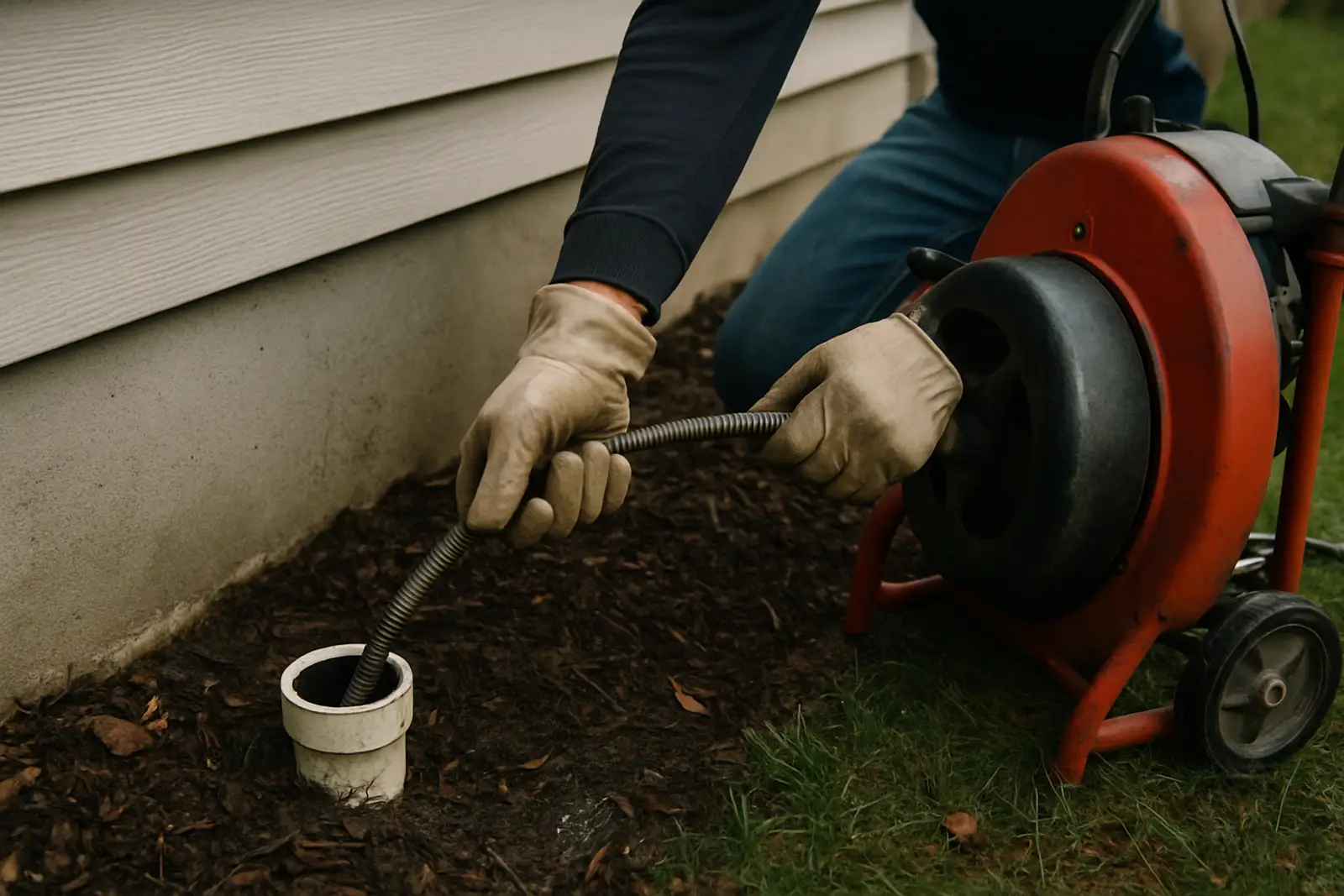
Houses and pipes in Warren
South Warren, between 8 Mile and 10 Mile Roads, has the oldest housing, with small brick and frame homes from the 1920s through the 1950s, many with basements and clay laterals.
The middle of the city, from 10 Mile to 13 Mile, was built almost entirely in the 1950s and 1960s with brick ranches and bungalows over full basements, cast iron inside and clay or early cement pipe outside.
North Warren, above 13 Mile toward 14 Mile, has some 1960s and 1970s colonials and tri-levels, and a few newer subdivisions.
Warren sits on flat, poorly drained clay that holds water after storms, and many homes have footing drains tied into the sanitary sewer from when they were built.
The GM Technical Center, Detroit Arsenal and several auto plants are in Warren, and the city has long been a home for auto industry families.
Who handles what in Warren
Warren's own Water and Sewerage Division maintains the city sewers, and much of the flow reaches regional treatment through the Great Lakes Water Authority system. Warren homeowners own their building sewer from the house to the city main.
Drain problems Warren homes see most
| Problem | Why it happens here |
|---|---|
| Basement backups after storms | Flat clay ground and overloaded sewers |
| Roots in clay laterals | 1950s and 1960s neighborhoods |
| Cast iron scale | Postwar brick ranches |
| Footing drain overload | Homes with old foundation drains tied in |
| Grease and wipes | Family households |
| Frozen lines | Michigan winters |
Warren drains through the year
Heavy summer storms are the biggest risk, especially the slow-moving cells that drop several inches of rain on flat ground. Roots grow fastest in June and July.
Long winters with stretches below zero can freeze drains in attached garages and exterior walls.
What drain cleaning costs in Warren
| Job | Typical range |
|---|---|
| Sink, tub or toilet cleared | $130–$275 |
| Main line cleared from a cleanout | $200–$445 |
| Root cutting | $260–$595 |
| Hydro jetting | $340–$815 |
| Sewer scope inspection | $135–$280 |
| Backwater valve installation | $850–$2,700 |
Clean access at a basement cleanout keeps costs down. Root-packed clay and cement pipe, heavy cast iron scale and finished basements that hide the line add time.
Before the plumber arrives
- 1
Hold off on water
Skip laundry and showers until the line is checked.
- 2
Storm-related?
If the whole street has water after a downpour, the public sewer is likely surcharged.
- 3
Watch the floor drain
Water rising from the basement floor drain is the classic Warren symptom.
- 4
Find the cleanout
Look along the front basement wall near the floor.
The postwar boom
In 1950, Warren was a small township with fewer than 50,000 people. By 1970, it had nearly 180,000. That growth came from auto workers moving north from Detroit to new brick ranches on quarter-acre lots, close to the GM Tech Center, the Chrysler and Ford plants and the Detroit Arsenal. Builders worked fast, and nearly every house got a full basement, cast iron drains inside and a clay or cement lateral out to the street. Sixty to seventy years later, those laterals are the reason for most main line calls in the city.
Flat clay and storm water
Warren sits on flat lake-plain clay left by ancient Lake Erie and Lake St. Clair. Rain soaks in slowly and water stands in yards after a big storm. Groundwater seeps into cracked laterals, and many homes from the 1950s have footing drains tied directly into the sanitary sewer, which was common practice then. During heavy rain, all that extra water fills the sewers, and the lowest opening in each house, the basement floor drain, is where it comes out.
Many Warren homeowners have added backwater valves, and some have disconnected footing drains and installed sump pumps. Those changes take pressure off both the house and the city system.
Brick ranches and cast iron
Inside a typical Warren ranch, cast iron runs from the kitchen and bathroom down into the basement and under the floor to the cleanout. After decades of use, cast iron scales on the inside, narrowing the pipe until grease and paper catch. A camera inspection often shows heavy scale under the basement floor even when the outside clay is in fair shape. Descaling with chain cutters restores most of the original flow.
A typical Warren call
On a hot August evening, after a two-hour downpour, a retired couple in a 1956 brick ranch near 12 Mile and Hoover finds two inches of water around the basement floor drain. The rain stops but the water stays. The plumber opens the front-wall cleanout and clears roots from a maple in the tree lawn about thirty feet out. The camera shows a cracked clay joint and heavy scale under the floor. The couple books a liner and descaling and asks about a backwater valve.
South Warren
The blocks between 8 Mile and 10 Mile are some of the oldest in the city, with small homes from the 1920s through the early 1950s. Many have been rentals for years. Their laterals are often clay with several root intrusions, and some homes lack a proper cleanout. Plumbers sometimes clear these lines through a toilet or the floor drain before installing a cleanout for next time.
North Warren colonials
Above 13 Mile, subdivisions from the 1960s and 1970s have larger colonials and tri-levels. Laterals there may be cement or early plastic. Roots are less common than in the south, but grease, wipes and sagging joints in flat clay still cause trouble.
Auto families and heavy use
Many Warren homes house extended families, retirees with grandkids visiting and households with several working adults on different shifts. That means a lot of laundry, showers and cooking. Grease from daily cooking and wipes flushed down basement toilets are two of the most common culprits.
Van Dyke and Mound Road kitchens
Restaurants along Van Dyke, Mound Road, Hoover, 12 Mile and the Dequindre corridor serve plant workers and families, including many Coney Islands, Middle Eastern restaurants and family diners. Their grease traps need pumping on schedule, and older strip mall lines benefit from regular jetting.
Winter cold
Warren winters bring weeks of hard cold. Drains in attached garages, laundry lines along exterior basement walls and pipes in uninsulated additions freeze first. Keeping the garage closed, insulating the rim joist area of the basement and letting a faucet run slowly on the coldest nights prevents most frozen lines.
Basement protection
Because so many Warren basements are finished, a backup can ruin carpet, drywall and furniture. A backwater valve on the main line, a standpipe or float plug in the floor drain and a working sump pump for groundwater are the main tools. The city has sometimes offered help with flood prevention, so check before you install.
Calling a Warren plumber
Tell them the nearest mile road and cross street, the home's age and whether the basement is finished. Mention whether it rained before the backup, whether neighbors have water too, whether you have a backwater valve and whether big trees grow near the line.
Warren ZIP codes
- 48088
- 48089
- 48091
- 48092
- 48093
Warren drain questions
Who handles sewer in Warren?+
Warren's Water and Sewerage Division. The building sewer from your house to the main is yours.
Why does my Warren basement flood in big storms?+
Flat clay ground, aging sewers and old footing drains tied into the sanitary line all push water toward basement floor drains when it rains hard.
What is a footing drain?+
It's a perforated pipe around the foundation that collects groundwater. In many older homes it was connected to the sewer, which adds a lot of water during storms.
Should I scope the line before buying a Warren ranch?+
Yes. Most of these homes are sixty-plus years old, and roots and cracked clay are common.