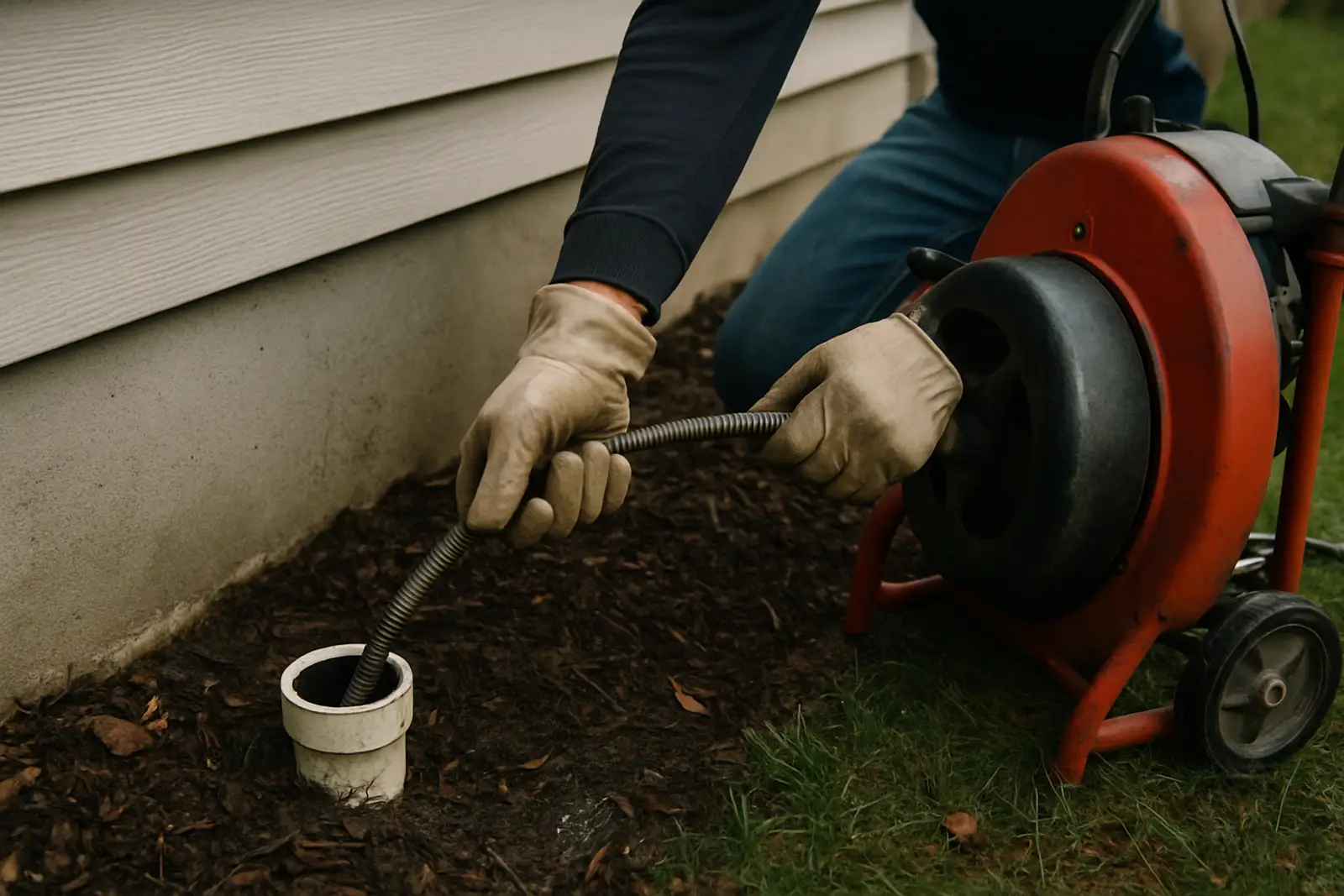
Houses and pipes in Detroit
Neighborhoods like Boston-Edison, Indian Village, Woodbridge, Corktown and West Village have homes from the 1880s through the 1920s, many large and historic, with clay tile laterals and cast iron stacks.
Most of Detroit's housing, in neighborhoods like Grandmont-Rosedale, East English Village, Bagley, Warrendale and Russell Woods, was built in the 1910s through the 1950s as brick bungalows, Tudors and colonials with full basements.
Many basements have a floor drain near the laundry and furnace that connects directly to the main sewer line, making it the first place water appears during a backup.
Detroit's sewer system is mostly combined, carrying storm water and sewage together, and it serves not just the city but many surrounding communities.
Vacant lots and demolished homes in some neighborhoods have left behind abandoned laterals and changed how water drains across blocks.
Who handles what in Detroit
The Detroit Water and Sewerage Department maintains the city's local sewers, and the Great Lakes Water Authority operates the regional treatment plant and large interceptors. A Detroit property owner owns the sewer lead from the house to the main, including the section under the street.
Drain problems Detroit homes see most
| Problem | Why it happens here |
|---|---|
| Basement flooding in storms | Combined sewers citywide |
| Roots in clay pipe | Neighborhoods with big street trees |
| Collapsed or broken leads | Century-old clay |
| Cast iron scale | Older stacks and basement drains |
| Grease buildup | Busy family kitchens |
| Frozen lines | Long Michigan winters |
Detroit drains through the year
Summer thunderstorms are the biggest risk. When several inches of rain fall in an hour, the combined sewers fill and push water back into basements across whole neighborhoods. Roots grow fastest from May through August.
Long, cold winters can freeze drains in unheated garages, enclosed porches and exterior walls, and lake-effect cold snaps add to the risk.
What drain cleaning costs in Detroit
| Job | Typical range |
|---|---|
| Sink, tub or toilet cleared | $135–$285 |
| Main line cleared from a cleanout | $205–$460 |
| Root cutting | $270–$615 |
| Hydro jetting | $355–$845 |
| Sewer scope inspection | $140–$285 |
| Backwater valve installation | $900–$2,800 |
A clear path to the basement cleanout keeps costs down. Root-filled clay leads, collapsed sections and lines that run under the street take longer.
Before the plumber arrives
- 1
Stop water use
Hold off on laundry, showers and dishes until the line is clear.
- 2
During a storm?
If neighbors are flooding too, the city sewer may be overwhelmed. Report it to DWSD.
- 3
Check the floor drain
Note whether water is coming up the basement drain or the laundry tub.
- 4
Find the cleanout
Usually a large capped fitting near the front basement wall.
The bungalow city
Between the 1910s and the 1950s, Detroit grew into one of the largest cities in the country, and builders put up hundreds of thousands of homes for workers at Ford, GM, Chrysler and the auto suppliers. Neighborhoods like Grandmont-Rosedale, Bagley, East English Village, Warrendale and Morningside are lined with brick bungalows, Tudors and colonials, almost all with full basements. Their sewer leads are usually clay tile running from the front basement wall under the yard and street to the main. After eighty to a hundred years, roots, cracks and settling are common.
Historic districts
Boston-Edison, Indian Village, Palmer Woods, Arden Park and Woodbridge have some of Detroit's grandest homes, built for auto executives and industrialists in the early 1900s. These houses have large basements, cast iron stacks and clay leads under huge elms, oaks and maples. Roots and corroded cast iron are the usual findings. Lining is a good option to avoid disturbing historic lawns and trees.
Combined sewers and summer storms
Detroit's sewer system is mostly combined, and it also takes flow from many surrounding communities. During intense summer storms, like the major floods of 2014 and 2021, the system was overwhelmed and tens of thousands of basements flooded. When the public sewer fills, water rises in the leads and comes out at the lowest drain in each house. A backwater valve, installed on the main line, closes automatically to keep that water out. Disconnecting downspouts from the sewer also reduces the load.
A typical Detroit call
On a muggy July night, after a hard storm, a family in a 1928 brick bungalow in Grandmont-Rosedale finds sewage on the basement floor that isn't draining. The plumber opens the front-wall cleanout, cuts out a mass of roots about forty feet out under the tree lawn and the water drains away. The camera shows cracked clay and a sag near the curb. The family books lining and asks about a backwater valve.
Vacant homes and old leads
Some Detroit neighborhoods have lost many homes to vacancy and demolition. When a house sits empty for years, its sewer lead can fill with roots, and when a house is demolished, the old lead may be capped or left. Buyers of homes that have been vacant should always get a camera inspection before moving in.
Cast iron and basement drains
Many older Detroit homes have cast iron stacks and drains under the basement floor. After eighty or more years, cast iron scales and corrodes inside, narrowing the pipe. Basement floor drains, laundry tubs and toilets may drain slowly even when the main is clear. Descaling restores the flow, and a camera shows whether the pipe is still sound.
Restaurants and Mexicantown
From Mexicantown's taquerias on West Vernor to Greektown, Corktown's restaurants and Coney Island diners across the city, Detroit's kitchens produce a lot of grease. Commercial kitchens need their grease traps pumped and lines jetted regularly to avoid backups.
Michigan winters
Detroit winters are long and cold, with stretches below zero. Drains in garages, enclosed back porches and along exterior walls freeze first. Wrap exposed pipe, keep heat in porches and basements and let faucets drip during deep cold. If a line does freeze, a space heater aimed at the pipe or a hair dryer works; a propane torch near old wood framing does not.
Renovation and new owners
As people buy and renovate older homes across Detroit, sewer leads are often one of the first systems to need attention. Pipes in homes that sat empty may have dried-out traps, root-filled leads and corroded cast iron. A camera inspection before renovation helps plan the budget.
Calling a Detroit plumber
Give your neighborhood and the home's age, whether there's a front-wall cleanout and whether the home was vacant before you moved in. Mention whether it rained hard, whether neighbors also have water and whether big trees grow near the lead.
Detroit ZIP codes
- 48201
- 48202
- 48203
- 48204
- 48205
- 48206
- 48207
- 48209
- 48212
- 48213
- 48214
- 48216
- 48219
- 48221
- 48224
- 48226
- 48227
- 48234
- 48235
- 48238
- 48239
- 48240
- 48242
Detroit drain questions
Who is responsible for my sewer lead in Detroit?+
The property owner owns the lead from the house to the main, including under the street. DWSD maintains the public sewer.
Why does my basement flood during heavy rain?+
Detroit's combined sewers carry storm water and sewage together. In big storms they fill and can push water back through basement floor drains. A backwater valve can help.
Can roots be cleared without digging?+
Yes. A root cutter or hydro jetting clears them from the inside. When the clay itself is cracked, a cured-in-place liner can seal it from inside, so the tree lawn and street stay intact.
Should I scope the sewer before buying a Detroit home?+
Absolutely. Many older leads have roots, cracks or collapsed sections, and some homes have sat vacant for years.