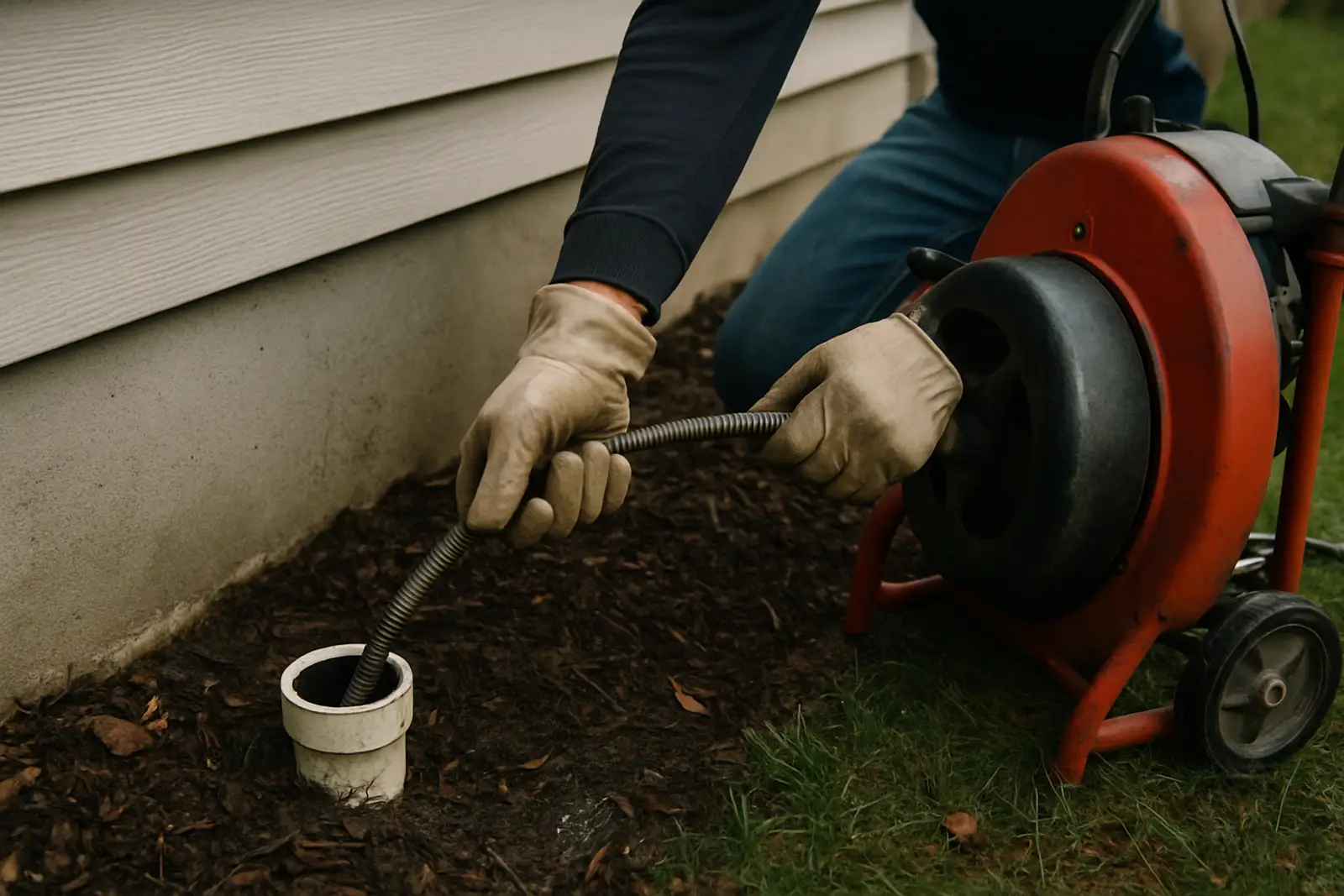
Houses and pipes in Grand Rapids
Heritage Hill, one of the largest urban historic districts in the country, and the neighborhoods around Fulton Street and Cherry Hill have homes from the 1840s through the 1920s with basements and clay tile laterals.
The West Side, built largely for Polish and Dutch furniture workers, has frame houses and cottages from the 1880s through the 1920s with old clay sewer lines.
Neighborhoods like Eastown, Alger Heights, Creston and Garfield Park filled in from the 1910s through the 1950s with bungalows, Tudors and colonials over basements.
The outer edges of the city and neighboring suburbs grew from the 1950s onward with ranches and split-levels, and newer homes with PVC drains.
The Grand River runs through the city, and lake-effect snow off Lake Michigan brings long, snowy winters.
Who handles what in Grand Rapids
The City of Grand Rapids Environmental Services Department runs the sewer system and treatment plant. Grand Rapids homeowners are responsible for their sewer lateral from the house to the city main.
Drain problems Grand Rapids homes see most
| Problem | Why it happens here |
|---|---|
| Roots in clay tile | Heritage Hill and the West Side |
| Basement backups | Older homes with floor drains |
| Cast iron corrosion | Bungalows and colonials |
| Frozen drains | Lake-effect winters |
| Grease and wipes | Student rentals and busy households |
| Spring thaw infiltration | Low areas near the river |
Grand Rapids drains through the year
Spring snowmelt and summer storms soak the ground, and roots grow fastest from May through August, making early summer a peak time for basement backups.
Lake-effect winters bring long stretches of cold and heavy snow, freezing drains in garages, crawlspaces and exterior walls.
What drain cleaning costs in Grand Rapids
| Job | Typical range |
|---|---|
| Sink, tub or toilet cleared | $130–$275 |
| Main line cleared from a cleanout | $200–$445 |
| Root cutting | $260–$595 |
| Hydro jetting | $340–$810 |
| Sewer scope inspection | $140–$280 |
| Frozen line thawing | $195–$500 |
Newer homes clear quickly. Heritage Hill clay under massive trees, steep hillside laterals and frozen lines take longer.
Before the plumber arrives
- 1
Pause water use
Stop the dishwasher and laundry and wait on showers.
- 2
Look in the basement
Water at the basement floor drain usually means a blocked main.
- 3
Frozen?
In a deep freeze, a stopped drain may be frozen, not clogged.
- 4
Find the cleanout
Usually near the front basement wall where the line exits.
Heritage Hill
Heritage Hill climbs the bluff east of downtown, with more than 1,300 homes built by lumber barons, furniture makers and merchants between the 1840s and the 1920s. The architecture ranges from Greek Revival to Prairie style, and the trees are as old as the houses. Clay tile laterals run down steep lots under those trees, and roots have had a century to find every joint. Lining is a popular fix here because it avoids digging up historic yards, retaining walls and old stone walks.
The West Side
Across the Grand River, the West Side was home to Polish, Dutch and Lithuanian families who worked in the furniture factories. Small frame houses and cottages sit close together on narrow lots, many with clay laterals and old cast iron. Roots, cracks and settling are common. Many homes have been updated over the years, but the sewer line is often original.
Bungalow neighborhoods
Eastown, Alger Heights, Creston, Garfield Park and the neighborhoods that filled in from the 1910s through the 1950s are full of bungalows, Tudors and colonials with full basements. Their laterals are typically clay with cast iron inside, and big street trees line most blocks. Basement floor drains near the laundry are where trouble usually shows up first.
A typical Grand Rapids call
In late June, a family in a 1924 bungalow in Eastown notices the basement floor drain gurgling and then overflowing while the washer drains. The plumber opens the front-wall cleanout and clears a heavy mass of roots about forty feet out under the tree lawn. On the monitor, the clay has split lengthwise and one joint has slipped a half inch. The family schedules a liner for September.
Lake-effect winters
Grand Rapids sits about thirty miles from Lake Michigan, close enough to get heavy lake-effect snow and long stretches of cold. Drains in garages, enclosed porches and along exterior walls freeze first. Wrap exposed pipe, keep heat in basements and garages and let a faucet drip during deep cold. A frozen drain line should be thawed carefully, never with a torch.
Steep laterals on the hills
Heritage Hill and other neighborhoods on the bluffs have steep lots, and their laterals drop quickly to the main. Steep runs can let water outrun solids, leaving debris behind, and hillside soil can shift pipe over time. Jetting cleans these lines thoroughly.
Students and rentals
Grand Rapids has several colleges, including Grand Valley State's downtown campus, Calvin and Aquinas, and many older homes nearby are rentals. Several tenants push more hair, grease and wipes through old clay lines. Annual jetting prevents many emergencies.
Breweries and restaurants
Grand Rapids calls itself Beer City USA, with dozens of breweries and taprooms, plus a busy restaurant scene downtown and along Bridge Street, Wealthy Street and Cherry Street. Breweries and commercial kitchens need grease interceptors and screens maintained and lines jetted on schedule.
Spring thaw
When a deep snowpack melts in March and April, groundwater rises and seeps into cracked laterals. Homes near the Grand River and in low areas feel it most. Disconnecting downspouts from the sewer and repairing cracked pipe reduces the load and keeps basements drier.
Old combined sewers and separation work
Like many older Great Lakes cities, Grand Rapids originally built combined sewers that carried rain and sewage in one pipe, and overflows into the Grand River were a long-running problem. The city spent decades and hundreds of millions of dollars separating those systems, and most of the work is done. Even so, many older homes still have downspouts, areaway drains or footing drains tied into their laterals from the old days. During a heavy storm, that clean water floods into the same pipe as household waste and can push it back out of the basement floor drain. Rerouting those old connections to the yard is a simple step that keeps a lateral from being overloaded every time it rains hard.
Postwar ranches on the edges
Along the city's northeast and southeast edges, toward Kentwood, Wyoming and the Beltline, neighborhoods of ranch homes and split-levels went up from the 1950s through the 1970s. Many have cast iron under a basement slab and clay or early plastic out to the street. Scale in the cast iron narrows the drain over time, so a basement shower or laundry tub can drain slowly for months before a full stoppage. Descaling restores the original diameter, and a camera run shows whether the clay section beyond the foundation needs attention too.
Calling a Grand Rapids plumber
Share your neighborhood and the home's age, whether there's a basement cleanout and whether it's a rental. Mention big trees near the lateral, whether the lot is steep and whether trouble started after snowmelt, a storm or a cold snap.
Grand Rapids ZIP codes
- 49503
- 49504
- 49505
- 49506
- 49507
- 49508
- 49512
- 49525
- 49534
- 49544
- 49546
- 49548
Grand Rapids drain questions
Who handles sewer in Grand Rapids?+
The city's Environmental Services Department. The homeowner is on the hook for the lateral, from the basement wall all the way to where it joins the city pipe.
Why do Heritage Hill homes have so many root problems?+
Their clay laterals are often over a century old and run under very large trees on steep lots.
Can my old lateral be lined?+
Often, yes. Lining seals cracks and joints without digging up historic yards.
Should I scope the sewer before buying in Grand Rapids?+
Yes, especially for homes built before 1960.