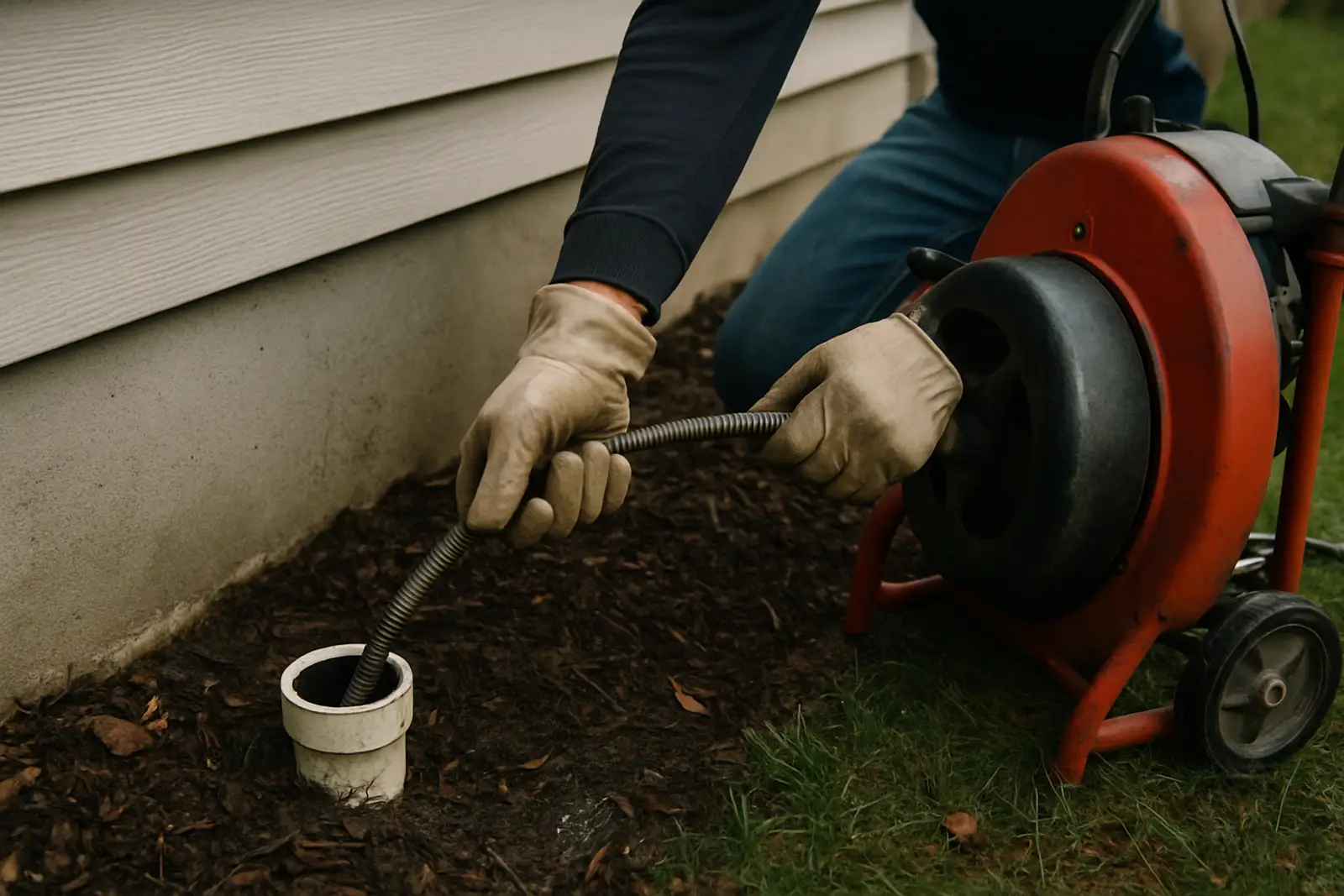
Houses and pipes in Newark
The Ironbound, Down Neck, has attached row houses and two- and three-family homes from the 1870s through the 1920s, packed tightly on narrow streets.
The North Ward, Forest Hill, Roseville and Vailsburg have two-families, three-families and single homes from the 1890s through the 1930s.
The South Ward, Weequahic and Clinton Hill have homes and apartment buildings from the 1910s through the 1950s.
Many Newark homes have basements with a house trap near the front wall, required by older plumbing codes.
Much of Newark has combined sewers that carry rain and wastewater together, and the city is under a long-term plan to reduce overflows into the Passaic River.
Who handles what in Newark
Newark's Department of Water and Sewer Utilities maintains the city's sewers, and the Passaic Valley Sewerage Commission treats the wastewater. Newark property owners maintain the house sewer from the building to the city main.
Drain problems Newark homes see most
| Problem | Why it happens here |
|---|---|
| House trap clogs | Older homes with basement traps |
| Basement flooding in storms | Combined sewer neighborhoods |
| Multi-family shared lines | Two- and three-family homes |
| Roots in clay laterals | Forest Hill, Vailsburg and Weequahic |
| Grease buildup | Ironbound restaurants and busy kitchens |
| Cast iron corrosion | Century-old buildings |
Newark drains through the year
Summer thunderstorms and tropical remnants overload combined sewers and flood basements, and roots grow fastest in warm months.
Winter cold snaps freeze pipes in unheated basements, enclosed porches and exterior walls.
What drain cleaning costs in Newark
| Job | Typical range |
|---|---|
| Sink, tub or toilet cleared | $160–$330 |
| Main line or house trap cleared | $240–$525 |
| Root cutting | $315–$695 |
| Hydro jetting | $410–$950 |
| Sewer camera inspection | $170–$335 |
| Backwater valve installation | $1,100–$3,200 |
Single-family homes with a reachable trap go quickest. Three-families with shared lines, long house sewers under the sidewalk and work during flooding take longer.
Before the plumber arrives
- 1
Tell every unit
Knock on the other doors: in a Newark multi-family, every unit drains into the same pipe.
- 2
Storm flooding?
When the gutters are overflowing and the house next door has water too, the city sewer is probably surcharged.
- 3
Find the house trap
Look for a U-shaped cast iron fitting with two caps near the front basement wall.
- 4
Leave the caps on
Opening a house trap while the line is full can release a flood of sewage.
The Ironbound
The Ironbound, bounded by railroad tracks east of Penn Station, has been home to Irish, German, Italian and Polish immigrants and, for the last several decades, a large Portuguese, Brazilian and Spanish community. Its narrow streets are lined with row houses and multi-family homes packed tightly together, many with basements and house traps. Ferry Street's restaurants add grease to old lines. House trap clogs and grease are the most common causes of backups.
Two- and three-family homes
Across the North Ward, Vailsburg and the South Ward, two- and three-family homes are the norm, with all units sharing one basement and one house sewer. When it clogs, the lowest unit, often a basement apartment or the first floor, gets the water. Owners who keep the house trap and sewer clean avoid many emergencies.
Combined sewers
Newark's older neighborhoods are served by combined sewers that overflow into the Passaic River and Newark Bay during heavy rain. Under a New Jersey permit, the city is working on a long-term control plan to reduce overflows. During big storms, basements can take on water. Backwater valves and disconnected downspouts help.
Forest Hill and Vailsburg
Forest Hill, in the North Ward near Branch Brook Park, has large Victorian and Colonial Revival homes on tree-lined streets. Vailsburg, on the west side, has two-families and single homes. Clay laterals under big trees fill with roots in both neighborhoods.
A typical Newark call
After a July thunderstorm, the first-floor tenant in a 1915 three-family in the North Ward finds water around the basement floor drain. The owner calls a plumber, who opens the house trap and pulls out wipes and grease, then cables toward the street and hits roots under the sidewalk about fifteen feet out. On the camera, the clay is cracked. The owner gets a bid for lining.
Weequahic and the South Ward
Weequahic and the South Ward have homes and apartment buildings from the 1910s through the 1950s, many near Weequahic Park. Old laterals, cast iron stacks and big trees mean roots and corrosion.
Apartment buildings
Newark has many older apartment buildings with shared cast iron stacks. Kitchen stacks collect grease from many households, and lower-floor units get the backup. Building superintendents who schedule regular jetting avoid many emergencies.
Ferry Street restaurants
Ferry Street in the Ironbound is famous for Portuguese, Brazilian and Spanish restaurants serving grilled meats, seafood and rodízio. Those kitchens produce a lot of grease, and New Jersey requires grease traps for food service. Pumping them on schedule keeps kitchens open.
Winter
Newark winters bring cold snaps that freeze pipes in unheated basements, enclosed porches and exterior walls. In multi-family homes, the back porch kitchens are often the first to freeze. Keep the basement warm and insulate exposed pipe.
Older three-families often have their kitchens stacked at the back of the building, with drain and supply pipes running up the coldest wall.
Permits and street work
Repairing a house sewer under a Newark sidewalk or street requires city permits and a licensed plumber. A cured-in-place liner often avoids tearing up the sidewalk at all.
Renovations and new owners
As Newark's downtown and neighborhoods have attracted new investment, many older homes have been renovated. Renovation is a good time to inspect and replace an old house sewer, before new floors and finishes go in.
Branch Brook Park and the North Ward
The North Ward around Branch Brook Park, famous for its cherry blossoms, has long been home to Italian American families and, more recently, Latino and Caribbean families. Its streets are lined with two- and three-family homes built in the early 1900s, many with basement apartments added later. Those lower units sit at the bottom of a century-old house sewer and are the first to flood when it clogs. Owners who install a backwater valve and keep the house trap clean protect both their tenants and their rental income.
Cleaning the house trap
A Newark house trap collects whatever doesn't make it through the line: paper, grease, hair, wipes and the occasional small toy. Over the years, a coating builds up inside the trap and narrows it. A plumber can open the trap's cleanout cap, clear it and scrape the inside, then run a cable or jetter through the house sewer toward the street. Some owners have the trap removed and replaced with a straight pipe and cleanout, which local code may allow during a larger repair.
When you call
Share the neighborhood, the building type, how many units share the line and whether there's a house trap. Mention whether a storm came first.
Newark ZIP codes
- 07102
- 07103
- 07104
- 07105
- 07106
- 07107
- 07108
- 07112
- 07114
Newark drain questions
Who handles sewer in Newark?+
Newark's Department of Water and Sewer Utilities maintains city sewers, and PVSC treats wastewater. The house sewer is the owner's.
What is a house trap?+
A U-shaped fitting near the front basement wall that blocks sewer gas. It is the most common place for a Newark blockage to form, and clearing it solves a large share of basement backups.
Why do Newark basements flood in storms?+
Combined sewers fill during heavy rain and can push water back through basement floor drains.
Is a sewer scope worth it before buying a multi-family in Newark?+
Yes. Century-old house sewers often have roots, cracks or collapsed sections.