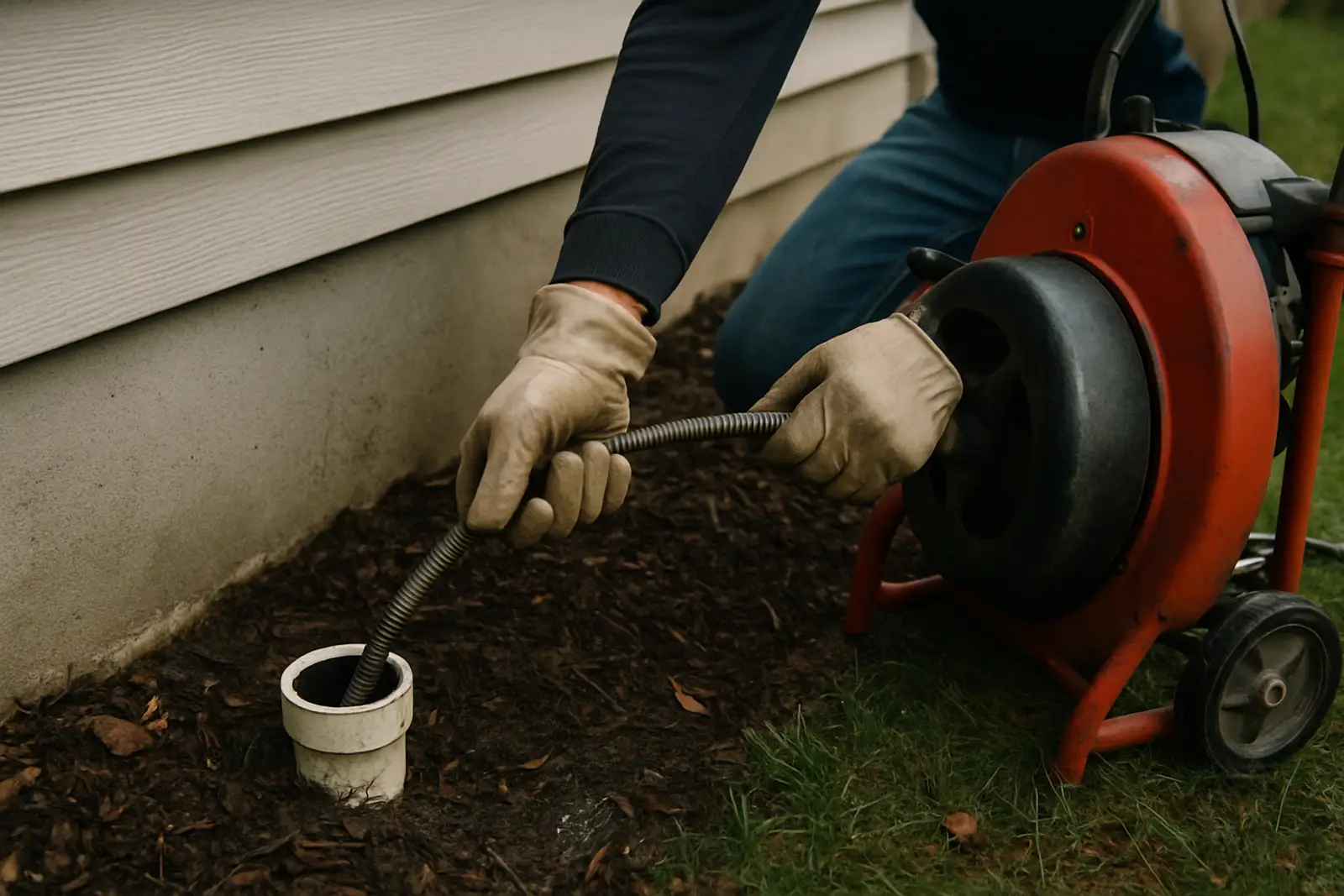
Houses and pipes in Paterson
The neighborhoods around the Great Falls, Dublin and the downtown mill district have worker homes and multi-families from the 1850s through the 1920s.
The Eastside, including the Eastside Park historic district, has larger Victorian and Colonial Revival homes from the 1890s through the 1930s.
Riverside, the Totowa section, People's Park and South Paterson are full of two- and three-family homes from the 1890s through the 1950s.
Many homes have basements with house traps and old clay or cast iron house sewers.
The Passaic River wraps around much of the city, and neighborhoods along it flood in major storms.
Who handles what in Paterson
Paterson's Department of Public Works maintains the city sewers, and the Passaic Valley Sewerage Commission treats the wastewater. In Paterson, the house sewer from the building to the main belongs to the property owner.
Drain problems Paterson homes see most
| Problem | Why it happens here |
|---|---|
| Multi-family shared lines | Two- and three-family homes citywide |
| Basement flooding | Neighborhoods near the Passaic River |
| House trap clogs | Older homes |
| Roots in clay pipe | Eastside Park and older neighborhoods |
| Grease buildup | Busy family kitchens and restaurants |
| Cast iron corrosion | Century-old buildings |
Paterson drains through the year
Spring rains and summer storms raise the Passaic and overload combined sewers, flooding basements in low neighborhoods, and roots grow fastest in summer.
Winter cold snaps freeze pipes in unheated basements and exterior walls.
What drain cleaning costs in Paterson
| Job | Typical range |
|---|---|
| Sink, tub or toilet cleared | $155–$320 |
| Main line or house trap cleared | $235–$515 |
| Root cutting | $305–$675 |
| Hydro jetting | $400–$930 |
| Sewer camera inspection | $165–$325 |
| Backwater valve installation | $1,050–$3,100 |
Single-family homes with an accessible trap clear quickest. Three-families with shared lines, river-flooded basements and century-old pipe take longer.
Before the plumber arrives
- 1
Alert all the tenants
Every household on the line needs to stop flushing and showering.
- 2
River rising?
If the Passaic is high and streets are flooding, wait for water to recede before running more.
- 3
Check the house trap
It's usually a U-shaped fitting near the front basement wall; don't open it if the line is full.
- 4
Basement apartment?
The lowest unit gets the water first; move belongings off the floor.
Silk City
Alexander Hamilton chose the Great Falls of the Passaic as the site for America's first planned industrial city, and Paterson became the Silk City, producing much of the country's silk by the late 1800s. Mill workers from Ireland, Italy, Germany, Poland and later Puerto Rico, the Dominican Republic, Peru, Turkey and the Middle East filled dense neighborhoods of multi-family homes. Many still stand, with century-old house sewers, cast iron stacks and house traps.
The Passaic River
The Passaic River wraps around Paterson, and it floods in major storms, most notably after Hurricane Irene in 2011, when the river reached its highest level in a century. Riverside neighborhoods and parts of the Totowa section and downtown flooded. Groundwater stays high near the river, and cracked house sewers take in water.
Multi-family homes
Most Paterson homes are two- and three-family buildings, often with additional basement apartments. Every unit shares the house sewer, and the lowest unit gets the water when it clogs. Grease from several kitchens and wipes from several bathrooms are the leading causes.
Eastside Park
The Eastside Park historic district has large Victorian and Colonial Revival homes on tree-lined streets near the park, built for mill owners and professionals. Long clay house sewers under big trees fill with roots.
A typical Paterson call
After a June storm, the basement tenant in a 1910 three-family in People's Park finds water rising from the floor drain. The owner calls a plumber, who opens the house trap and clears grease and wipes, then cables toward the street and finds roots under the sidewalk. The camera shows cracked clay. A liner and a backwater valve go on the owner's list.
Combined sewers
Paterson's combined sewers overflow into the Passaic during heavy rain, and the city is working on a long-term plan with regional partners to reduce overflows. Until that work is done, the best protection for a Paterson basement is a backwater valve on the house sewer and roof drains that empty into the yard.
Main Street restaurants
Paterson's Main Street, Little Lima and South Paterson's Little Istanbul are known for Peruvian, Turkish, Middle Eastern and Latin American restaurants. Busy kitchens produce a lot of grease, and pumping grease traps on schedule keeps them open.
Big households
Paterson has many large, multigenerational households, and busy kitchens send rice, grease and food scraps down drains. A sink strainer and a can for cooking oil help prevent clogs.
Winter
Paterson winters bring cold snaps that freeze pipes in unheated basements, back porches and exterior walls. Heat the basement and insulate exposed pipe.
In three-families, the back kitchens and porches are usually the coldest part of the building, and their pipes freeze first.
Hilly streets
Parts of Paterson, especially near Garret Mountain and the Eastside, sit on hills, and homes there have laterals that drop steeply to the street. Steep runs can leave debris behind, which jetting clears.
Old mill district
The mill district around the Great Falls, now a national historical park, has old buildings converted to apartments and lofts. New plumbing inside often connects to very old sewers.
Riverside and the Totowa section
Riverside, along the northern bend of the Passaic, and the Totowa section on the west side have dense streets of two- and three-family homes built for silk workers in the early 1900s. Both flooded badly after Hurricane Irene, and many basements were gutted and rebuilt. Silt and debris from floodwater can settle in house sewers, and the shock of a flood can shift old clay joints. A camera inspection after a flood shows whether the line needs cleaning or repair before the next storm.
Basement apartments
Many Paterson homes have basement apartments added over the years, legal or not, to house relatives or bring in rent. Those units sit at the very bottom of the plumbing, with a shower, toilet and floor drain lower than anything else in the building. When the house sewer clogs or the street sewer surcharges, they flood first. A backwater valve and a regular cleaning of the house trap are the cheapest protection for those tenants.
What to tell the plumber
Give the neighborhood, the building type, how many units share the line, whether there's a basement apartment and whether the river was high or it rained hard.
Paterson ZIP codes
- 07501
- 07502
- 07503
- 07504
- 07505
- 07513
- 07514
- 07522
- 07524
Paterson drain questions
Who handles sewer in Paterson?+
Paterson's DPW maintains the city sewers, and PVSC treats wastewater. The house sewer is the owner's.
Why do Paterson basements flood?+
Combined sewers fill during heavy rain, and the Passaic River can rise into low neighborhoods. Both push water back into basements.
Why do Paterson three-families clog more than single homes?+
Several households share one old house sewer, and grease, wipes and heavy use add up.
Is a sewer scope worth it when buying in Paterson?+
Yes, especially for multi-family homes and those near the river.