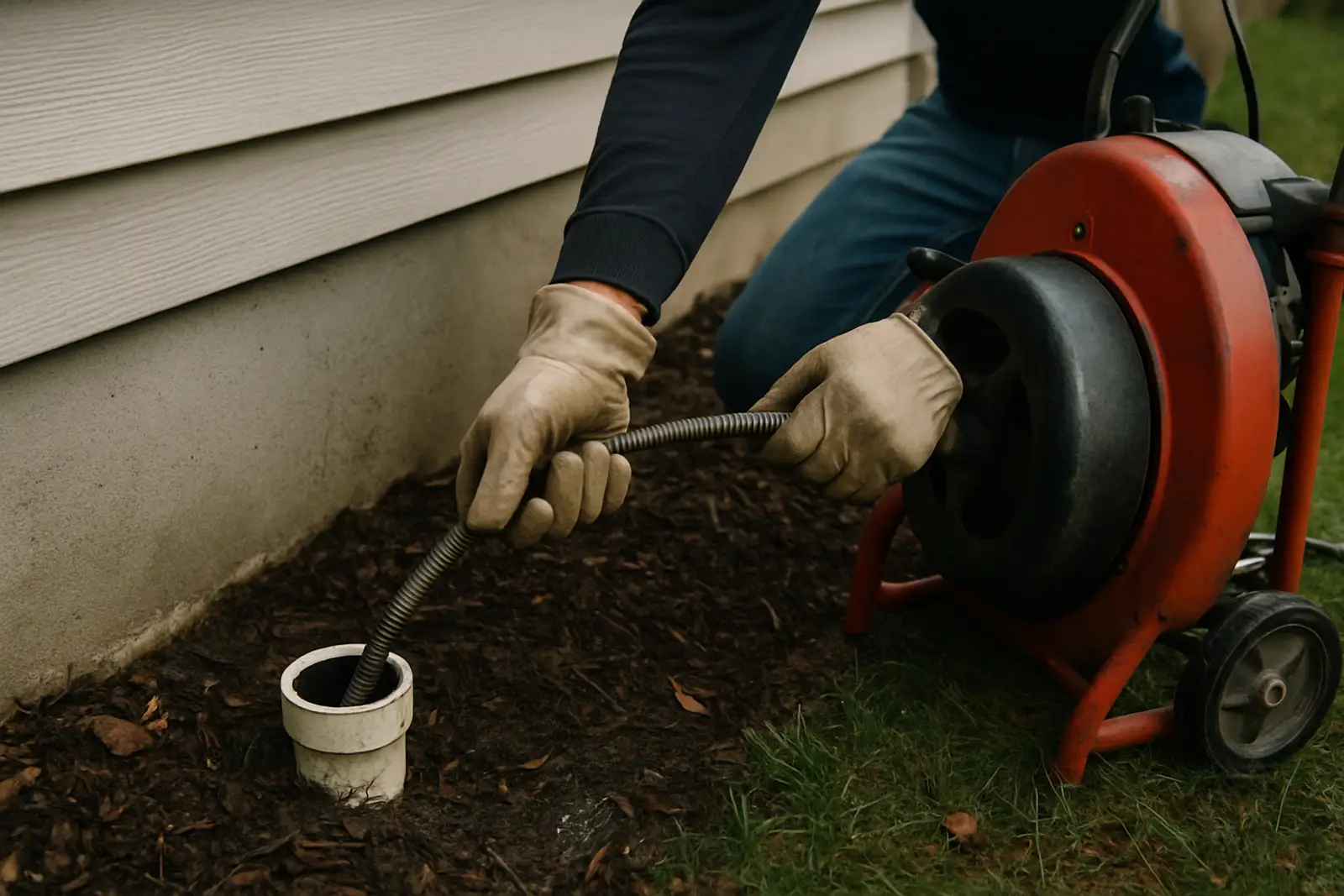
Houses and pipes in New Haven
Wooster Square, East Rock, Dwight and the Hill have homes from the 1830s through the 1920s, including row houses, two-families and triple-deckers with basements and old laterals.
Prospect Hill, St. Ronan-Edgehill and Whitney Avenue have large Victorian and Colonial Revival homes on wooded lots.
Westville, Beaver Hills and Morris Cove have homes from the 1910s through the 1950s.
Fair Haven and the Annex sit along the Quinnipiac River and the harbor, with older multi-families and cottages.
Much of the older city has combined sewers, and the Greater New Haven Water Pollution Control Authority has been separating and storing overflow for years.
Who handles what in New Haven
The Greater New Haven Water Pollution Control Authority runs sewers and treatment for New Haven and neighboring towns. New Haven property owners maintain the building sewer from the house to the public main.
Drain problems New Haven homes see most
| Problem | Why it happens here |
|---|---|
| Multi-family shared lines | Dwight, the Hill and Fair Haven |
| Basement flooding in storms | Combined sewer neighborhoods |
| Roots in clay laterals | East Rock, Westville and Prospect Hill |
| Heavy use in student rentals | Near Yale and Southern Connecticut State |
| Coastal flooding | Morris Cove, Fair Haven and the Annex |
| Cast iron corrosion | Century-old buildings |
New Haven drains through the year
Nor'easters and summer storms overload combined sewers and flood low basements, and roots grow fastest in summer.
Winter cold freezes back-porch plumbing and pipes on exterior walls.
What drain cleaning costs in New Haven
| Job | Typical range |
|---|---|
| Sink, tub or toilet cleared | $155–$320 |
| Main line cleared from a cleanout | $235–$515 |
| Root cutting | $305–$675 |
| Hydro jetting | $400–$930 |
| Sewer camera inspection | $165–$325 |
| Backwater valve installation | $1,050–$3,100 |
Westville single-family homes go quickest. Multi-families near downtown, coastal basements and century-old laterals take longer.
Before the plumber arrives
- 1
Alert the other apartments
In a New Haven two- or three-family, everyone shares the basement line.
- 2
Heavy rain or storm tide?
If the street is flooding, the combined sewer may be pushing back.
- 3
Check the basement
Water around the floor drain or laundry sink is the usual first sign.
- 4
Yale or SCSU rental?
Call your landlord before calling a plumber.
Wooster Square and the Italian East Side
Wooster Square, with its row houses around a cherry-tree park, became the heart of Italian New Haven in the early 1900s, home to the pizzerias that made the city famous. Its row houses and multi-families have old laterals running under narrow sidewalks, and the restaurants on Wooster Street put plenty of grease into the system.
East Rock
East Rock, below the trap-rock ridge of the same name, has Victorian two- and three-families on tree-lined streets, many rented to Yale graduate students, postdocs and hospital staff. Big trees and old clay laterals mean roots, and heavy use adds wear.
Combined sewers
New Haven's older neighborhoods are served by combined sewers that overflow into the harbor and the Mill and Quinnipiac rivers during heavy rain. The regional authority has separated many sewers and built storage, but big storms can still surcharge local lines. Backwater valves protect basements.
Dwight, the Hill and Fair Haven
Dwight, the Hill and Fair Haven are dense neighborhoods of multi-family homes built for factory workers and immigrants, from Irish and Italian families a century ago to Puerto Rican, Mexican and Ecuadorian families today. Several households share each building sewer, and grease and wipes from busy kitchens and bathrooms cause most clogs.
A typical New Haven call
In September, the first-floor tenants in a 1900 two-family in East Rock find water around the basement floor drain after the upstairs tenants run laundry. The landlord's plumber opens the cleanout and clears roots from a big maple about twenty-five feet out. The camera shows the clay lateral cracked at two joints. The landlord books a liner.
Coastal neighborhoods
Morris Cove, the Annex and parts of Fair Haven sit on low ground near the harbor and the Quinnipiac River. Hurricane Irene and Sandy flooded parts of these neighborhoods, and storm tides still push water into low streets. Cracked laterals take in water, and basements see flooding.
Westville and Beaver Hills
Westville and Beaver Hills have single-family homes and two-families from the 1910s through the 1950s on hilly, wooded streets near Edgewood Park and West Rock. Long laterals under big trees fill with roots.
Pizza and restaurants
New Haven's famous apizza places on Wooster Street, the restaurants downtown around Yale and the taquerias in Fair Haven keep kitchens busy. Restaurants there keep grease traps pumped to stay open on busy weekends.
Students and turnover
Yale, Southern Connecticut State, Albertus Magnus and the University of New Haven bring tens of thousands of students and staff, many renting in older multi-families. Late August and early September bring a rush of clogs as new tenants move in.
Owners who have the line cleaned during the summer, while units sit empty, rarely get those early-semester calls.
Winter
New Haven winters bring nor'easters and cold snaps. Back-porch kitchens in old multi-families and pipes along exterior walls freeze first. Heat the basement and wrap exposed lines.
Prospect Hill and Whitney Avenue
Prospect Hill and the stretch of Whitney Avenue north of Yale have grand Victorian and Colonial Revival homes, many now owned by the university or divided into apartments for faculty and staff. Long laterals from deep front lawns run under enormous oaks and beeches, and roots are almost a given. Owners usually choose lining here to protect the trees and old stone walls.
Kitchen stacks in multi-families
New Haven two- and three-families usually stack their kitchens at the back, all draining into one cast iron kitchen stack. Grease from several households coats that pipe year after year, and it often clogs at the base in the basement. When the first-floor sink fills with dishwater from upstairs, jetting the stack usually clears it.
The Mill River and Wooster Square floods
The Mill River and the old creek beds under Wooster Square and Fair Haven sit on low ground where storm water collects. Heavy rain raises groundwater quickly, and cracked laterals in those neighborhoods take it in. A backwater valve on the building sewer is the best protection for a basement apartment there.
When you call
Share the neighborhood, the building type and age, how many units share the line and whether it's a rental. Mention whether it rained hard first.
New Haven ZIP codes
- 06510
- 06511
- 06512
- 06513
- 06514
- 06515
- 06519
- 06525
New Haven drain questions
Who handles sewer in New Haven?+
The Greater New Haven Water Pollution Control Authority. The building sewer is the owner's.
Why do New Haven basements flood in heavy rain?+
Much of the older city has combined sewers that fill quickly and can back up into low basements.
Why do East Rock rentals clog so often?+
Old multi-families full of grad students and young professionals push heavy loads through century-old clay laterals.
Should New Haven buyers get a sewer scope?+
Yes, especially for multi-family homes.