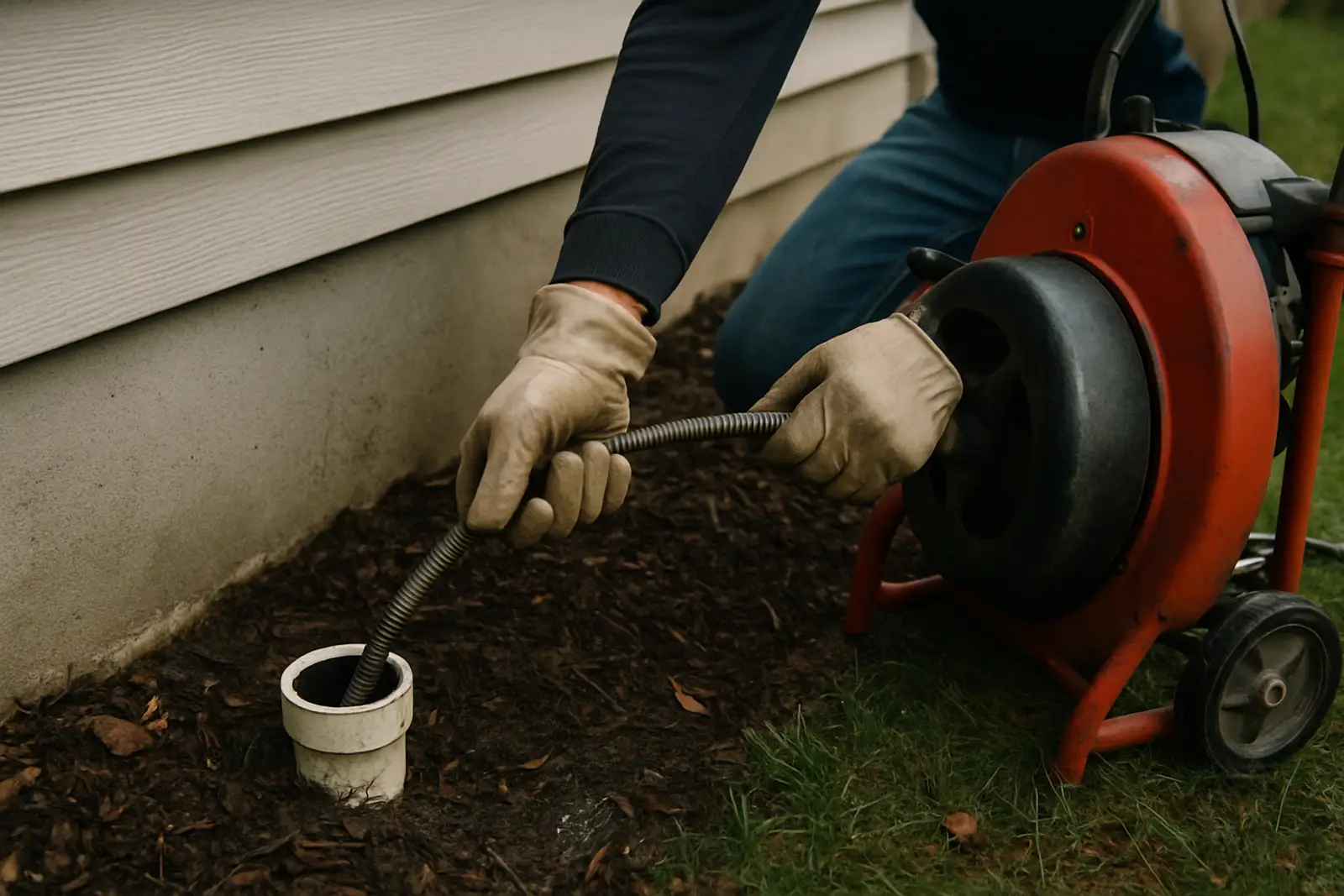
Houses and pipes in Waterbury
The North End, South End, Brooklyn and Washington Hill have triple-deckers and two-families from the 1880s through the 1930s, many on steep streets with basements and clay laterals.
The Hillside historic district has Victorian mansions built by brass company owners.
Bunker Hill, Town Plot and the west side filled in from the 1910s through the 1960s with single-family homes and capes.
Waterbury sits in a valley along the Naugatuck and Mad rivers, with steep hills and ledge close to the surface.
Many neighborhoods are dense with multi-family homes built for immigrant brass workers.
Who handles what in Waterbury
Waterbury's Bureau of Water Pollution Control runs the city's sewers and treatment plant. Waterbury property owners maintain the building sewer from the house to the city main.
Drain problems Waterbury homes see most
| Problem | Why it happens here |
|---|---|
| Multi-family shared lines | North End, South End and Brooklyn |
| Steep laterals | Hillside neighborhoods |
| Ledge and rock | Citywide |
| Roots in clay laterals | Hillside, Bunker Hill and Town Plot |
| Basement backups | Older homes during storms |
| Frozen pipes | Connecticut winters |
Waterbury drains through the year
Spring thaw and summer storms send runoff down the hills into cracked laterals, and roots grow fastest in summer.
Waterbury's hills catch cold winter air, freezing back-porch plumbing and pipes on exterior walls.
What drain cleaning costs in Waterbury
| Job | Typical range |
|---|---|
| Sink, tub or toilet cleared | $145–$300 |
| Main line cleared from a cleanout | $215–$480 |
| Root cutting | $285–$635 |
| Hydro jetting | $375–$880 |
| Sewer camera inspection | $150–$300 |
| Backwater valve installation | $1,000–$2,950 |
West side single-family homes go quickest. Triple-deckers on steep hills, laterals through ledge and century-old clay take longer.
Before the plumber arrives
- 1
Tell the other floors
In a Waterbury triple-decker, all three apartments drain into one basement pipe.
- 2
Uphill or downhill?
On Waterbury's hills, it helps to know whether your house sits above the road or below it, because the line runs very differently.
- 3
Check the basement
Gray water at the floor drain means the building sewer is backing up.
- 4
Find the cleanout
On a hillside, look on the downhill basement wall.
The Brass City
From the mid 1800s through the mid 1900s, Waterbury's brass mills, including Scovill, Chase and American Brass, made buttons, clocks, munitions and countless brass goods. Workers from Ireland, Italy, Lithuania, Portugal, Albania and later Puerto Rico filled the North End, South End and Brooklyn with triple-deckers and two-families. Those buildings still stand, with clay laterals and cast iron stacks about a century old.
Steep hills
Waterbury is built on hills rising sharply from the Naugatuck River valley, and many streets are steep enough that houses sit high above or well below the road. Laterals from uphill homes drop sharply, and water outruns waste, leaving deposits where the slope levels out. Homes below the street may need a pump. A jetter scours steep lines better than a cable.
Ledge
Connecticut ledge sits close to the surface in much of Waterbury, and many laterals were laid shallow or cut into rock. Digging means jackhammering or blasting, which is why lining and pipe bursting are the usual choices here.
The Hillside
The Hillside historic district, north of downtown, has grand Victorian homes built by brass company owners and executives on steep, wooded lots. Many have been divided into apartments. Long, steep clay laterals under big trees fill with roots.
A typical Waterbury call
In June, the first-floor tenant in a 1910 triple-decker in the North End finds water around the basement floor drain. The owner's plumber opens the cleanout on the downhill wall and clears roots and grease about twenty feet out. On camera, the clay has cracked where it passes over ledge. Lining avoids breaking rock.
The 1955 flood
In August 1955, back-to-back hurricanes sent the Naugatuck and Mad rivers over their banks, devastating parts of Waterbury. Flood control dams now protect the valley, but neighborhoods near the rivers still have higher groundwater after heavy rain.
Brooklyn and Washington Hill
Brooklyn and Washington Hill are dense neighborhoods of multi-families on steep streets, home to many Puerto Rican, Albanian and Brazilian families. Grease from busy kitchens and old shared laterals cause most backups.
Bunker Hill and Town Plot
Bunker Hill and Town Plot, on the west side, have capes, colonials and two-families from the 1920s through the 1960s. Clay and cast iron laterals under mature trees have roots and scale.
Kitchen stacks
Triple-deckers stack their kitchens at the back, with one cast iron stack serving all three. Grease builds up inside and can clog the base of the stack in the basement. If the first-floor sink fills with water from upstairs, jetting the stack usually fixes it.
Restaurants and downtown
Downtown Waterbury's restaurants and the Italian, Albanian and Portuguese eateries across the city keep kitchens busy. Restaurants pump their grease traps regularly to avoid backups.
Many of those kitchens operate in old commercial blocks on sewer connections almost as old as the brass mills.
Winter on the hills
Waterbury's hills catch cold winds, and winter cold snaps freeze back-porch plumbing and pipes on exterior walls. Keep basements heated and insulate exposed lines.
The South End and the old mills
The South End grew up around the Scovill brass works along the Naugatuck, and its blocks of triple-deckers and cottages sit on the lower slopes near the river and the old factory sites. Groundwater is higher there, and cracked clay laterals take in water after heavy rain. Many buildings have passed through several owners over the decades, with the lateral cleared repeatedly but never replaced. A camera inspection helps an owner decide whether one more cleaning will do or whether it's time for a liner.
Basement apartments
Some Waterbury multi-families have added apartments in the basement or on the garden level of hillside lots. Those units sit at the bottom of the plumbing, so they flood first when the building sewer clogs. A backwater valve and regular jetting are the cheapest protection for those tenants.
House traps
Many older Waterbury homes still have a house trap, a U-shaped fitting near the front basement wall, that catches paper, grease and debris. Cleaning the trap and running the line to the street solves many backups. Leave the trap caps alone if the line is full of water.
When you call
Share the neighborhood, the building type, how many units share the line and how steep the lot is. Mention big trees near the line.
Waterbury ZIP codes
- 06702
- 06704
- 06705
- 06706
- 06708
- 06710
Waterbury drain questions
Who handles sewer in Waterbury?+
Waterbury's Bureau of Water Pollution Control runs the public system; the building sewer belongs to the property owner.
Why do Waterbury triple-deckers back up?+
Several households share one century-old building sewer, often on a steep lot, and the basement takes the water when it clogs.
Does ledge make repairs harder?+
Yes. Rock near the surface makes digging slow and costly, so lining is often preferred.
Is a sewer scope worth it before buying in Waterbury?+
Yes, especially for multi-family homes on the hills.